Today we’d like to introduce you to Paul Dillon.
Hi Paul, so excited to have you with us today. What can you tell us about your story?
Hi Kristen, I don’t know that I’ve ever been brief on anything but I will try. Thank You so much for this opportunity however in all honesty, I am not the story. The real story is the Jefferson Barracks POW-MIA Museum and its grass roots effort to put names, faces, and stories to that silhouette on the POW-MIA flag. That’s where the stories are.
Although I am a Veteran I am not a combat Veteran, nor was I ever a Prisoner of War or listed as Missing in Action… but my dad was. During WWII his B-17 was shot down over Germany. He managed to bail out, was captured, and spent a year and eight months as a Prisoner of War in Stalag 17B. Thus my involvement with the Museum project
The Museum Board of Directors and staff are all volunteers, we have no paid or salaried positions, no government funding, and no real museum experience. Not quite the auspicious beginning.
The project officially began around April, 2011 when then Missouri AMVET District Commander Joe Grohs spoke with Missouri Congressman Russ Carnahan about the possibility of a permanent POW-MIA Museum in Missouri, possibly at Jefferson Barracks. At that time the Missouri AMVETS had a traveling POW-MIA Museum of sorts which was taken to different venues throughout the state receiving much positive interest and feedback.
Meetings were held at Congressman Carnahan’s office with representatives of multiple Veterans groups in attendance. Congressman Carnahan arranged with St. Louis County that the building located at 16-18 Hancock Avenue in Jefferson Barracks, known as The Old 1896 Officer’s Quarters Building and which up until 2008 had housed the Civilian Conservation Corps Museum, become available to lease for the project for 25 years at $1 per year.
We decided that we could either sit around and talk about it, or do it. So we did it. In May of 2012 the Jefferson Barracks POW-MIA Museum project was incorporated and a 501c3 tax exempt status obtained. Bylaws were written and a Board of Directors selected.
In December 2012 a lease agreement with St. Louis County was finalized with the stipulation that the exterior of the building be restored to its original 1896 appearance and the interior renovated into a museum. In January, 2013 we received the keys to the building.
Although the building had not been occupied or cared for since around 2008 and was in pretty dilapidated condition, we dedicated the project on May 1, 2013 in a ceremony held in conjunction with the final reunion of the Stalag 17B Association. The main exhibit was a collection of photos taken by former POW Ben Phelper of Stalag 17B… the compounds, the forced march the POWs were made to undertake in April 1945 near the end of the war, and the forest outside of Braunau, Austria where they were eventually liberated by Patton’s 13th Armored Division. Although the museum looked like the house in the honeymoon scene from the movie It’s a Wonderful Life, it was a most special day.
In 2013 and in 2014 we were awarded St. Louis County Port Authority Grants and in late 2014 we began Phase One of the restoration/renovation. Phase One was completed in December 2015 with Phase Two beginning in January 2016. Even though Phase Two is still ongoing, we have been operational at intervals in between the restoration construction with the first floor being fully operational since September 2023.
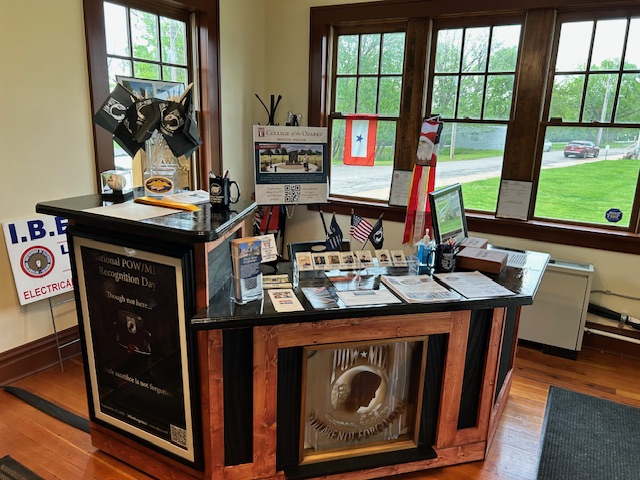
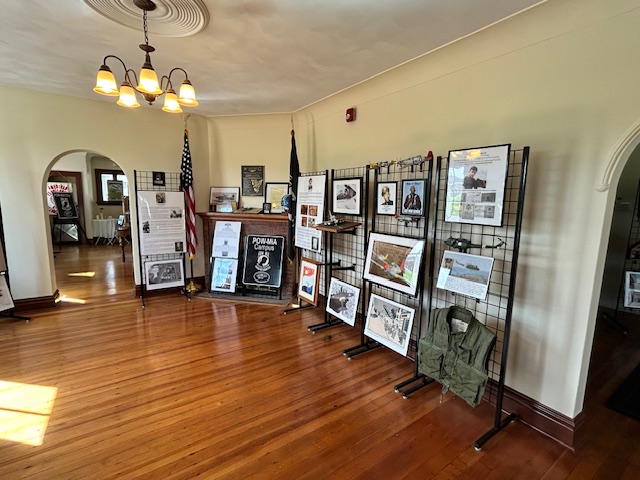
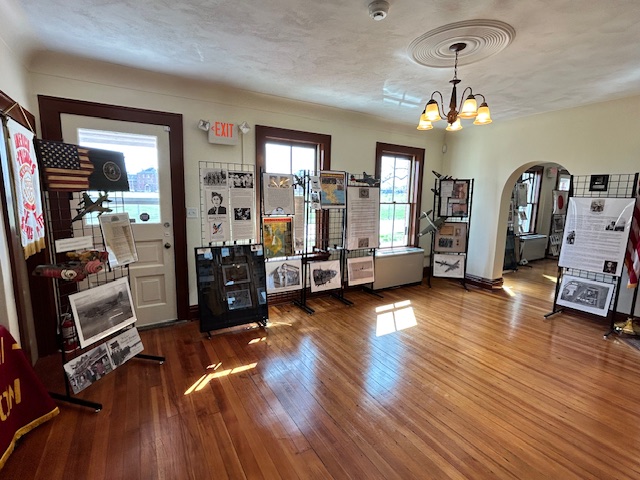
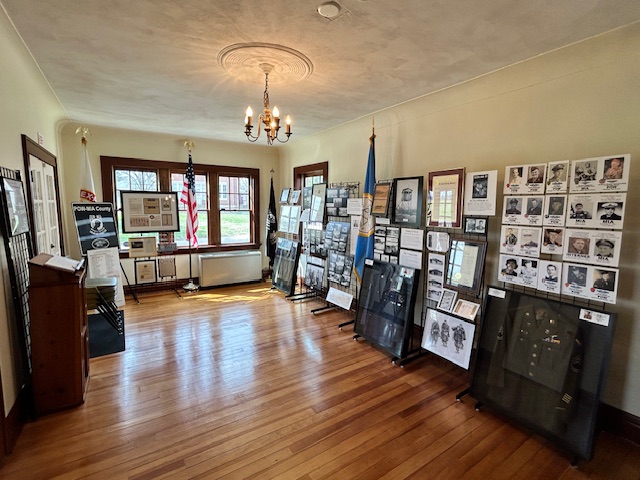
A snapshot of some of the Museum activities over the years…
We are proud to have three Eagle Scout projects associated with the Museum. Those of Eagle Scouts Chase Hatch, John Comerford, and Amelia Bazzell.
In 2016 we asked master carpenter and Vietnam Vet Jack Poitras if he might could build a replica POW guard tower on the east side of the building so that passers-by might notice it and possibly reflect on the service and special sacrifices made by our former Prisoners of War. American Legion, VFW, and AMVETS posts often times have a tank or a helicopter or an artillery piece placed in front of their Posts as a reminder.
We thought what better representation could we place on the Museum grounds than a replica POW camp guard tower enclosed by a stockade fence topped with barbed wire. It has since become a focal point of Remembrance for the Museum with visitors tying yellow ribbons to it with the names of former POWs, MIAs, KIAs, and the names of friends and family members who have served. Our hope is that all visitors feel like a physical part of the Museum with each ribbon a name and a story to be remembered.
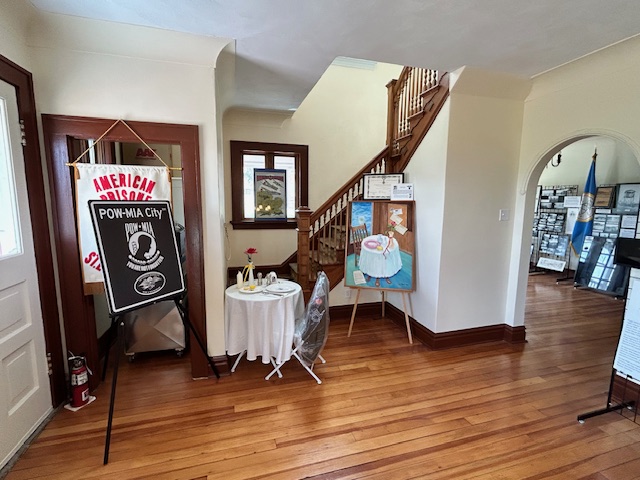
2016 also saw the introduction of our POW-MIA City(sm) program. Modeled after the Purple Heart City program it was the idea of Museum Board Member and Vietnam Vet Russ Whitener for the purpose of raising POW-MIA awareness. The program soon expanded into a POW-MIA County(sm) program.
In 2020, working with Russ Whitener and retired U.S. Army Lt. Colonel Noel Freesh, Board Member and Hillsboro Intermediate School Principal Scott Readnour designed a POW-MIA Campus(sm) program whereby POW-MIA legacy information could be made available to students to help foster and inspire new generations of story-tellers.
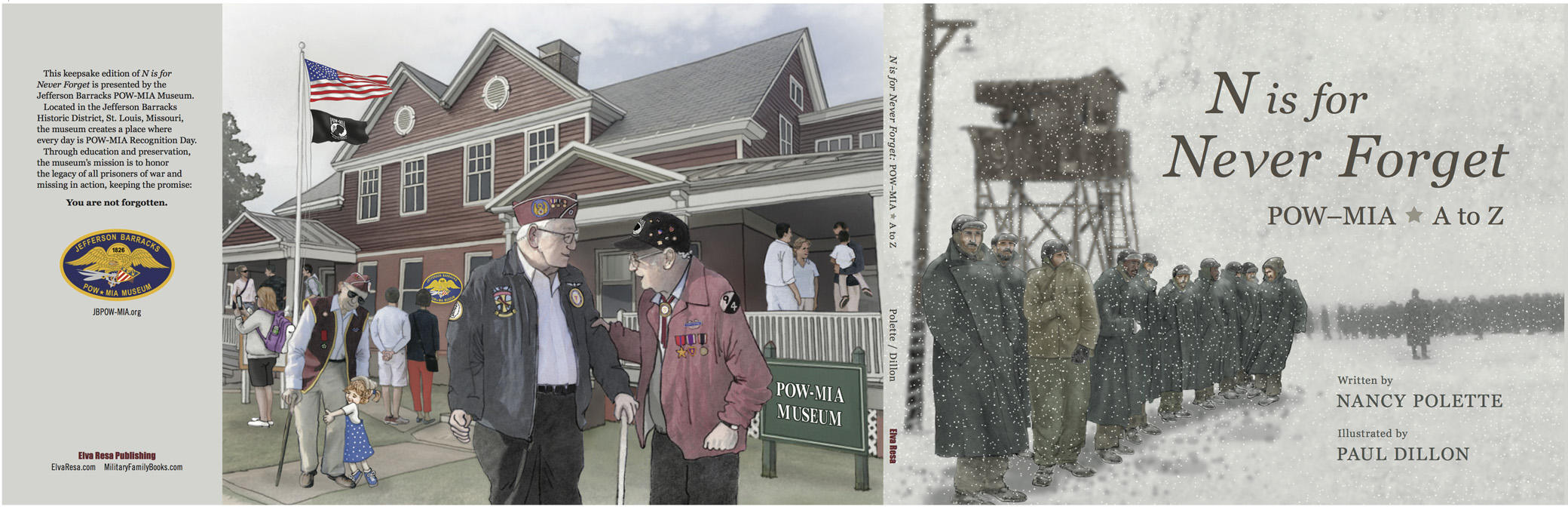
In 2017 we partnered with award-winning children’s book author Nancy Polette to write a child-friendly introduction to our country’s POW-MIA legacy. The book, entitled “N is for Never Forget,” was nominated as a Finalist for the Foreword INDIE Publishers 2017 Juvenile Nonfiction Book of the Year. It did not win, but we are most proud of the story it tells. Nancy did an amazing job. As I am a freelance cartoonist and illustrator, I had the honor and privilege of illustrating the book.
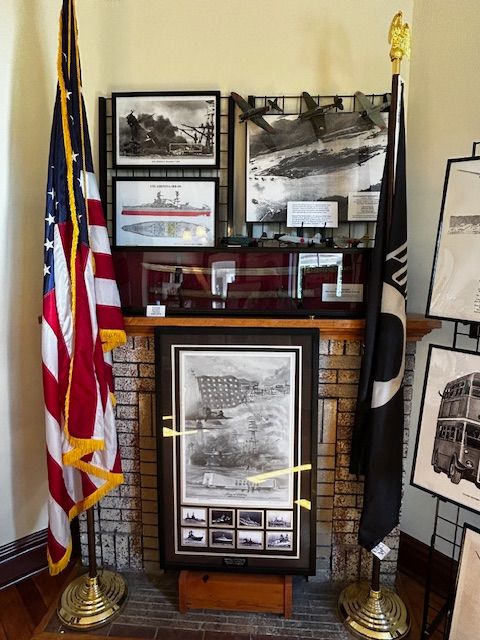
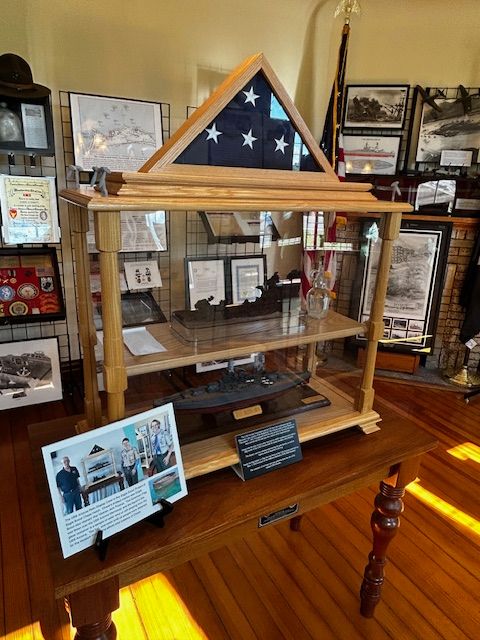
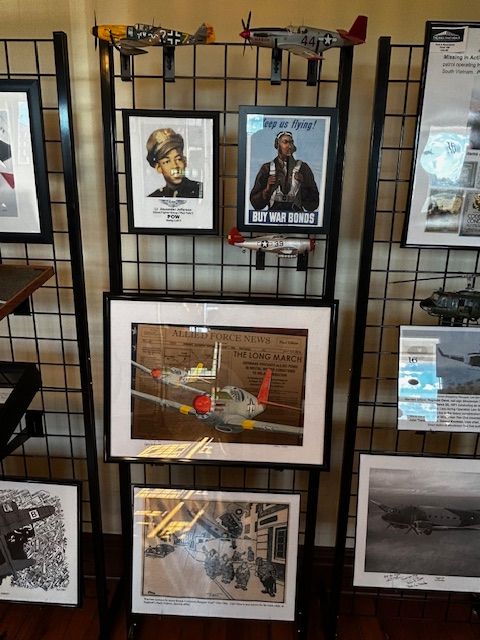
Over the years we have been gifted with many precious artifacts including artwork, material evidence from a combat grave site on Betio Island in the Tarawa Atoll, equipment, clothing, telegrams, letters, medals, photographs, models, and the all important stories. In 2020 we were gifted with an actual piece of the Battleship USS Arizona, sunk at Pearl Harbor on December 7, 1941 with the loss of 1,177 of its crew.
For the past five years with have partnered with the Hillsboro R-3 School District, our first POW-MIA Campus(sm), on their Annual POW-MIA Remembrance Event and Football Game.
For the past two years we have partnered with Scott Air Force Base and the Air Force Sergeants Association Chapter 872 on their 24 Hour POW-MIA Remembrance Vigil Run held during the third week of September.
This past year Museum personnel assisted in staffing The Wall That Heals visit to Jefferson Barracks. The Wall That Heals is a traveling replica of the Vietnam War Memorial (“The Wall”) located in Washington, DC.
And in August of last year the U.S. Coast Guard Chief Petty Officers Association installed a walkway and patio around the Museum’s replica POW guard tower. Named after the legendary Coast Guard rescue helicopter pilot Lt. Jack Rittichier who went Missing in Action in Vietnam on June 9, 1968, the Lt. Jack Rittichier Walkway & Patio provides easy access to the memorial paver area in front of the building and to the replica POW guard tower.
I hope this has not been too long or too boring… there are so many more stories to tell, and I very much look forward to the possible opportunity of telling them to you and showing you the Museum in person!
Can you talk to us a bit about the challenges and lessons you’ve learned along the way. Looking back would you say it’s been easy or smooth in retrospect?
There being no heat in the building, the day we received the keys to the Museum we discovered that just about every water line in the building had burst due to below zero and single digit temperatures. Yes, we definitely felt that we were being tested and that we were going to have to earn this.
As you can imagine, restoring a historical building built in the late 1890’s, raising the money, finding the historically correct replacement material and the craftsmen to do the work, getting the permits, installing the electrical and plumbing upgrades, installing a modern HVAC system and security and fire alarm system, all have their own special rung on the ladder to hell. Covid of course did not help.
Fundraising, always the 800 pound gorilla in the room, is particularly challenging. Initially, the project was set up whereby all of the participating Veterans groups, first statewide and then hopefully nationwide, would conduct a fundraiser for the Museum once a year, ideally around National POW-MIA Recognition Day, the idea being that a little bit from a lot would be enough to operate and maintain the Museum and would not be a burden on any one group.
Although sounding good in theory, in practice this proved to have too many moving parts and to date has not been doable. Fundraising now mainly consists of applying for Grants (although few and far between), corporate and private donations, quartermaster items, and special fundraising events. We do not charge an admission to the Museum because we feel that it belongs to everyone.
Finding qualified Volunteers to staff, do the researching and cataloging, and help maintain the Museum is becoming more and more of a challenge, as well as finding those younger generations to participate in all aspects of the Museum.
We do not have all of the answers for the problems encountered above, but we do what we can and leave room for the miracles… and we have had some loaves and fishes moments.
Thanks for sharing that. So, maybe next you can tell us a bit more about your work?
I am a graduate of the University of Arkansas at Little Rock and I am a semi-retired cartoonist and children’s book illustrator. The most recent books I’ve illustrated are “N is for Never Forget,” by Nancy Polette, and “Hello, My Name is Louisiana Purchase O’Leary,” by Jonathan Hickman. I’m currently working on the illustrations for Jonathan’s newest children’s book “The Liberty Bell Comes to St. Louis.”
What would you say have been one of the most important lessons you’ve learned?
You cannot be exposed to POW-MIA experiences and not come away with any lessons learned. It is impossible, I think. Some of the things I have learned…
Not all struggles against an enemy or adversity are with weapons… sometimes, simply enduring is the only weapon, the only option you have.
Faith is necessary for Hope… whether it is Faith in God, Faith in yourself, Faith in those around you, Faith in Country, Faith in family, Faith in luck… without it, Hope is impossible.
In his book “The Eagle Hunts,” former Prisoner of War Col. John Clark tells of his struggle to survive six tortuous years of captivity at the hands of the North Vietnamese by willing himself to “make it to the next sunrise.” In many ways his encouragement to just “make it to the next sunrise” has become the Museum’s mantra and strength.
Contact Info:
- Website: www.jbpow-mia.org
- Facebook: facebook.com/pow.mia.museum