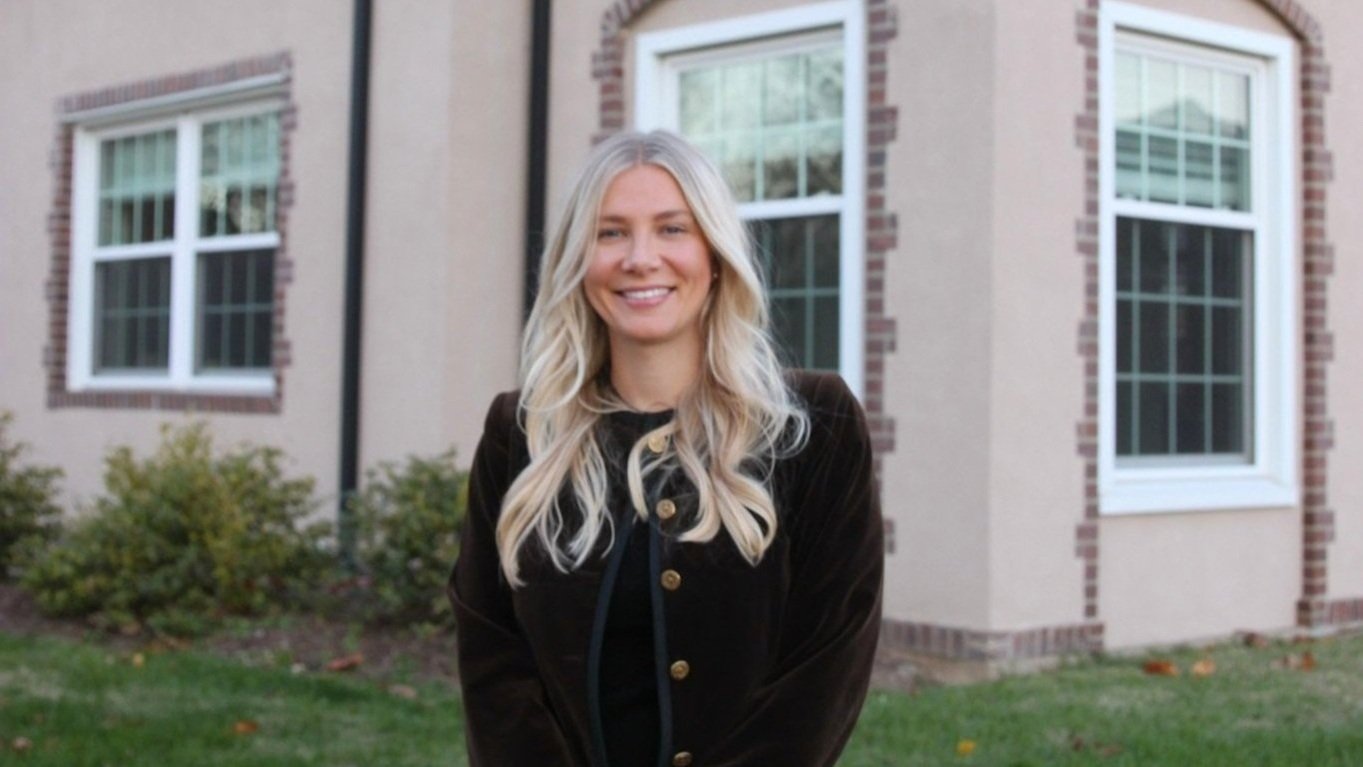
Today we’d like to introduce you to Anna-Spencer O’Hara.
Hi Anna-Spencer, so excited to have you on the platform. So before we get into questions about your work-life, maybe you can bring our readers up to speed on your story and how you got to where you are today?
My path into speech-language pathology began long before I knew the profession had a name. I grew up in a home where therapy sessions happened at our kitchen table and in our living room several times a week. My younger brother, John, was born with cerebral palsy and other serious medical complications following an intrauterine stroke. He used a wheelchair, required extensive medical care, and for many years was considered nonverbal. Therapists became part of the rhythm of our busy household — physical therapists supporting him step by step as they trekked up the front stairs, occupational therapists adapting food to make chewing more manageable, and speech therapists sitting across from him on the carpet, waiting patiently for a sound or an attempt at communication.
As a child, I would sit nearby and watch. Our house often felt like a small clinic. There were therapy balls in the corner, laminated picture cards on the kitchen counter, nurses in and out, and adaptive equipment designed especially for John woven into everyday routines. What struck me most was not the items around our house, though – it was the power of even one word. My brother could never speak in full sentences, but over time he learned to say many meaningful words. He could say “pretty please,” “cake,” (carrot cake was his go to), “I love you,” and – because we are from the south and it was his preferred sandwich – “pimiento cheese.” His words were powerful, to him, and to the many people who adored him. His favorite movie was Finding Nemo, and whenever he wanted to watch it, he would take a deep breath and say, “Nemoooo” with pride. Seeing that little clownfish find his way home became symbolic in our house; for John, having the word “Nemo” meant control and choice. It gave him autonomy.
My name, Anna-Spencer, is not the easiest for a child to pronounce. But my brother called me “nah.” He said it with certainty, and it was unmistakably directed at me. Even now, years after his passing, that approximation carries enormous weight. There were many times he could not tell us when something was wrong, but the few words he did have changed the quality of his life – and ours. Watching him gain access to language showed me, at a very young age, that communication is not a luxury. It is dignity. It is autonomy. It is connection.
Children with cerebral palsy often experience motor speech challenges due to muscle tone differences and impaired motor coordination. Many are labeled “nonverbal” early on, even though receptive language and cognitive skills may be stronger than their expressive abilities suggest. Even limited expressive language can significantly improve a child’s ability to participate across a variety of settings. Growing up inside that reality gave me a deep respect for the field long before I formally entered it.
Would you say it’s been a smooth road, and if not what are some of the biggest challenges you’ve faced along the way?
It was not a straight path. I loved math growing up and thrived in structured, analytical environments. When I entered the University of North Carolina as a freshman, I fully intended to pursue business, economics, or engineering. I loved numbers because they were predictable; there was comfort in the certainty of following a formula and getting a correct answer. I imagined myself in a career that was structured and analytical. During my freshman year, however, my younger brother passed away. Grief has a way of shifting your internal compass.
I remember sitting in an introductory economics lecture hall surrounded by hundreds of students, staring at graphs and supply curves, and realizing that the work felt distant from the parts of life that now felt most urgent and meaningful. I began to ask myself what kind of impact I wanted to have and what kind of work would feel aligned with the life I had lived and the experiences that had shaped me. I started exploring health sciences courses and volunteering in local clinical settings.
The pivot into speech and hearing sciences wasn’t immediate or effortless. It involved prerequisite coursework, observation hours, altered timelines, and reimagining the career identity I had built around being the math person. But the further I moved into communication sciences and disorders, the more everything clicked. I saw the science – neurology, anatomy, motor learning theory – and I saw the human side. It was the first time my analytical strengths and my lived experience felt integrated. I had to learn to tolerate ambiguity – therapy progress is not linear, and human development does not follow a formula. That shift challenged me, but it ultimately deepened my resilience.
From a factual standpoint, career changes during undergraduate years are extremely common; national data shows a majority of students change majors at least once. Grief during college years can certainly impact this. The field of speech-language pathology itself is grounded in both hard science – including neuroanatomy, acoustics, and physiology — and relational practice. Clinicians must understand both the physiological subsystems of speech – respiration, phonation, resonance, articulation – and the cognitive-linguistic processes underlying language. It is a profession that sits at the intersection of science and humanity. It requires graduate-level clinical training, supervised practicum hours, and national certification. That blend of science and humanity ultimately drew me in. What felt like a detour became the most purposeful career path I could have taken.
As you know, we’re big fans of Small Talk Speech Therapy. For our readers who might not be as familiar what can you tell them about the brand?
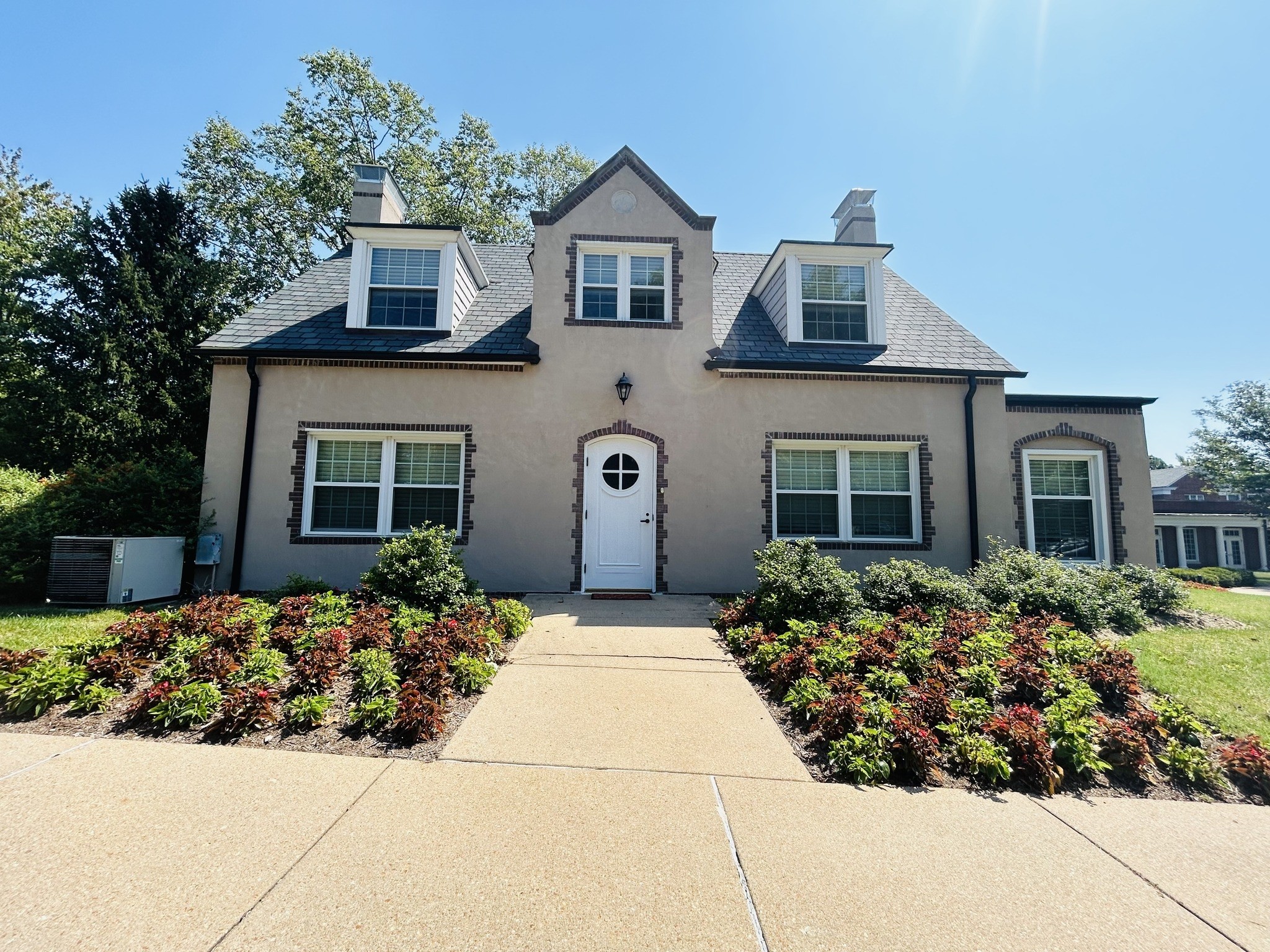
I founded Small Talk with the vision of creating a pediatric speech therapy practice that treats the whole child, not just isolated sounds or language. We serve children from infancy through adolescence and work with a wide range of needs, including motor speech disorders, articulation delays, language disorders, and social communication differences. From the moment families walk through our doors, our goal is to create a space that feels calm, relational, and empowering.
What sets us apart is our holistic and motor-based framework. We incorporate a specialized approach called PROMPT (Prompts for Restructuring Oral Muscular Phonetic Targets), developed by speech-language pathologist Deborah Hayden. PROMPT is a tactile-kinesthetic method that uses structured touch cues to support jaw stability, lip and cheek engagement, tongue movement, and coordinated speech sequencing. Rather than selecting sounds purely based on developmental norms, we analyze the entire motor speech subsystem. We ask questions such as: Does the child have sufficient muscle tone for breath support? Is the jaw stable enough for fine graded movements? Can the tongue dissociate from the jaw? Are movements coordinated across a longer phrase?
In addition to motor system analysis, we consider three interrelated domains: social-emotional regulation, physical-sensory capacity, and cognitive-linguistic skills. A child must feel safe and motivated in order to take risks. Their body and muscles must be capable of executing precise movements. Their language system must be able to understand the target and ready to support it. Therapy is never one dimensional. If a child is dysregulated, we address regulation. If receptive language is limited, we simplify linguistic demands. Our therapy is dynamic and individualized.
Research in motor learning supports high-frequency, meaningful practice embedded in functional communication. Tactile cueing can enhance proprioceptive feedback, which is often reduced in children with motor speech disorders. We are proud to blend evidence-based practice with support and connection. We want readers to know that our services are not just about achieving appropriate speech and language skills; they are about helping children be understood and confident in their communication.
If you had to, what characteristic of yours would you give the most credit to?
Patience and flexibility have been foundational to my work. Communication is one of the most essential human capacities. It is how we ask for help when we are lost, tell a doctor what hurts, express love, share humor, confess disappointment, or describe something beautiful. When you are working on something so fundamental, progress cannot be rushed. I have sat across from children who needed weeks to tolerate practicing a new sound and months to coordinate it into a two word phrase. Patience is not passive; it is an active commitment to steady, thoughtful support.
Flexibility has been equally important. Progress in speech therapy is rarely linear. A child may produce a word perfectly one day and struggle with it the next. No therapy session unfolds exactly as planned. A child may arrive tired, overstimulated, or emotionally overwhelmed. I might intend to target motor speech sequencing, but realize within minutes that the child first needs regulation and connection. As someone who once gravitated toward the predictability of math, learning to pivot in real time was a growth experience. Therapy requires clinical reasoning on the spot – adjusting the cognitive load, modifying tactile support, or shifting the intended goal entirely.
Effective speech-language pathologists rely on adaptability, cultural humility, and collaboration with families. Consistency matters, but so does compassion. Families run late. Home practice is imperfect. Life is complicated. We support family-centered care emphasizing partnership rather than judgment. I believe everyone is doing their best, families and clinicians alike. Approaching each session with patience, flexibility, and respect allows meaningful progress to unfold over time.
Ultimately, success in speech language pathology is not only measured in mastered sounds and language goals, but in moments of connection – when a child says something new and realizes they have been understood.
Pricing:
- Private pay practice (do not take insurance)
Contact Info:
- Website: https://www.smalltalkSTL.com