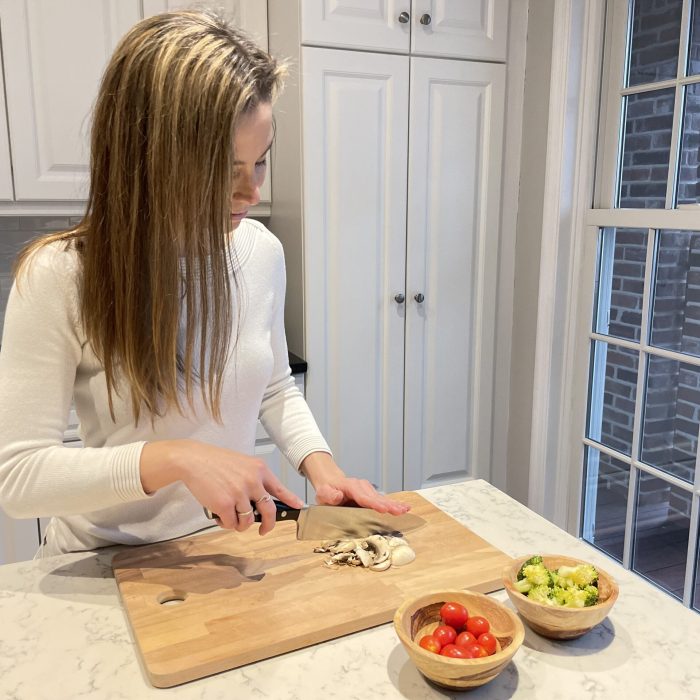
Today we’d like to introduce you to Dr. Nicole Shen, MD.
Alright, so thank you so much for sharing your story and insight with our readers. To kick things off, can you tell us a bit about how you got started?
I often tell people that the story of Easy Belly began long before I ever knew I wanted to become a gastroenterologist. It began with curiosity—deep, persistent curiosity about people, about health, about why the body works the way it does, and why sometimes it doesn’t. That curiosity carried me from St. Louis to Nashville, New York City, and ultimately back home again, where I would create the kind of digestive health practice I always wished existed.
I left St. Louis after high school to attend Vanderbilt University, where I studied Chemistry. I loved science, but I loved people even more, and I found myself drawn to the human stories that exist within medicine. After Vanderbilt, I attended medical school at the University of Missouri–Columbia. By then, my passion for gastroenterology was taking shape, and I knew I wanted to train in an environment that would challenge me at the highest level.
That decision led me to New York Presbyterian Hospital–Weill Cornell Medical Center, where I completed my internal medicine residency and gastroenterology fellowship. My years in New York were some of the most formative of my life—intense, humbling, and transformative. I worked grueling hours with incredible colleagues, took care of patients from all walks of life, and learned to critically evaluate medical systems and how care is delivered. While in fellowship, I obtained my Master’s of Science in Clinical Epidemiology and Health Services Research, supported by NIH funding. That experience reshaped how I looked at healthcare: not just as an individual clinician, but as someone interested in designing a better healthcare model for patients.
After my GI fellowship, I continued on to a subspecialty fellowship in Transplant Hepatology at New York Presbyterian Hospital–Columbia University Medical Center. During this time, I cared for some of the sickest patients in the hospital, which taught me profound lessons about resilience, empathy, and the importance of clear, compassionate communication and effective healthcare delivery models. Overall, during the 7 years I spent training in New York, I was exposed to a diversity of patients, hospital systems, and a breathtaking range of human experience.
But New York also taught me something else: that the way outpatient GI care is structured often leaves patients overwhelmed, underserved, or stuck waiting far too long for help. I started to imagine a different kind of model—one where gastroenterology could be proactive, personal, integrated, and deeply human.
That seed eventually became Easy Belly.
Easy Belly is a gastroenterology clinic built to reimagine how digestive health care is delivered. Our mission is to make GI care accessible, streamlined, and genuinely supportive—blending traditional medical care with lifestyle, nutrition, and fitness-based interventions. We help patients understand their symptoms, feel prepared to take action, and learn about practical diet and lifestyle improvements that make day-to-day life better.
Many people with GI concerns struggle for months to see a specialist. In the meantime, they’re left searching online, navigating conflicting dietary advice, and trying to piece together solutions on their own. I wanted to change that. At Easy Belly, our goal is to fill the gap between “I don’t feel well” and “I finally found help.” We do this through personalized care, educational tools, and a practice philosophy rooted in accessibility, clarity, and encouragement.
One of the things that sets Easy Belly apart is our emphasis on education and small, sustainable behavioral change. From constipation and Irritable Bowel Syndrome (IBS) to metabolic liver disease, GI conditions often respond best to a blend of medical treatment and lifestyle and dietary shifts. But patients frequently tell me they feel overwhelmed by the information available—much of it contradicting, unrealistic, or not tailored to their specific needs. Our approach is to break things down into simple, actionable steps that help patients feel empowered instead of discouraged.
My own interest in whole-person care led me to complete a 200-hour yoga teacher training program after reading clinical research on how yoga helps treat constipation, IBS, and stress-related GI symptoms. Yoga is just one example of how lifestyle interventions can complement traditional medical care, and it has become a meaningful part of our programming at Easy Belly.
Ultimately, Easy Belly is a reflection of what I value most in medicine: compassionate listening, thoughtful care, personalized planning, and the belief that health should feel achievable—not overwhelming. I built Easy Belly because I wanted patients to feel supported the moment they walk through our doors or visit us online. My vision is to continue building a clinic that blends medicine, technology, nutrition, yoga and mindful living in a way that helps people feel—and live—better every single day.
We all face challenges, but looking back would you describe it as a relatively smooth road?
My journey through medicine, particularly my training in New York City, shaped much of who I am today—but it was also extremely challenging. The rigors of residency were unlike anything I had experienced. The hours were long, the emotional toll was real, and every day pushed me in ways I did not always feel prepared for. There were moments when I questioned whether I was strong enough, smart enough, or simply able to keep going. Those years taught me resilience, humility, and the ability to stay grounded in the “why” behind all the hard work: the patients.
Another challenge was deciding the direction of my career after finishing training. I was deeply immersed in the academic world and strongly considered staying on a research track. There is a certain prestige and structure to academic medicine that can feel like the natural “next step,” especially when you’ve spent years working toward it. But as time passed, I found myself craving a different kind of impact—something more personal, more patient-centered, and more aligned with who I was becoming both professionally and as a parent.
Choosing to step away from academic medicine was scary. It meant stepping off the track I had been on for nearly a decade and carving my own path instead. But it also meant coming home to St. Louis, being closer to family, and creating the space—emotionally and logistically—to launch Easy Belly.
Being a young woman in medicine presented its own set of challenges. Like many women in the field, I have experienced moments of doubt, instances where I felt underestimated, and situations where I had to work harder to be taken seriously. These experiences pushed me to become more confident in my voice, more assertive about my ideas, and more protective of the kind of environment I want to create for patients and for my team.
Then, of course, there is the challenge of starting a new business—an entirely different universe from clinical medicine. Creating something from the ground up required learning new skills, embracing uncertainty, and wearing more hats than I ever imagined. From legal structures to branding, from scheduling systems to clinical workflow design, I found myself navigating complexities far beyond my medical training. There were days when progress felt slow and when the road ahead felt impossibly long.
But every obstacle reinforced why I started this work in the first place. Every patient who felt heard, every person who finally found clarity after months of confusion, every moment when someone said, “I feel better, thank you”—those experiences made every challenge worth it. Easy Belly is still young, but it is growing, evolving, and becoming exactly the kind of space I dreamed it could be.
Great, so let’s talk business. Can you tell our readers more about what you do and what you think sets you apart from others?
At Easy Belly, our mission is to transform how patients experience GI care. We combine high-quality medical evaluation with lifestyle, nutrition, and fitness-based strategies, supported by a suite of digital tools that help patients navigate each step of their care journey. Our goal is to help every patient understand their symptoms, stay engaged with their plan, and feel empowered to make meaningful changes that improve their daily life.
If we knew you growing up, how would we have described you?
My story would not be complete without talking about where I come from. I was born and raised in St. Louis, and my connection to this city runs deep. Growing up, medicine was always part of the backdrop of my life. My father was a pulmonologist at BJC Missouri Baptist Medical Center, and my mother worked as a billing director for Mercy. Between the two of them, I saw both sides of healthcare—the clinical and the administrative—and I learned early on that caring for people is both a science and a service.
My parents taught me the value of hard work but also the importance of empathy. From my father, I learned how meaningful the physician-patient relationship can be. From my mother, I learned the importance of fairness, order, and the behind-the-scenes systems that allow healthcare to function. Together, they instilled in me a belief that showing up for people—really showing up—is one of the most valuable things you can do in life.
Growing up in St. Louis also gave me a strong sense of community. It’s the kind of place where people look out for one another, where relationships matter, and where roots feel like anchors. When I left for college and medical training, I didn’t know whether I would return. But by the time I became a parent, the pull toward home became unmistakable. I wanted my daughter to grow up with the same warmth, support, and connectedness that I experienced as a child.
Returning to St. Louis allowed me to bring all the knowledge and experience I gained elsewhere back to the city that raised me. It gave me the chance to build Easy Belly in a community I love, surrounded by people who supported me long before I ever became “Dr. Shen.” It’s meaningful to practice medicine here—not just because this is my home, but because the people I care for often remind me of the people who cared for me.
As Easy Belly continues to grow, my hope is that our practice becomes a place where patients feel both cared for and empowered, where digestive health is demystified, and where people feel connected—not just to their providers, but to their own wellbeing. My journey has taken me across the country and through some of the most intense environments in healthcare, but it has brought me right back to St. Louis, where I get to build something that reflects everything I’ve learned along the way.
Easy Belly is more than a clinic to me. It’s the culmination of my experiences, my values, my training, and my desire to help people feel better in their daily lives. And it’s just the beginning.
Pricing:
- Small month-to-month membership fee, which enables access to our expanded digital tools and services. This membership fee can be paid via FSA or HSA card depending on the patient’s plan.
- Appointments with Easy Belly are covered by insurance as an in-network provider for United Healthcare, Aetna, Cigna, and Anthem Bluecross Blueshield commercial plans.
Contact Info:
- Website: https://www.easybelly.com
- Instagram: https://www.instagram.com/easybelly_health