Today we’d like to introduce you to Wyatt Eikermann.
Hi Wyatt, thanks for joining us today. We’d love for you to start by introducing yourself.
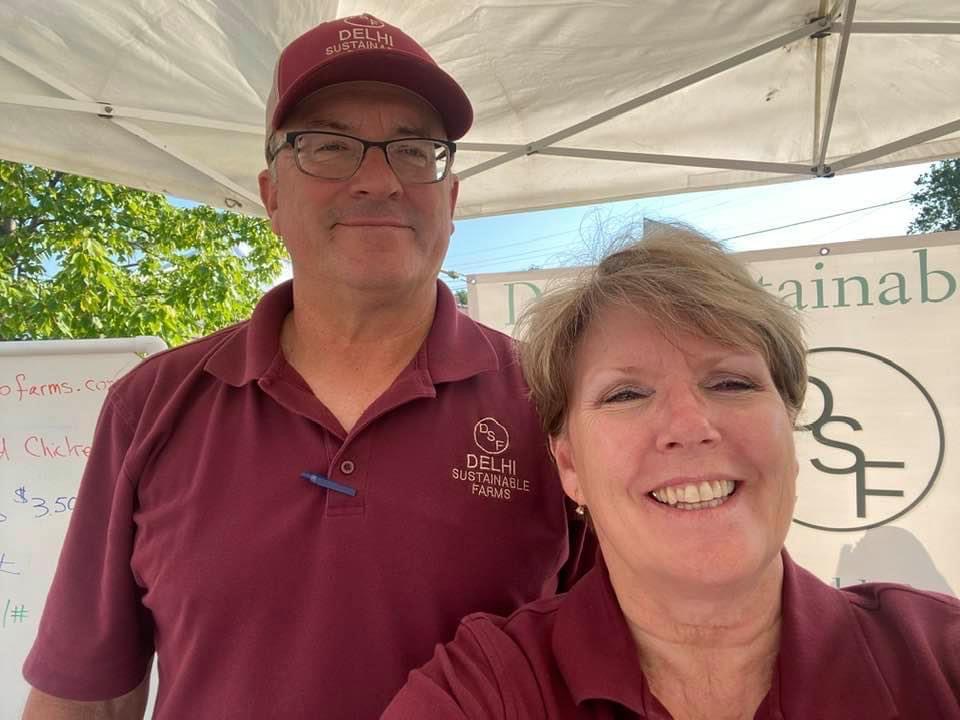
Our farm was founded in 1984 with the original 160 acres purchased by Lee Eikermann. The farm has gone through a few name changes and the acquisition of more property before finally becoming the 350-acre farm we know and love today. Our name changed to Delhi Sustainable Farms in 2019 to encompass our farm and mission.
Originally the farm was the typical cow/calf operation with just a few head of momma cows, called Eikermann Angus Farms. Lee built a house on the farm and moved the family there in 2001 where the Eikermann kids were raised. The kids have been active in the farming operation their entire lives. Growing up they were active members of the local 4-H club and FFA, raising their own market animals each year to sell at the local community fair.
Our farm is truly a family operation. We farm because we enjoy it immensely. Each member of the team works full-time, and we farm on the side. Today the farm has grown in the number of species that we have: cattle, sheep, meat chickens, laying hens, and honeybees. They all work symbiotically to help restore and sustain the land that we have.
We all face challenges, but looking back would you describe it as a relatively smooth road?
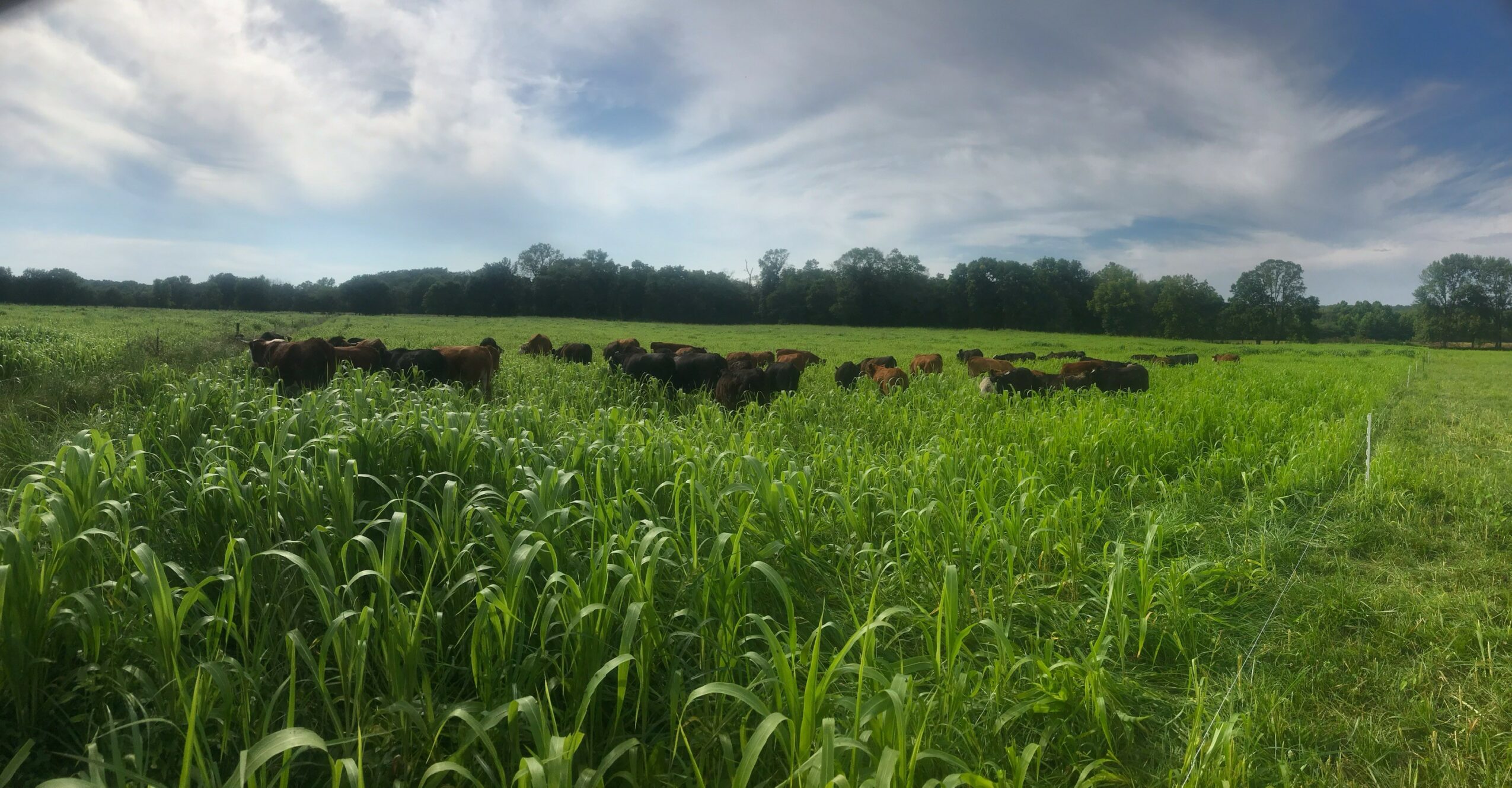
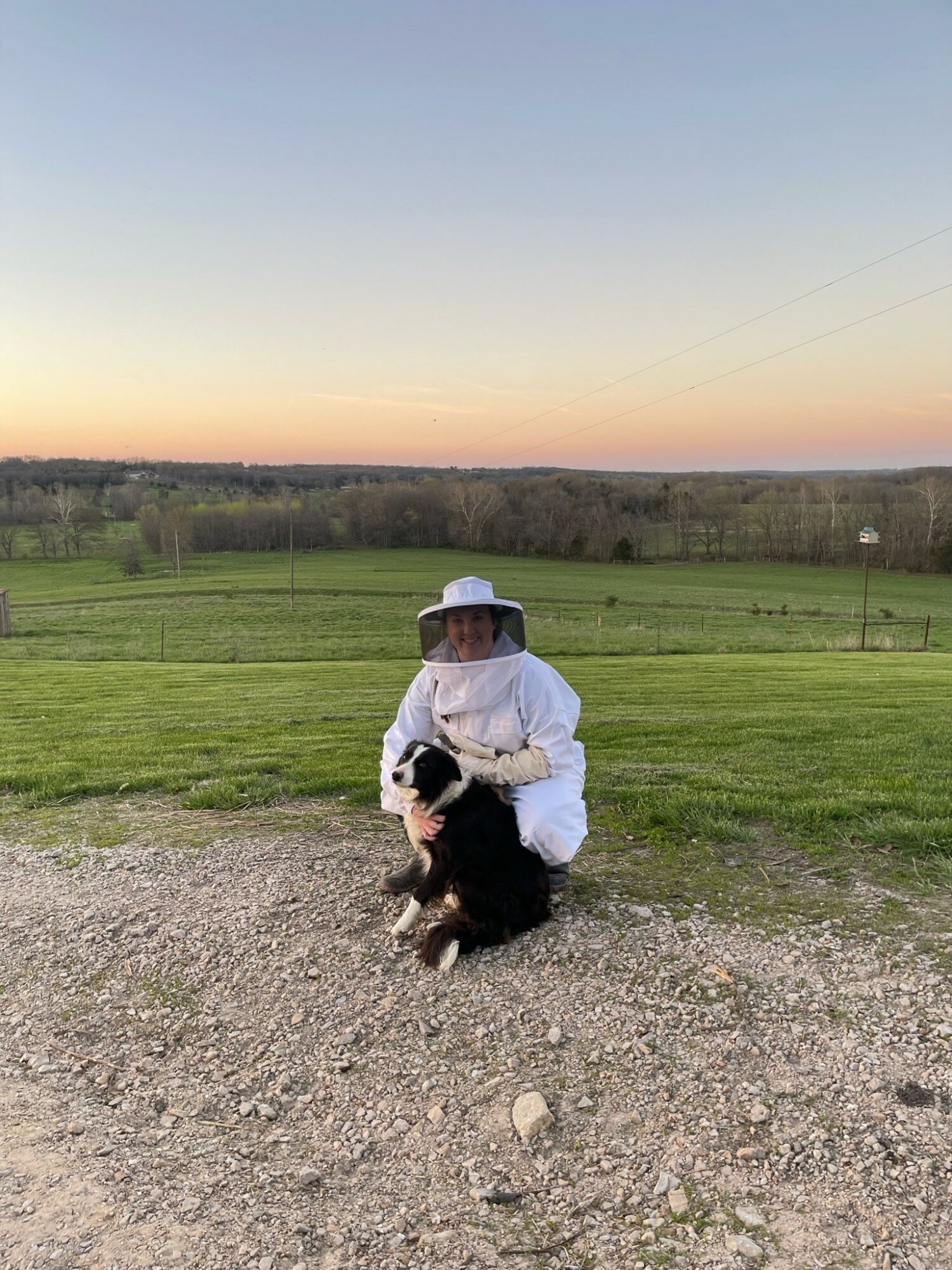
Nothing about farming is a smooth road. We have had many ups and downs along the way. Markets have crashed, and prices have increased. The changing climate and severe droughts have made things more difficult in the past several years. With our multi-species system we try to mitigate all of those different challenges. We have focused on soil health, which has helped with water retention. We have also started using a practice originally developed in Australia called “Keyline Plowing”, which helps increase root depth and allows the soil to hold more water. Additionally, we use intensive rotational grazing for our cattle. In this practice, our cattle only have access to part of the pasture at once (called a paddock). Rotational grazing is good for both the animals and the environment. It allows the soil to rest and recover and the cattle to have access to high nutritional grasses. Training the animals to rotate pasture and to respect the fencing takes time and patience. We also have three Border Collies – Libby, Trudy, and May, that help round up any stragglers.
These changes have been worth it, as our pastures are lush and green, especially compared to neighboring farms that have not incorporated sustainable farming practices.
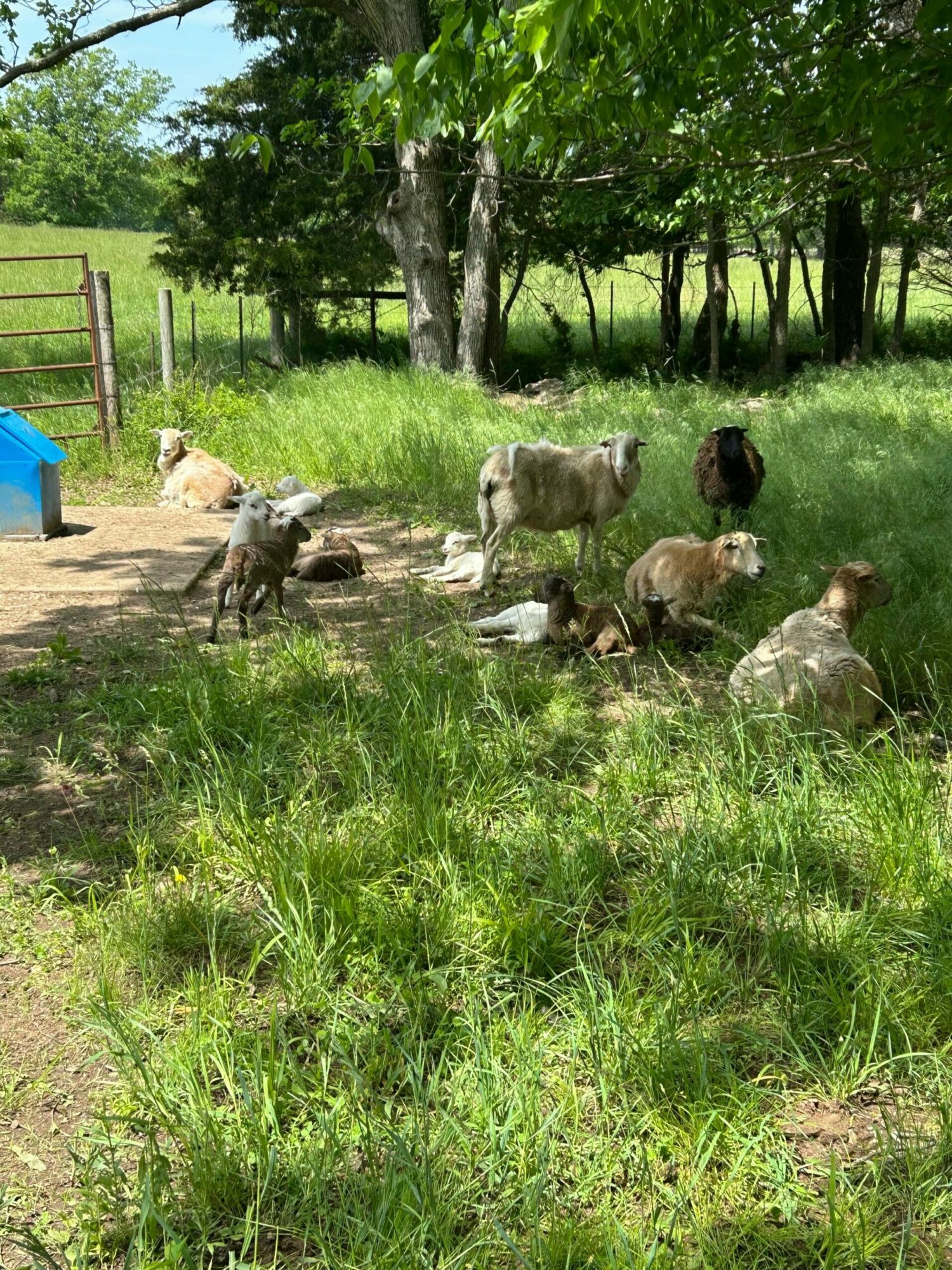
There have also been challenges every time we add a new species or practice to our farm. Since we were primarily a cattle farm, raising meat chicken and sheep have added their own challenges. We are learning that each species has their own set of health requirements which keeps us on our toes.
Alright, so let’s switch gears a bit and talk business. What should we know?
Since 2001 the farm has grown and gained a few more cows but maintained the original cow/calf operation. We started implementing rotational grazing with the cows in 2005. There were a few years of trial and error before we got the system down, but now we are able to work the grazing system seamlessly.
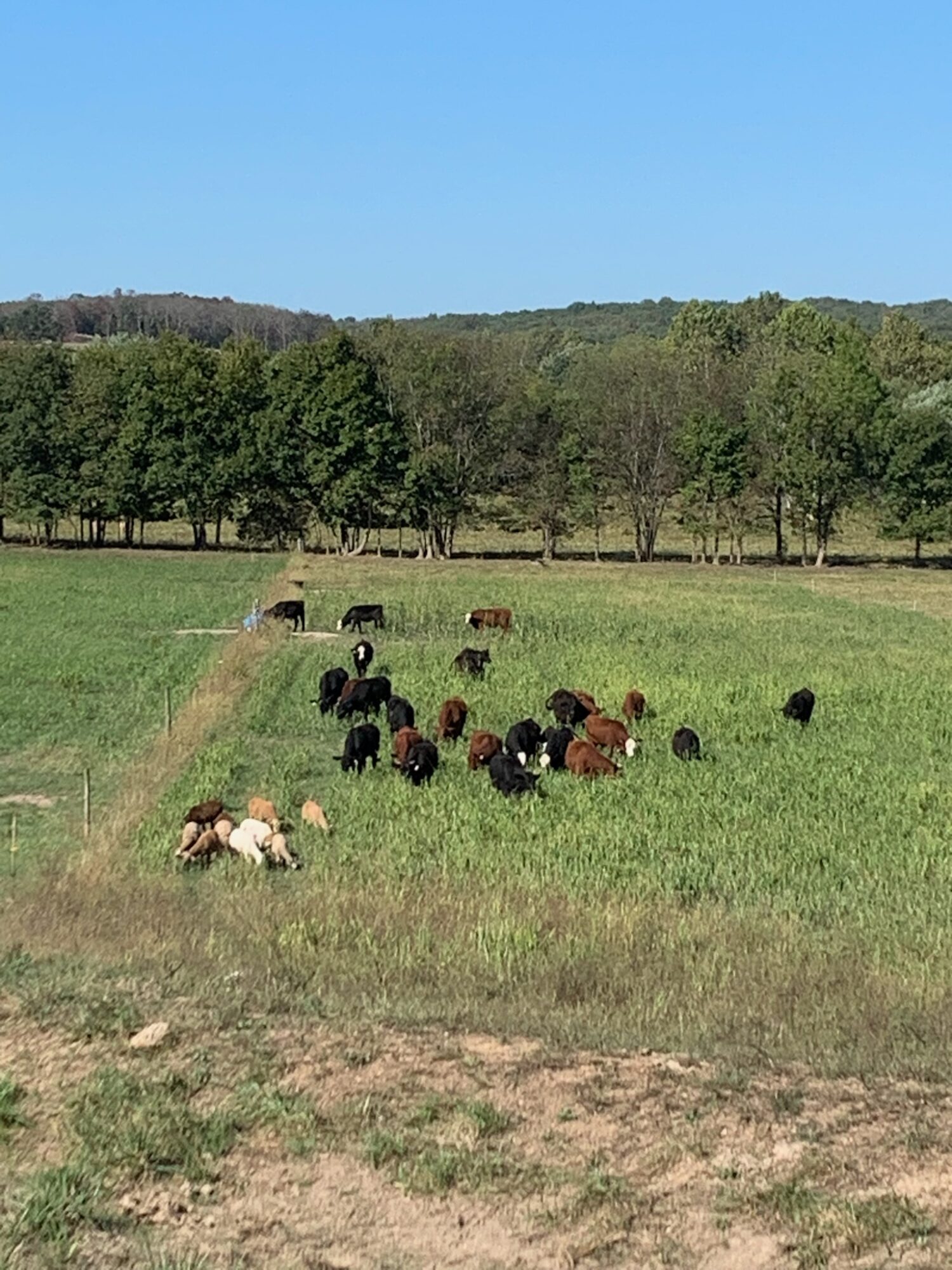
Rotational grazing improves the health of the pasture grasses and soil while also allowing more cattle to be raised per acre. We were able to maximize the amount of forage grown on healthier soils with the implementation of the grazing system. Our 160 head of cattle are happy, and the pastures thrive with little assistance. Our sheep now graze right alongside the cattle and are mixed together into the same group that we call the “flerd” which is the combination of flock and herd.
Our cattle consume a high protein diet. In the spring season our cattle graze on forage oats, abundant clover, and orchard grass. Throughout the summer months we switch the pastures to sorghum-sudan grass, which provides an even higher protein content for finishing the beef. Our beef are truly grass-fed and do not get fed corn or grain. As a result, the meat is healthier and higher in nutrients and omega-3s compared to grain-fed or grain-finished beef.
We have been raising the best quality cattle in the area for years, and we have several repeat customers who return to purchase our grass-fed beef. Even our processor doesn’t believe how we are able to get as much fat onto our beef as we do. Our meat has a better flavor, is full of omega-3 fatty acids, antioxidants, and has high quality marbling.
After researching sustainable farming practices, we decided to start raising pasture-raised chickens. This practice yields high-quality poultry while also using sustainable practices. I’ve spent many hours researching pastured-raised chickens and have modeled the system after Joel Salatin.
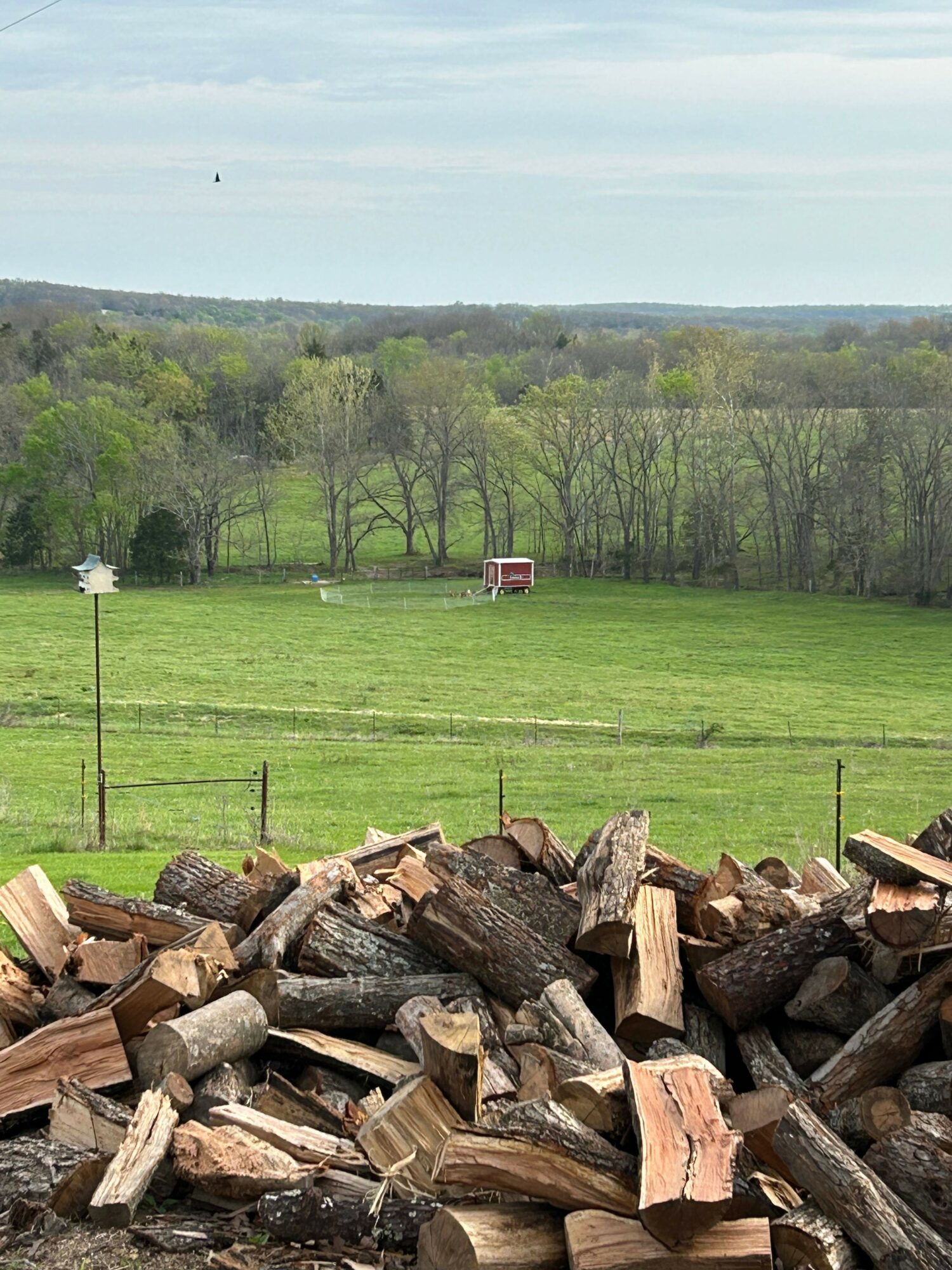
From spring to fall, the chickens are raised in the Salatin chicken tractors, which are moved daily to give the chickens fresh pasture and bugs to eat. Chickens are not able to survive solely on a plant based diet, so we do have to supplement their diet with feed, free of antibiotics. The feed is a corn-soybean mix packed full of all the vitamins and minerals the chickens can’t get from the grass. The chickens are rotated through the same pastures as the cows, which helps control the insect levels and fertilizes the soil.
The laying hens are also in a mobile chicken house in the pasture. The chicken house was built with a wire floor to assist with fertilization. We have automated the house with solar-powered devices. The nest box, where the hens lay their eggs, opens every morning at 6AM and closes at 5PM. We use a roll away nest box which keeps the eggs perfectly clean so they don’t need to be washed.
The chicken house also has an automatic door that opens every morning at 7AM and closes at 8:30PM. This keeps the chickens safe from predators at night.
Every animal on our farm lives a great life and is well cared for. They thrive living together and each serve a purpose, promoting farm biodiversity and environmental health.
Contact Info:
- Website: https://www.delhisustainablefarms.com
- Instagram: https://www.instagram.com/delhisustainablefarm/
- Facebook: https://www.facebook.com/DelhiSF/
- Youtube: https://www.youtube.com/@delhisustainablefarms2477