Today we’d like to introduce you to Santiago Navarro.
Hi Santiago, it’s an honor to have you on the platform. Thanks for taking the time to share your story with us – to start maybe you can share some of your backstory with our readers?
I was born and raised in Quito, Ecuador, where I developed an early curiosity about science, nature, and how innovation can improve people’s lives. That passion led me to pursue studies in plant biology and molecular biology, eventually bringing me to St Louis more than two decades ago.
Today, I work as an innovation scientist at Bayer, where I help develop technologies that improve agriculture, enhance crop productivity, and contribute to global food security. Throughout my career, I have been driven by the belief that science can create meaningful solutions for some of society’s most important challenges.
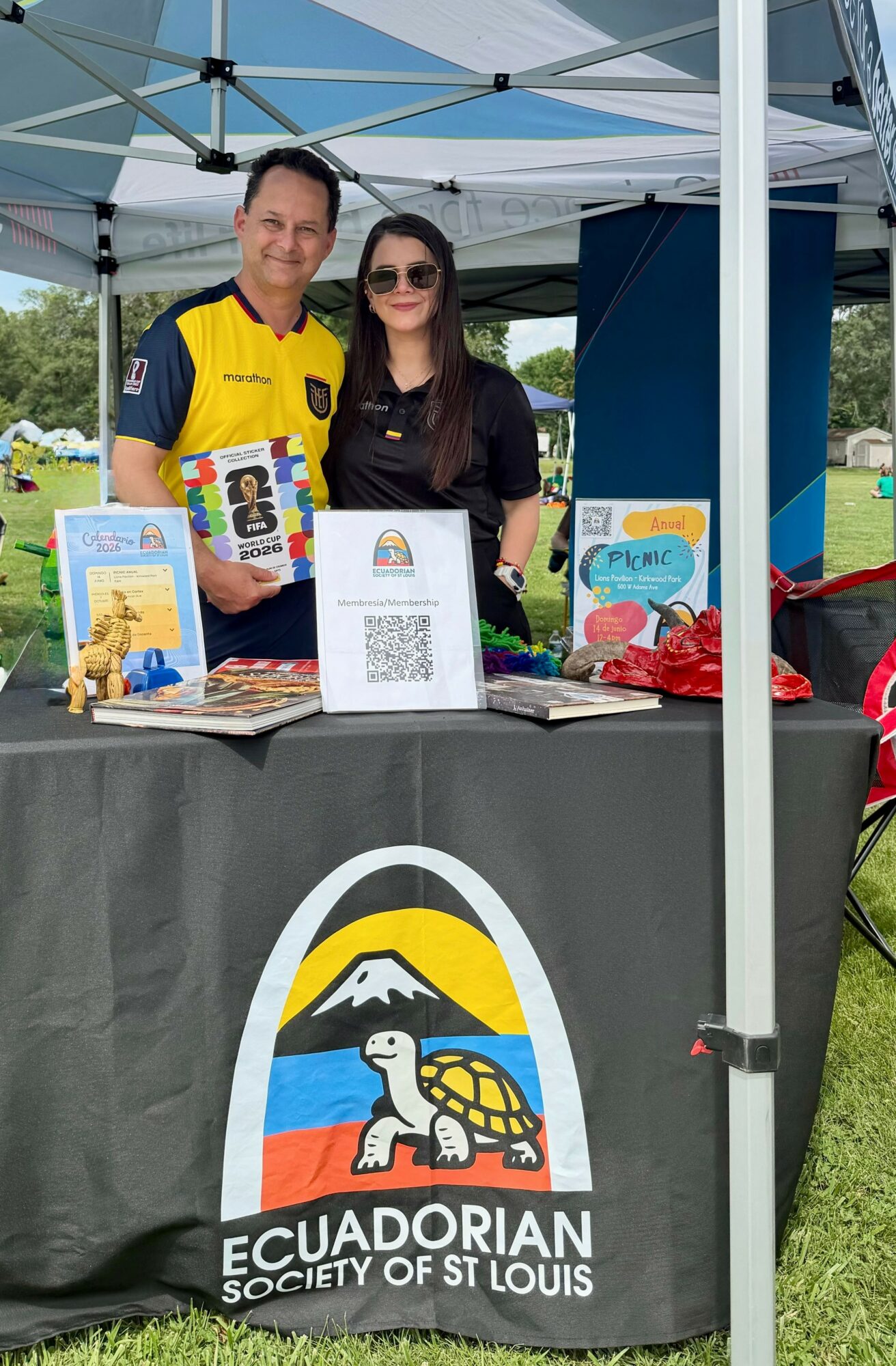
At the same time, I have remained deeply connected to my Ecuadorian roots and committed to serving my community. I currently serve as President of the Ecuadorian Society of Metropolitan St. Louis, where we promote Ecuadorian culture, educational opportunities, scholarships, and community engagement. I also serve as Chair of the Hispanic Chamber of Commerce Foundation, working alongside community leaders and partners to expand leadership development, educational access, and economic opportunity throughout the St. Louis region.
Looking back, my journey has been shaped by the opportunities others created for me, and I see leadership as a chance to help create those same opportunities for others. Whether through science, education, or community service, my goal is to leave a positive impact and help build a stronger, more inclusive future.
I’m sure it wasn’t obstacle-free, but would you say the journey has been fairly smooth so far?
Certainly not. Like many people, finding a career that truly aligned with my passions took time. Early in my journey, I was fortunate to have mentors who saw potential in me before I fully saw it in myself. One of those people was Steve Malcolm, who encouraged me to pursue graduate studies and helped me recognize that my curiosity and love of problem-solving could become a meaningful career.
Building confidence didn’t happen overnight. It came through years of learning, overcoming setbacks, and discovering where I could make the greatest impact. Along the way, I learned that one of my greatest strengths is asking questions, connecting ideas, and finding solutions to complex challenges.
As my career evolved, I realized that my passion extended beyond science. I developed a deep commitment to serving my community—whether in St. Louis, across the United States, or throughout Latin America. I came to understand that creating positive change doesn’t always require grand gestures; sometimes it’s about contributing your own grain of sand and helping others along the way.
Today, one of the things I am most proud of is being able to use my experiences, culture, and languages to build bridges between people. As an immigrant, scientist, and community leader, I have the opportunity to connect different worlds, foster understanding, and help create opportunities for others. That has become one of the most rewarding parts of my journey.
Thanks for sharing that. So, maybe next you can tell us a bit more about your work?
Science has always appealed to me because of a simple question: how do things work? That curiosity has guided much of my career and continues to motivate me today.
As a cell biologist, I study how cells function and how they produce proteins—the molecular machines that carry out many of life’s essential processes. Using advanced imaging technologies, I can observe cells in action, gaining insights into how proteins are made, where they go, and how they perform their functions. This allows us to better understand biological systems and identify opportunities to improve them.
A major focus of my work is making proteins more specific and more effective at what we want them to do in plants. By understanding their function and optimizing their performance, we can develop traits that help plants better withstand challenges such as insect pests. These innovations help protect crop yields, improve agricultural productivity, and support farmers in producing more food with fewer losses.
What excites me most is that the work happens at a microscopic scale, but the impact is global. The proteins we study in a laboratory can ultimately contribute to more resilient crops, improved food security, and more sustainable agricultural systems. For me, it is incredibly rewarding to know that the curiosity that led me to ask how things work can help create solutions that benefit people around the world.
Alright, so to wrap up, is there anything else you’d like to share with us?
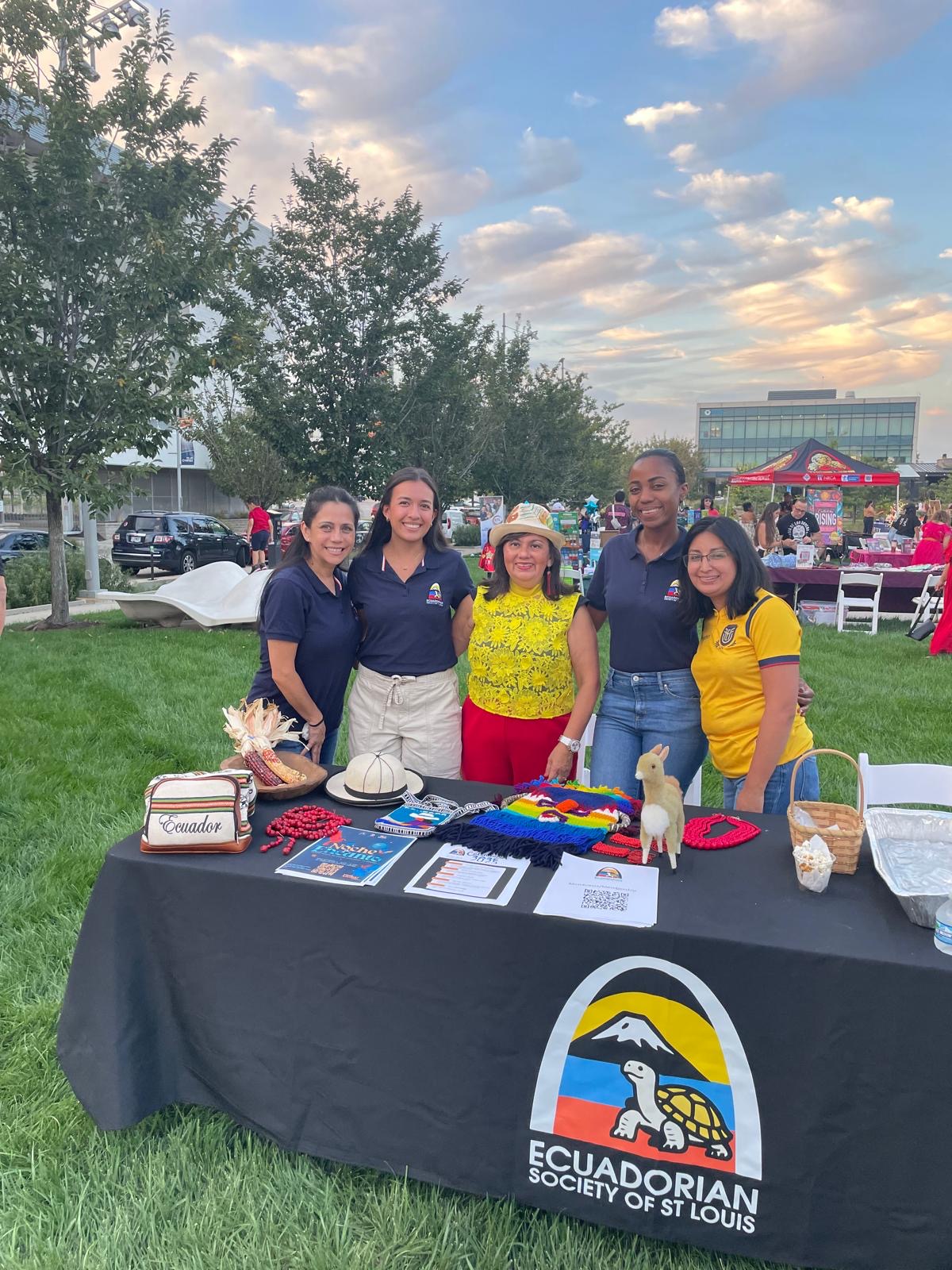
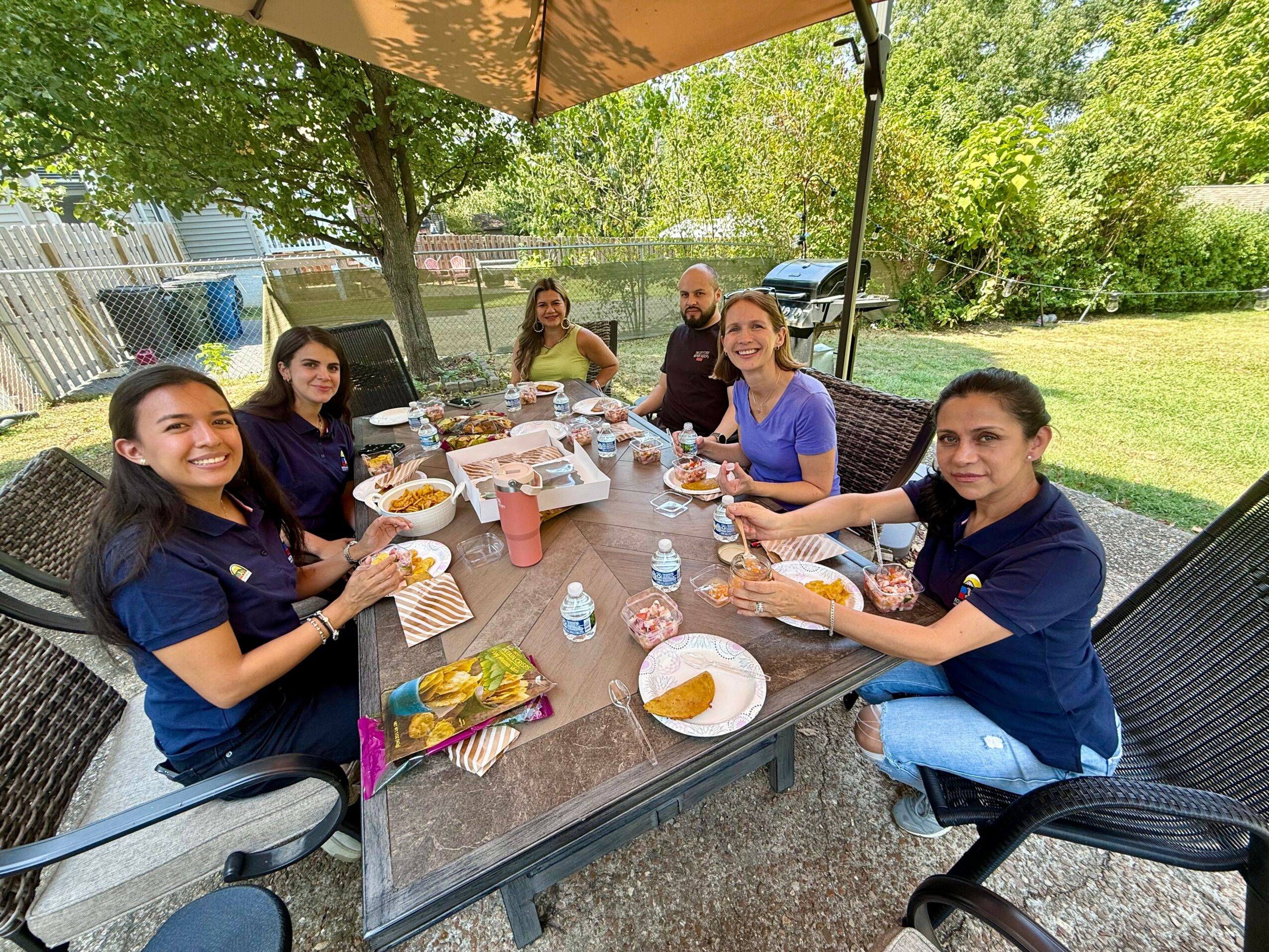
While science has allowed me to make an impact through agriculture, community service has given me another way to contribute. Through the Ecuadorian Society of Metropolitan St. Louis (ESSL), I have the privilege of helping build bridges between Ecuador and St. Louis, sharing the best of both communities and creating opportunities for people to learn, grow, and connect.
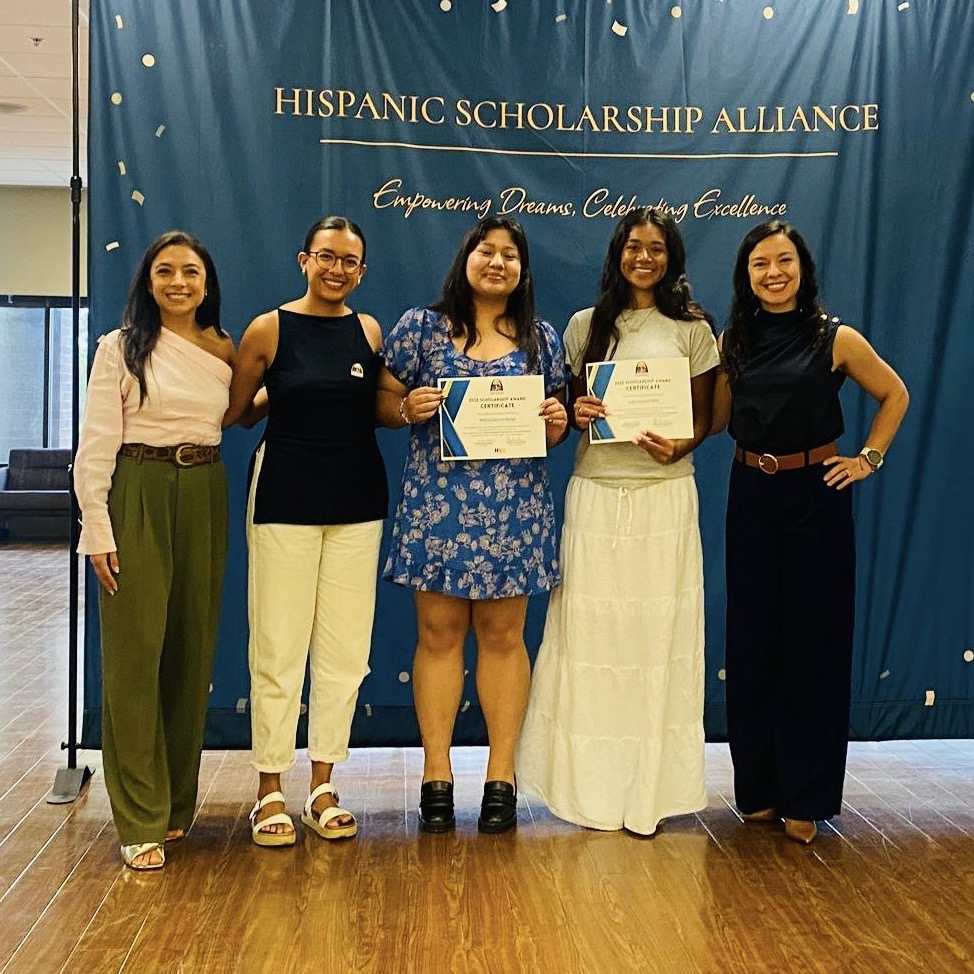
Our mission goes beyond celebrating culture. We invest in people. Through scholarships, we support high school students, college students, and professionals pursuing their educational and leadership goals. Through mini-grants and exchange opportunities, we help foster research, educational, and cultural connections between Ecuador and organizations in the St. Louis region.
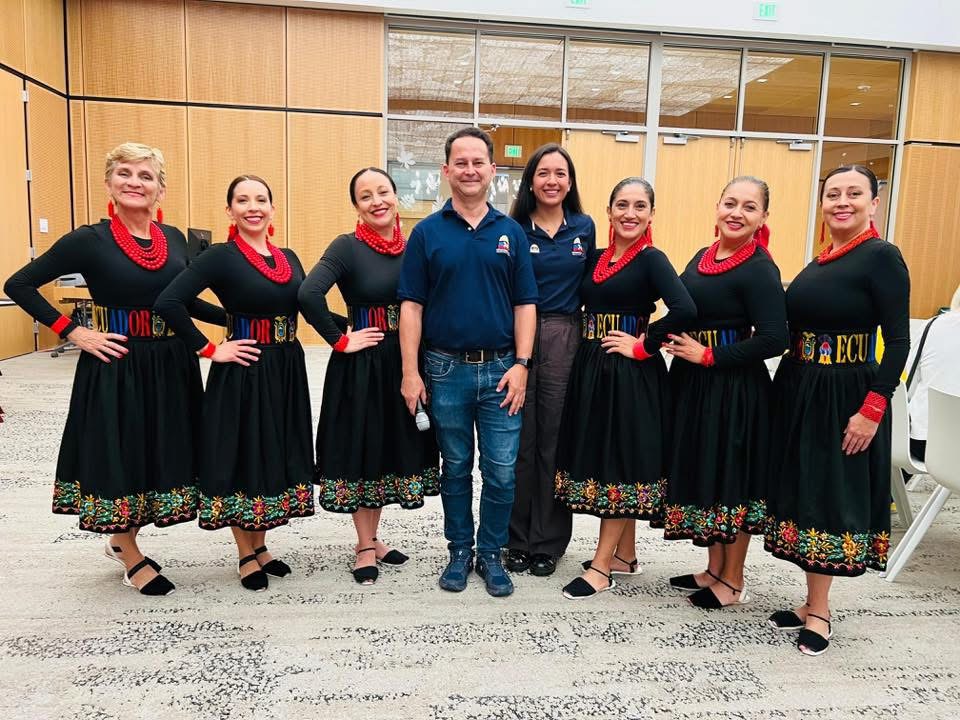
We also believe that culture is one of the most powerful ways to bring people together. Through partnerships with groups like Sumak Kamari, school programs, community events, and cultural presentations, we share Ecuador’s rich traditions, history, and heritage with our neighbors. At the same time, we create opportunities for Ecuadorians to become more engaged in the civic and cultural life of St. Louis.
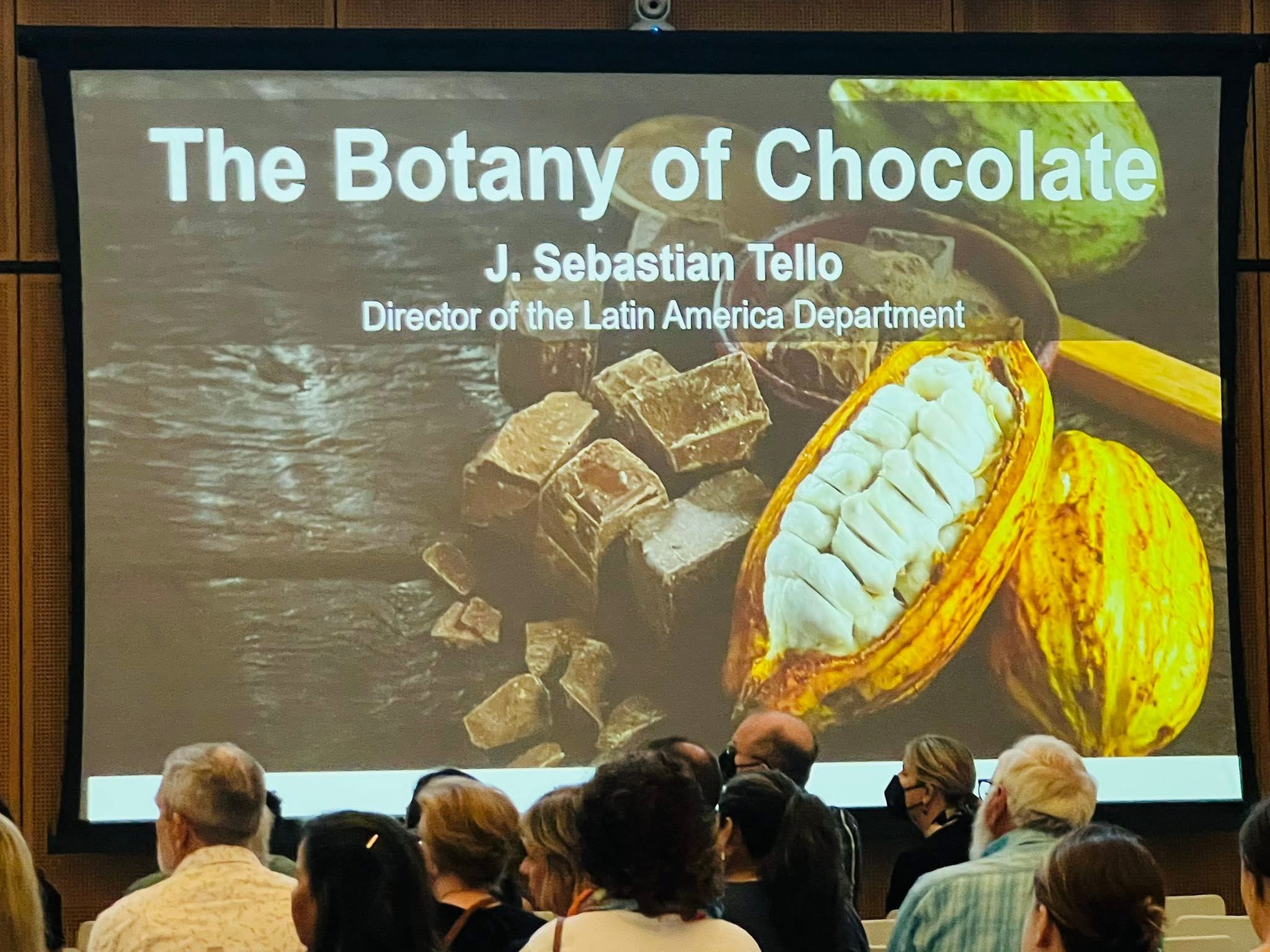
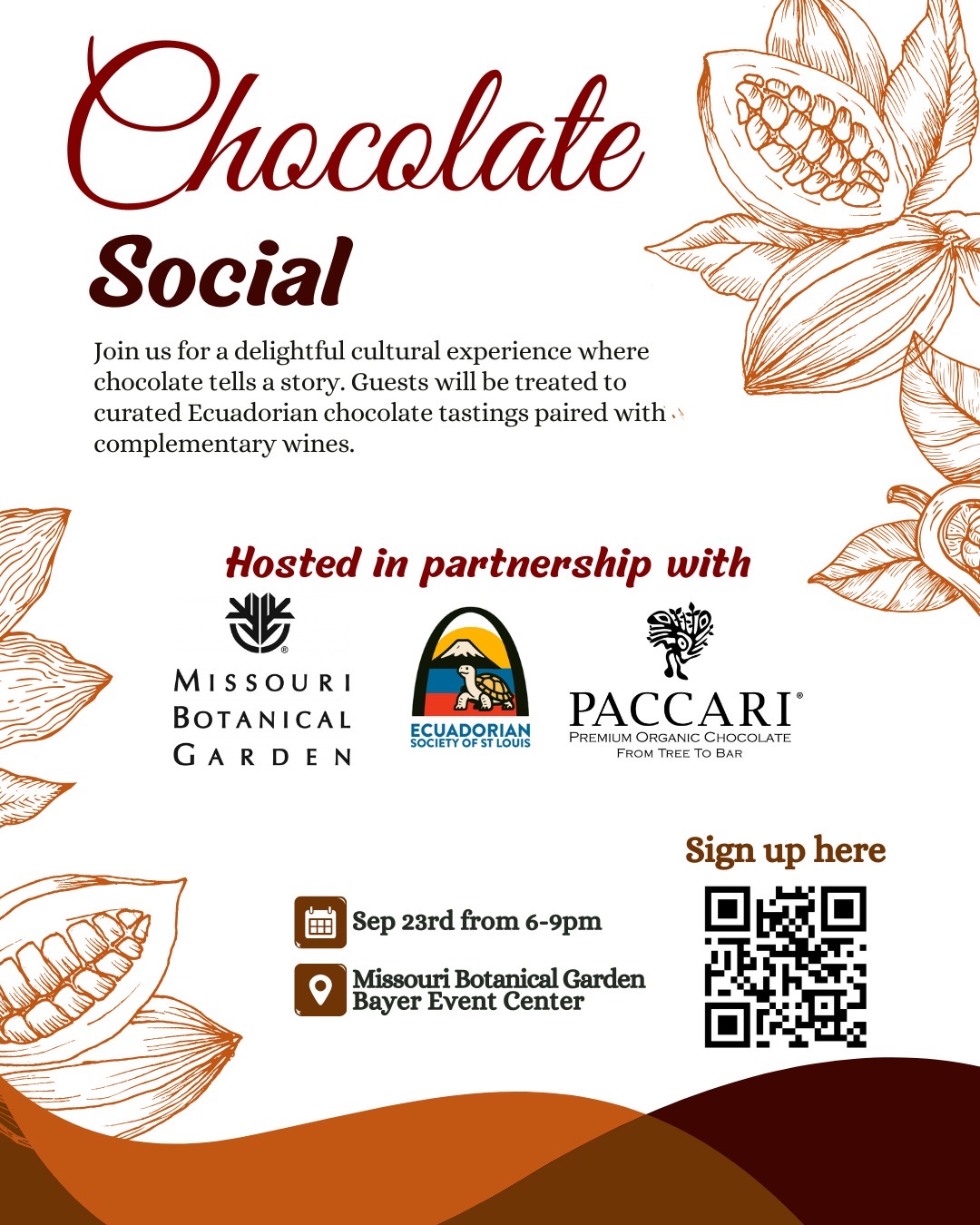
One of my favorite examples was our Chocolate Social at the Missouri Botanical Garden. The event brought together botany, culture, science, and community in a truly unique way. Guests experienced Ecuador’s world-renowned specialty cacao through premium chocolates, learned about the biodiversity that makes Ecuador so extraordinary, and enjoyed thoughtfully paired wines in one of St. Louis’ most iconic institutions. It was more than a tasting—it was an opportunity to tell Ecuador’s story through its flavors, landscapes, and people.
For me, that is what ESSL is all about: creating connections, expanding opportunities, and building lasting bridges between Ecuador and St. Louis. Whether through science, education, leadership development, or cultural exchange, our goal is simple—to leave both communities stronger because of the relationships we build between them.
Contact Info:
- Website: https://ecuadorianstl.org/
- Instagram: https://www.instagram.com/ecuadorianstl
- Facebook: https://www.facebook.com/share/1DwrheNUij/?mibextid=wwXIfr
- LinkedIn: https://www.linkedin.com/in/ecuadorianstl