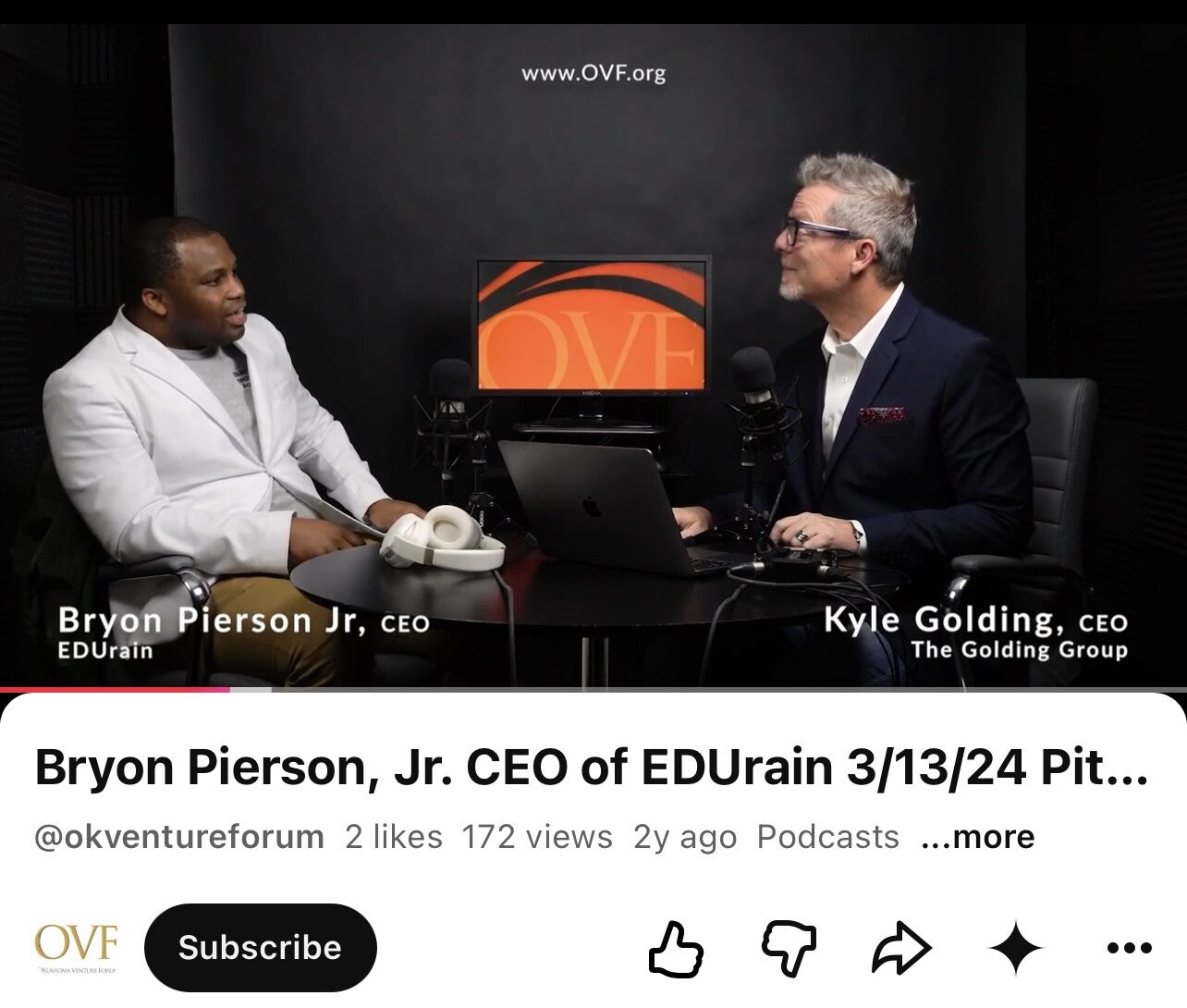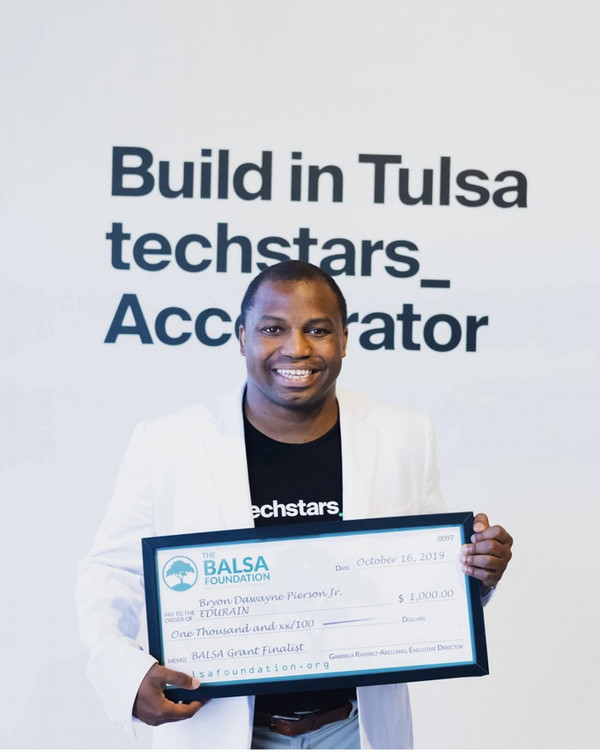
Today we’d like to introduce you to Bryon Pierson.
Hi Bryon, thanks for sharing your story with us. To start, maybe you can tell our readers some of your backstory.
Growing up in foster care taught me early that stability is not something everyone gets to take for granted. At 15, I fought for independence through court emancipation, and by the time I got to college, I already knew I was going to have to figure a lot of things out on my own.
I paid my own way through school, worked while I was enrolled, and ended up taking on more than $60,000 in student debt. A lot of that came from trying to stay housed and keep moving forward. I learned about financial aid, rent, roommates, leases, and college survival because I had to—not because I planned to build a company around it one day.
I started college at Lincoln College as a pre-nursing student because I wanted to help people. While I was there, I earned my associate degree, wrestled on the varsity team, worked as a Resident Hall Assistant, and started a student organization called Purple Reign. Looking back, that was probably my first real entrepreneurial experience. I had an idea, got people involved, and had to convince others that it was worth supporting. Lincoln College also gave me some of my first direct experience with student housing and the problems students deal with outside the classroom.
When I transferred to SIUE, I planned to keep going in nursing, but that path did not work out the way I expected. I struggled in some of the science courses and had to be honest with myself about where my strengths were. I eventually changed my major to Political Science and added a minor in Psychology. That ended up being one of the best decisions I made. I graduated from SIUE in 2018 with a Bachelor of Science in Political Science and a minor in Psychology.
At SIUE, I got very involved in student leadership. I served as President of the Gay-Straight Alliance, Secretary of the College Democrats, helped start Student Action, and participated in the Political Science Association. Those experiences taught me how to organize people, advocate for students, build relationships, and work with people who did not always agree with me.
They also helped me understand that students do not succeed because of academics alone.
A student can be smart and motivated, but if they do not know where they are going to live, cannot afford rent, do not have food, or do not feel safe, it becomes much harder to stay focused and finish school. Some students have parents they can call. Some have professors, advisors, friends, mentors, or campus staff who step in. Others are trying to create that support system from scratch.
That was my experience.
My senior research project at SIUE was called The Serenity Plan. I named it after my younger sister, Serenity-Rain, who passed away when she was only a year and a half old. I wanted her name to be connected to something that would keep helping people.
The project focused on how colleges could improve enrollment, retention, and student success by building stronger support systems, especially for LGBTQIA+ students and other students who are often overlooked. As I did the research, I kept coming back to housing.
Housing affects everything. It affects whether a student can sleep, study, get to class, manage stress, and stay enrolled. That was not just something I found in research. I had lived it.
During college, I moved seven times and lived with 22 different roommates. I worked long hours waiting tables at Red Lobster in Fairview Heights and The Pasta House in Edwardsville to pay rent. I had trouble qualifying for housing because I did not have a parent or co-signer. Like a lot of students, I used Facebook groups to find roommates because there was no trusted, college-supported option.
That is where EDUrain came from.
The name is personal. “EDU” stands for education, and “Rain” comes from my sister’s name, Serenity-Rain. I wanted her name to live on through something that helps students build more stable lives. Every time someone says EDUrain, they are also saying part of her name.
I officially launched EDUrain in 2022, but the company had been forming for years through my own housing struggles, my research, my work in higher education, and the people who helped me along the way.
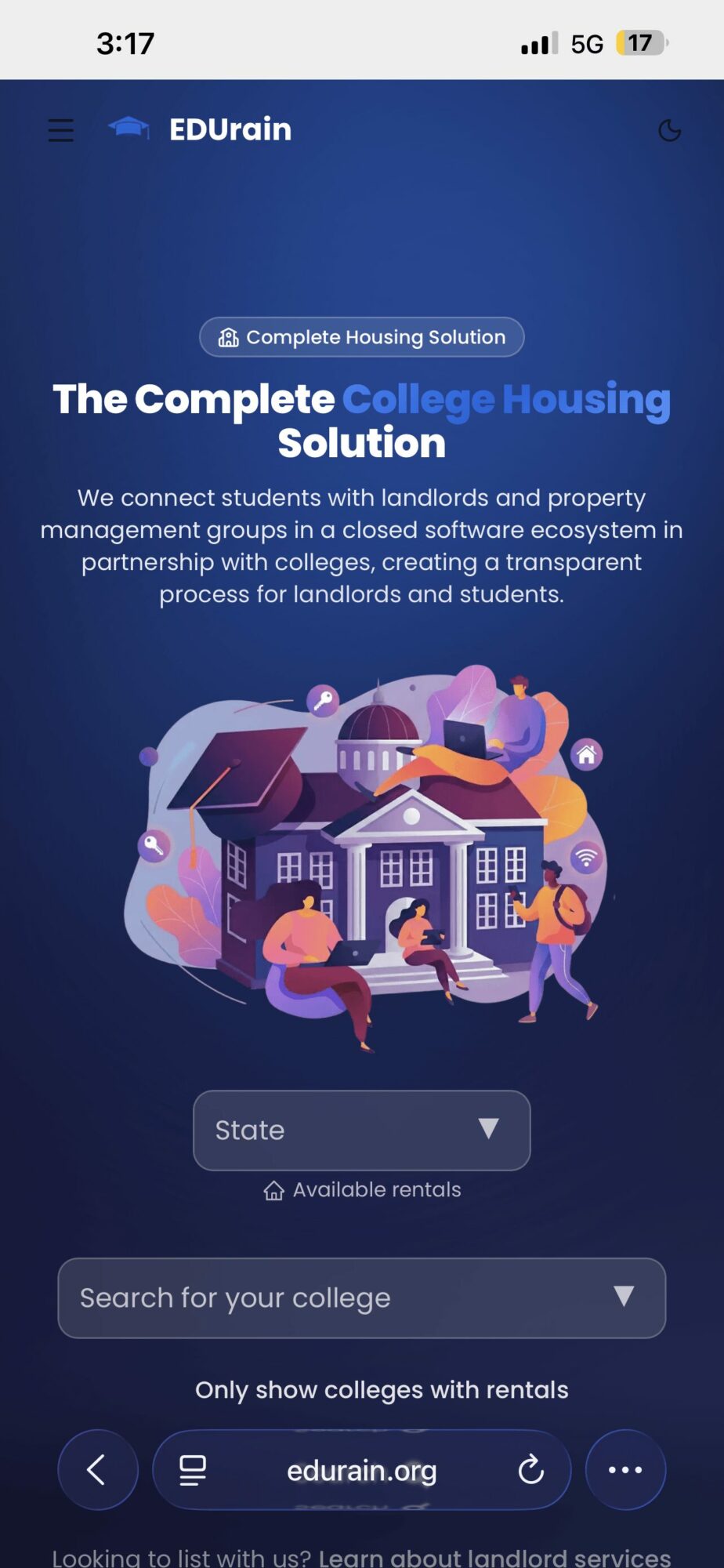
EDUrain is a college housing management platform. The simplest way I explain it is that we help colleges support students with both on-campus and off-campus housing in one place.
Right now, college housing is usually split up. A university may have one system for residence halls, but students looking off campus are often sent to Facebook, Craigslist, Zillow, private landlord websites, or random spreadsheets. Housing assistance resources may be somewhere else. Roommate matching may happen informally. Property managers operate separately. Students are expected to piece everything together on their own.
EDUrain brings those pieces together.
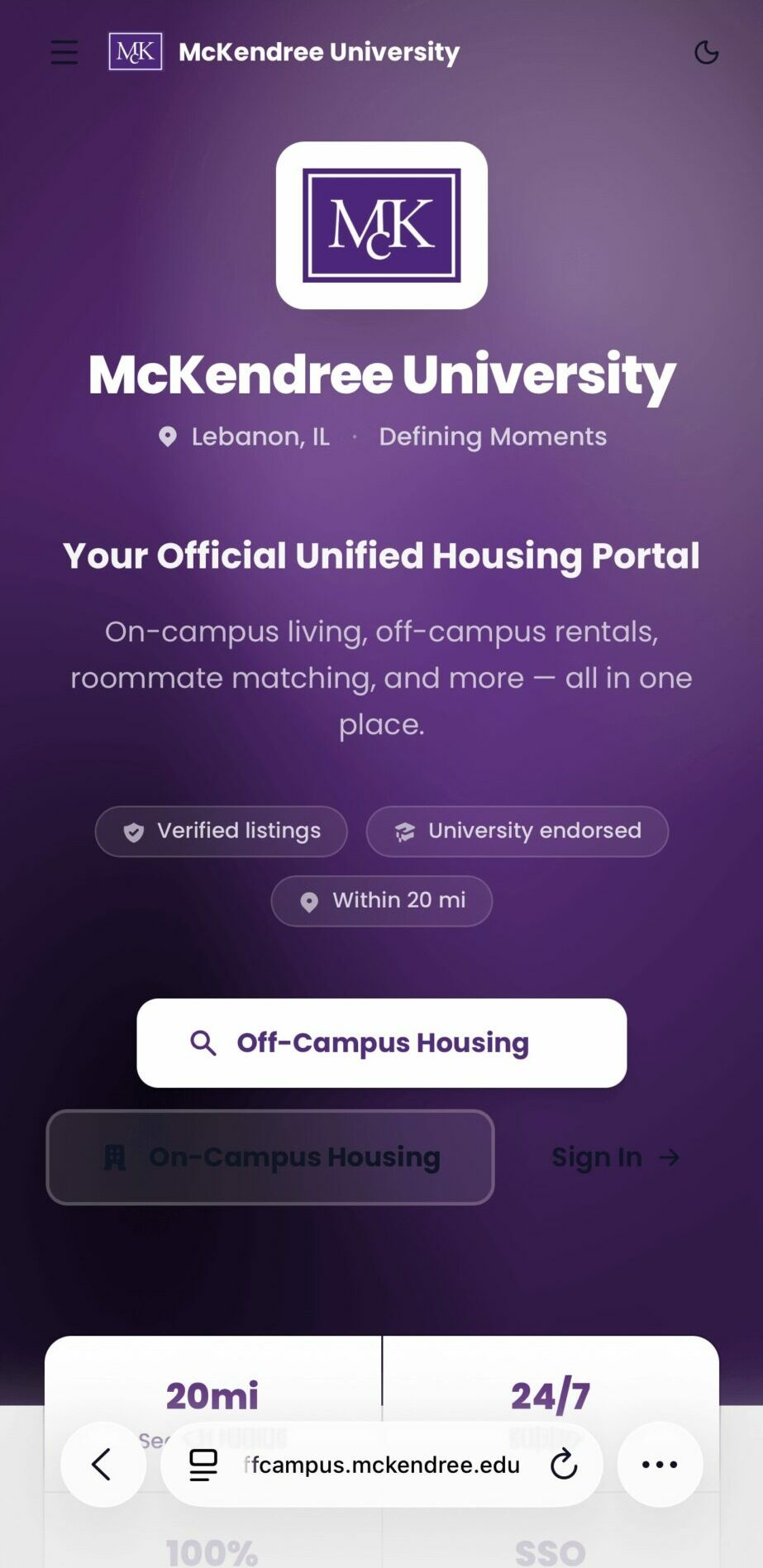
For colleges, we provide a university-branded housing portal that can support both on-campus and off-campus housing. Schools can use it to connect students with housing, trusted property managers, roommate options, and housing resources. They can also get a better understanding of student demand and where students are running into problems.
For students, EDUrain is more than an apartment search site. Students can look for verified housing, connect with potential roommates, learn how leasing works, access credit-building and scholarship tools, and find housing assistance resources. The goal is to make the process less confusing and less risky.
For property managers and landlords, EDUrain gives them a way to reach verified student renters through college partnerships. They can promote available units, manage listings, connect with students, and use tools that make parts of the leasing and rent process easier.
What makes EDUrain different is that we are not just another listing website. We are trying to connect the entire housing ecosystem around students: colleges, students, landlords, property managers, and support organizations.
The business also has more than one side. Property managers can pay to list and promote housing. Colleges can pay for white-labeled housing management tools. We can also generate revenue from services connected to leasing, rent processing, tenant verification, and other housing-related products.
I did not know how to build all of that when I started. I had to learn.
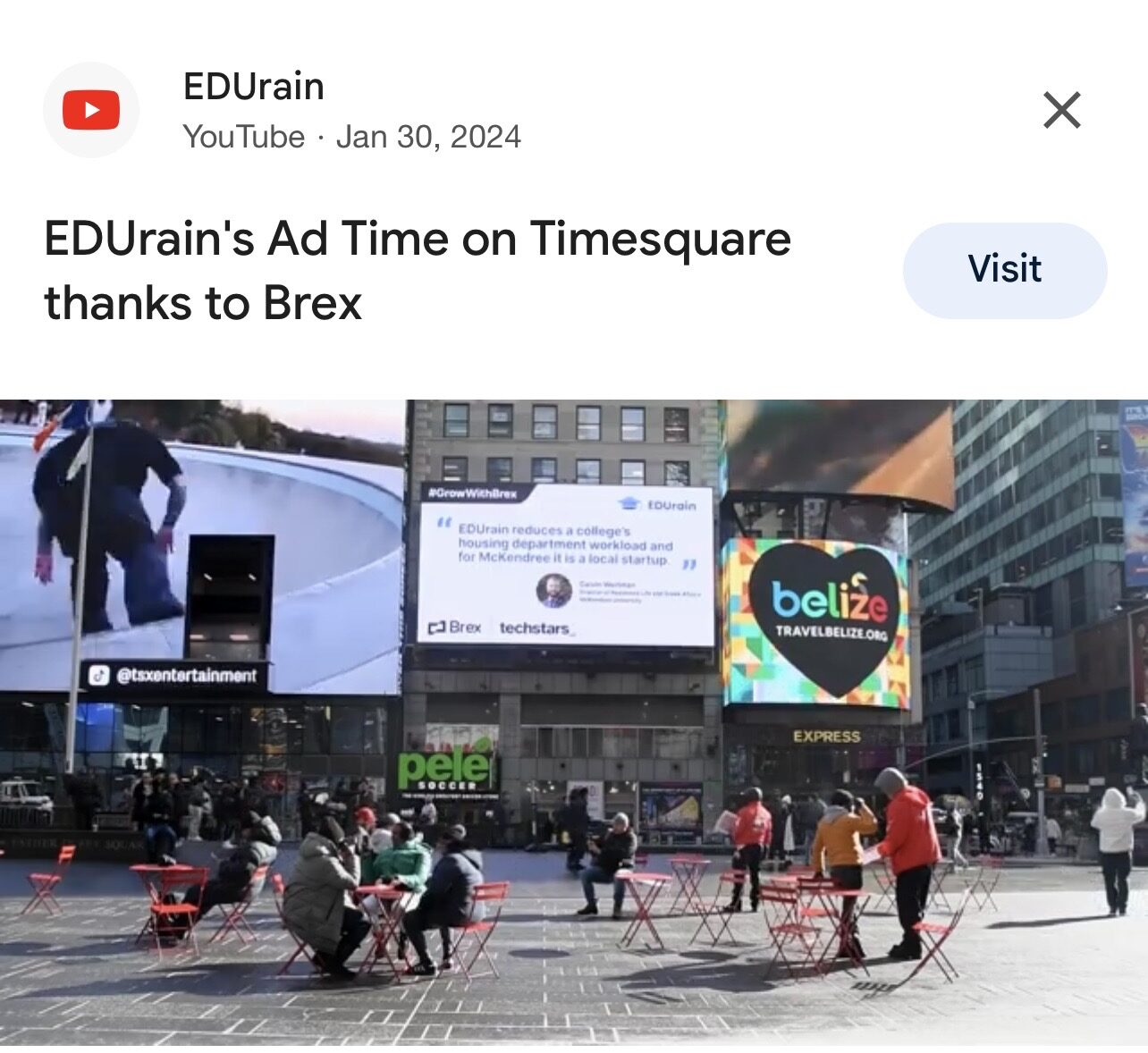
Over the years, I joined entrepreneurship programs, accelerators, pitch competitions, incubators, and customer discovery programs. I participated in programs connected to Washington University in St Louis, ITEN, SLU-Start, 4.0 Schools, TechRise, Techstars , Black Ambition, the Milken-Penn GSE Education Business Plan Competition, Rice, and DePaul University Coleman Entrepreneurship Center.
Each experience taught me something different. Some taught me how to talk to customers. Some taught me how to pitch. Some taught me how to build a business model, raise money, work with universities, or understand what customers were actually asking for instead of what I assumed they needed.
Today, EDUrain has served more than 100,000 students and has worked with colleges and housing partners to create a more connected housing experience. Our platform includes verified listings, roommate matching, tenant verification, rent tools, credit-building resources, scholarships, and white-labeled college housing portals.
The journey has not been easy. I have had people tell me colleges would never work with us, that student housing was too complicated, or that the problem was too big. But I understood the problem personally, and that kept me going.
I did not start EDUrain because I thought being a startup founder sounded exciting. I started it because I went through something that I knew other students were going through too.
A lot of my work has focused on students who are often overlooked—foster youth, first-generation students, LGBTQIA+ students, minority students, and students dealing with housing instability. I know what it feels like to move through systems that were not designed with your situation in mind.
That is also why I have stayed interested in politics and public service. Long term, I still hope to run for office. Whether I am building a company, organizing in the community, or serving in government one day, the goal is the same: create better systems and give more people a fair chance.
To me, EDUrain is not just a housing company or a technology company.
It is a support-system company.
We help students find housing, but the bigger mission is helping colleges create the stability and support students need to stay enrolled, graduate, and move forward with their lives.
We all face challenges, but looking back would you describe it as a relatively smooth road?
No, it has not been a smooth road.
A lot of the challenges started before EDUrain existed. Growing up in foster care meant I had to become independent early. By the time I got to college, I was paying my own way, working multiple jobs, trying to stay housed, and learning how to navigate adulthood without the kind of family support many students rely on.
Housing was one of the hardest parts. During college, I moved seven times, lived with 22 different roommates, and took on more than $60,000 in student debt. I worked long hours waiting tables at Red Lobster in Fairview Heights and The Pasta House in Edwardsville just to keep up with rent and other expenses. Those experiences gave me a personal understanding of how much housing can affect a student’s ability to stay focused and remain enrolled.
Building EDUrain brought a different set of challenges.
One of the biggest early obstacles was getting property managers to believe in the product and believe that I could actually build it. In the beginning, EDUrain was still an idea taking shape. I was asking property managers to trust a platform that did not yet have a long track record, a large team, or major institutional backing.
That meant I had to sell more than a product. I had to sell the vision, explain the problem clearly, and prove that I understood both students and the housing industry. Some property managers were skeptical. Others wanted to see users, university partners, or results before committing. That was difficult because, like many early-stage companies, we needed partners to build traction, but partners often wanted traction before they would participate.
I also had to overcome questions about whether I was really the person producing the platform. I did not come from a traditional software engineering background, and I was building in an industry where people often expect the founder to look or sound a certain way. At times, I felt like I had to work harder to prove that EDUrain was not just an idea I was pitching, but a real product I was actively building and leading.
Technology itself was another challenge. I had to learn how to work with developers, turn student and university needs into product requirements, make decisions about features, and keep moving forward with limited resources. Building software is rarely as simple as people think. Features take longer, priorities change, bugs happen, and every improvement creates new questions.
Fundraising has also been difficult. Raising money is hard for almost every founder, but as a Black founder building in higher education and housing, I have often felt that I needed more proof, more traction, and more validation before people were willing to believe in the opportunity. I do not assume every rejection is about race, because timing, market conditions, team, and investor fit all matter. But I would be dishonest if I said race has never felt like part of the experience.
Another challenge has been getting people to understand that student housing is not just a real estate issue. It is a student success issue. Early on, some people saw EDUrain as another apartment listing website. What we are building is larger than that. We are creating infrastructure that connects students, colleges, property managers, and housing resources in one system.
Building with limited resources has also forced me to wear almost every hat. I have handled sales, partnerships, fundraising, product strategy, customer discovery, marketing, operations, and support. There were many times when the vision was much larger than the team or budget available to execute it.
The hardest part has been continuing to believe in the company when progress moved slower than I wanted. Universities take time to make decisions. Property managers want proof. Technology takes time to build. Fundraising comes with a lot of rejection. There were many moments when walking away would have been easier.
What kept me going was knowing that the problem was real because I had lived it.
Every obstacle has made me better. The housing struggles gave me empathy for students. The skepticism from property managers taught me how to sell, listen, and build trust. The technical challenges made me a stronger product leader. The fundraising setbacks forced me to communicate the business more clearly.
I do not romanticize the struggle. Some of it has been exhausting and discouraging. But it made the mission clearer. EDUrain exists because students, colleges, and housing providers need a better system, and I have stayed committed to proving that we can build it.
We’ve been impressed with EDUrain, but for folks who might not be as familiar, what can you share with them about what you do and what sets you apart from others?
EDUrain was created because I experienced firsthand how difficult it can be to find stable housing while trying to earn a college degree. During college, I moved seven times, lived with 22 different roommates, and often relied on Facebook groups and word of mouth just to find somewhere to live. That experience eventually became the foundation for my senior research at SIUE and, ultimately, the company.
Today, EDUrain is a college housing management platform that helps colleges manage and support the entire student housing experience—from residence halls to off-campus housing—all in one connected system. We work with colleges, students, property managers, and landlords because we believe housing should be treated as part of student success, not just a place to live.
For many colleges, on-campus and off-campus housing operate in completely separate worlds. Residence halls are managed through one system, while students looking for off-campus housing are often sent to Zillow, Craigslist, Facebook groups, or word of mouth. Property managers work independently, and housing resources are scattered across different offices and websites. Students are left trying to connect all the pieces themselves.
EDUrain brings those pieces together.
For colleges, we provide a white-labeled housing platform that can manage both on-campus and off-campus housing in one place. Schools can offer students a seamless experience while gaining better visibility into housing demand, occupancy, and student needs. The platform integrates with university systems, supports branded housing portals, and gives institutions tools to better support students throughout their housing journey.
For students, EDUrain provides more than apartment listings. Students can search for housing, find compatible roommates, build credit, discover scholarships, access renter education, and connect with housing resources through one trusted platform. The goal is to make one of the most stressful parts of college much easier to navigate.
For property managers and landlords, EDUrain offers a way to reach verified student renters through university partnerships. They can market available units, verify tenants, automate parts of the leasing process, and build relationships with colleges instead of relying solely on traditional advertising.
What sets EDUrain apart is that we’re not trying to compete with Zillow or another apartment marketplace. We’re building the infrastructure that connects everyone involved in student housing. Most companies solve one piece of the problem. We bring together on-campus housing, off-campus housing, student services, and housing providers into one ecosystem designed around student success.
The part of EDUrain I’m most proud of isn’t the technology—it’s the purpose behind it. The company is named after my younger sister, Serenity-Rain, who passed away when she was very young. “EDU” represents education, and “Rain” comes from her name. I wanted to build something that honored her memory by helping students build more stable futures.
I’m also proud that EDUrain wasn’t created by chasing a trend. It came from lived experience, academic research, and conversations with students, universities, and housing providers. Every feature we’ve built solves a real problem that someone shared with us.
At the end of the day, I want people to know that EDUrain isn’t just helping students find housing. We’re helping colleges build stronger support systems. Stable housing is connected to retention, graduation, and student well-being. If we can make the housing experience easier—from move-in day to graduation—we can help more students succeed, and that’s what our company is built to do.
Are there any books, apps, podcasts or blogs that help you do your best?
A few resources have had a big impact on how I think as a founder.
I watch a lot of Y Combinator videos because they’re practical and honest. They cover everything from product-market fit and customer discovery to fundraising and building great companies. I like that they focus on solving real problems and learning directly from experienced founders.
During Techstars, one of the books we read was Venture Deals. It gave me a much better understanding of how venture capital works, from term sheets and valuations to dilution and investor incentives. It made fundraising feel a lot less intimidating because I finally understood the language investors were speaking.
Techstars also introduced me to frameworks that I still use today. Two that have stuck with me are the Business Model Canvas and the Theory of Change. The Business Model Canvas helps me think through every part of the business—from our customers and value proposition to revenue streams, partnerships, and costs. The Theory of Change keeps me focused on the bigger mission behind EDUrain. It reminds me that we’re not just building software—we’re building a solution that helps colleges better support students, because stable housing leads to better retention, graduation, and long-term success.
More than anything, though, I’ve learned that the best resource is talking to customers. Every conversation with a student, university leader, property manager, mentor, or fellow founder teaches me something new. Those conversations have shaped EDUrain far more than any book ever could.
I’m always trying to learn, but I also believe knowledge is only valuable if you put it into practice. The resources I come back to are the ones that help me make better decisions and build a company that solves a real problem.
Contact Info:
- Website: https://edurain.org/
- LinkedIn: https://www.linkedin.com/in/bryon-pierson-jr-839148a6
- Other: https://www.linkedin.com/company/edurain/