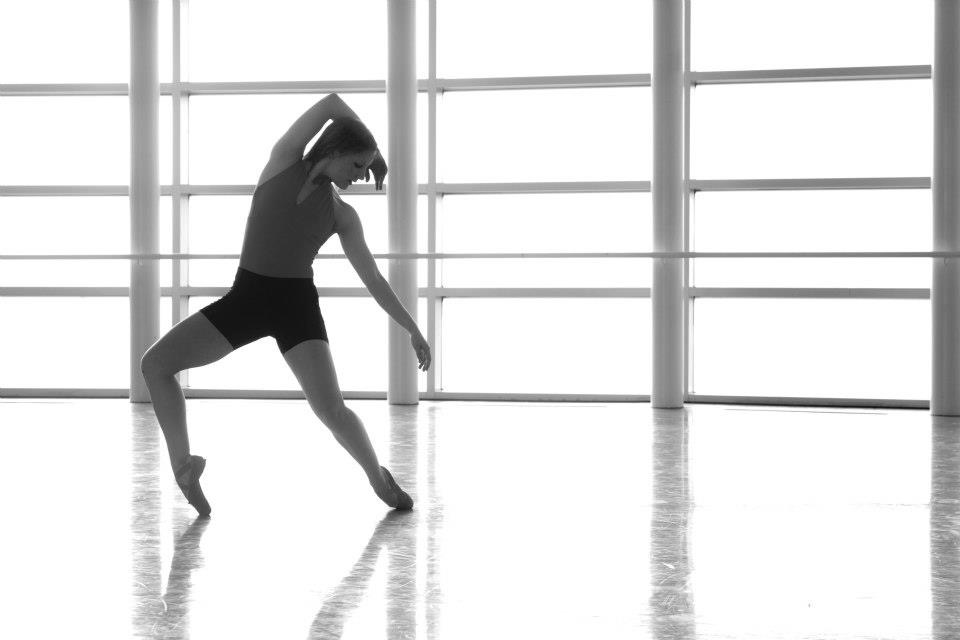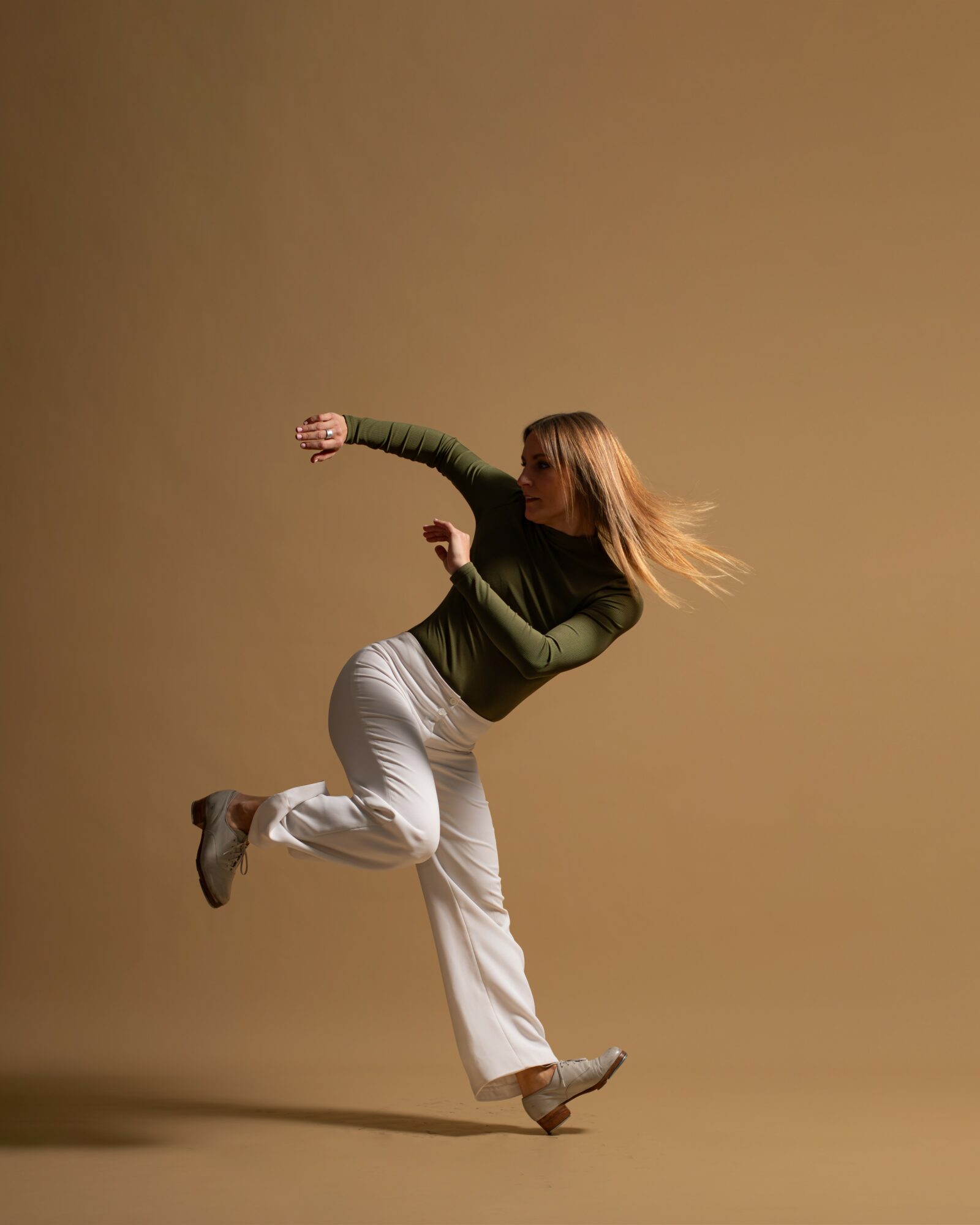
Today we’d like to introduce you to Lorraine Stippec.
Hi Lorraine, can you start by introducing yourself? We’d love to learn more about how you got to where you are today?
Dance has been the thread connecting every chapter of my life. I started dancing when I was two and a half years old, and from a young age, I knew movement was where I belonged. I grew up training in tap dance, contemporary, and jazz, and throughout my childhood and college years, I performed, choreographed, and taught. While earning my BFA in Dance from Webster University, I discovered my dream of becoming a college dance professor—someone who could mentor young artists and share the transformative power of movement. Professionally I performed at venues including The Muny and the Fabulous Fox Theatre, and even toured internationally with a hip hop crew in China,
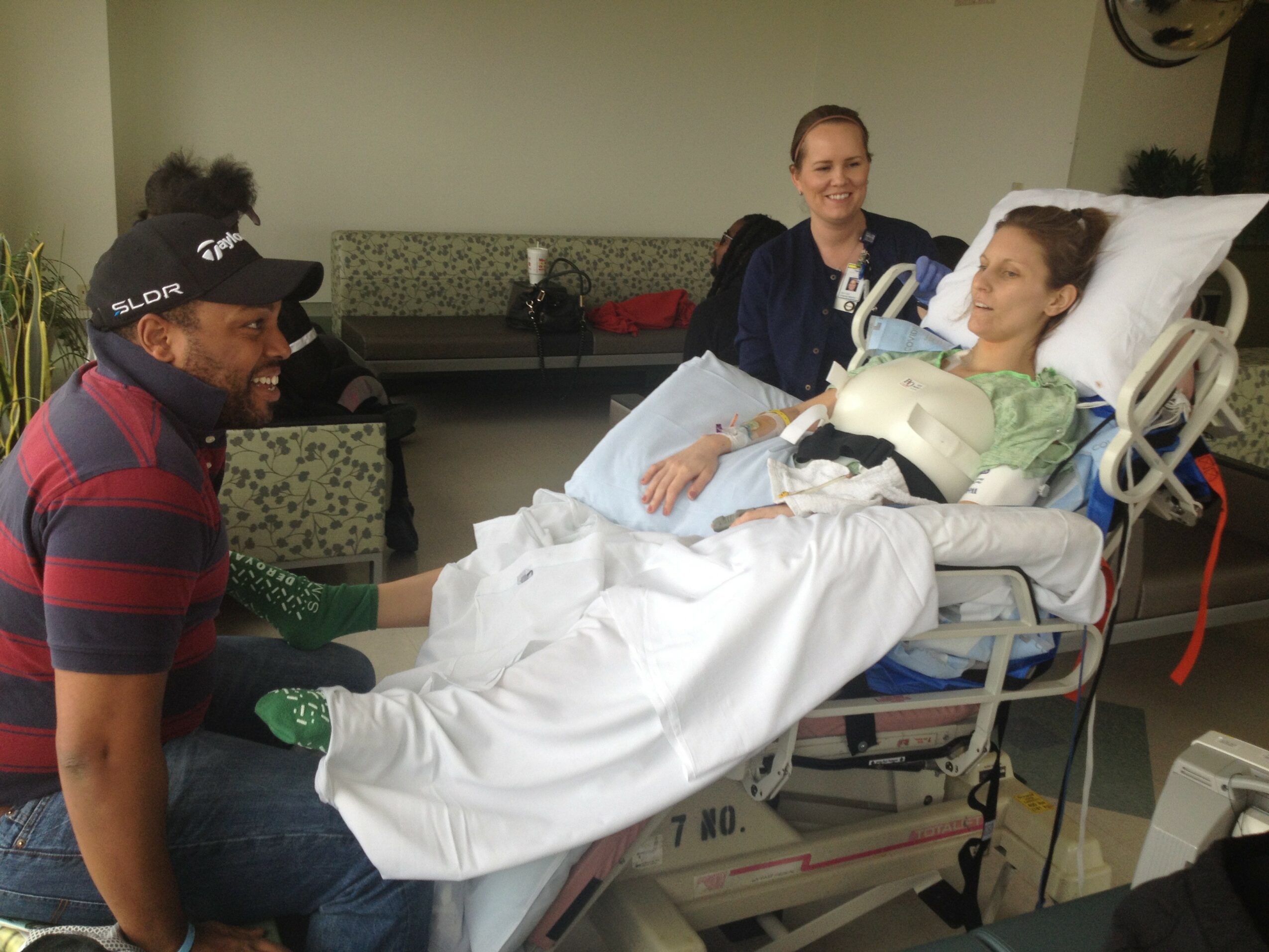
On February 6, 2017, my life changed forever when I became the victim of a random act of gun violence. I was shot eight times and arrived at the hospital with life-threatening injuries. Doctors gave me only a 5% chance of survival. I underwent more than 15 surgeries in the first 48 hours, including the removal of my left kidney, spleen, appendix, 20 feet of my small intestine, and part of my pancreas. I also suffered fractures in my spine and extensive nerve damage that affected my ability to walk.
My recovery became a journey of taking life one step at a time—literally and figuratively. After spending months hospitalized, including time in intensive care and inpatient rehabilitation, I had to relearn basic movements that I had once taken for granted. There was a time when doctors weren’t sure if I would ever eat, walk, or dance again. But I had always been a dancer, and movement was part of my identity. I refused to let go of the art form that had shaped me.
Dance became a symbol of my healing. I set goals for myself, including returning to the studio and taking a ballet class on the one-year anniversary of the shooting. It wasn’t perfect, but it was proof that I was moving forward. Through countless hours of therapy, determination, and the support of my family, friends, and community, I found my way back to performing and teaching.
Since then, I have continued building my career as a dancer, choreographer, educator, and scholar. I have performed professionally with moSTLy TAP through the St. Louis Rhythm Collaborative, presented choreography and research at national and international conferences, and returned to teaching dancers of all ages. My artistic work explores rhythm, embodiment, and the ways movement can help us process and understand our experiences even before trauma takes hold.
I went on to earn my MFA in Dance from Washington University in St. Louis (May 2026), where my research and creative work explored the relationship between trauma, movement, and healing, while continuing to choreograph and perform professionally and engaging with a motivational speaking career. Most recently I received an Artist Support Grant from the Regional Arts Commission and accepted a full-time position as an Artist-in-Residence in Dance at Missouri State University for the fall.
While the shooting is a significant part of my story, it is not the entirety of who I am. My scars are reminders of what I have survived, but they do not define me. I define myself through my passion, my resilience, my artistry, and my commitment to helping others discover their own strength. My journey has taught me that healing is not about returning to who you were before—it is about discovering who you are capable of becoming.
We all face challenges, but looking back would you describe it as a relatively smooth road?
It has definitely not been a smooth road, but I think the challenges I’ve faced have shaped the person, artist, and educator I am today.
Even prior to the shooting, I had dealt with my fair share of injuries as a dancer including reconstructive ankle surgery, knee surgery, and shoulder surgery resulting from a car accident where I was struck by a drunk driver.
At the age of 21 I was diagnosed with Lupus, Sjogrens, and mild Rheumatoid Arthritis.
My family was not well off, and situated somewhere in the lower middle class. I was often working 2-3 jobs at a time as soon as I started working when I was 15 while remaining a straight A student, participating in extra curriculars, and applying for every scholarship and form of financial aid I could find to assist with my goals.
Still, the biggest turning point in my life was the shooting. I spent months hospitalized and in physical, occupational, and psychotherapy, and had to relearn many of the things I once did effortlessly—including walking and moving my body as a dancer.
One of the hardest parts of recovery was learning patience with myself. Before the shooting, I was someone who was constantly moving—dancing, teaching, performing, traveling, and working toward my goals. Suddenly, I had to celebrate small victories: sitting up in bed, taking one step, learning how to trust my body again. As a dancer, my body had always been my instrument, and recovery required me to rebuild my relationship with it.
Returning to dance was not easy. I had to work through physical limitations, nerve damage, pain, and the emotional effects of trauma while trying to reconnect with the artist I had always been. There were moments when I wondered if I would ever dance the way I once did, but I learned that progress is not always linear. Sometimes it is one small step forward, followed by setbacks, and then choosing to keep going.
Beyond my recovery, pursuing a career in dance has also required perseverance. The arts are not always an easy path, and building a life as a performer, choreographer, and educator requires dedication, flexibility, and a willingness to continually grow. Through all of it, I have been fortunate to have an incredible community supporting me.
Those challenges ultimately became part of my purpose. They influence the way I teach, create, and connect with others. I now approach dance not only as an art form, but as a way to build resilience, foster connection, and remind people that they are capable of far more than they may believe.
Thanks – so what else should our readers know about your work and what you’re currently focused on?
My professional life exists at the intersection of performance, choreography, education, and research. I am a dancer, choreographer, educator, and scholar specializing in tap dance, rhythm, contemporary performance, embodied storytelling, and trauma-informed artistic practice. At the center of all of those things is a fascination with what the body knows—and how movement and rhythm can communicate experiences that sometimes exist beyond language.
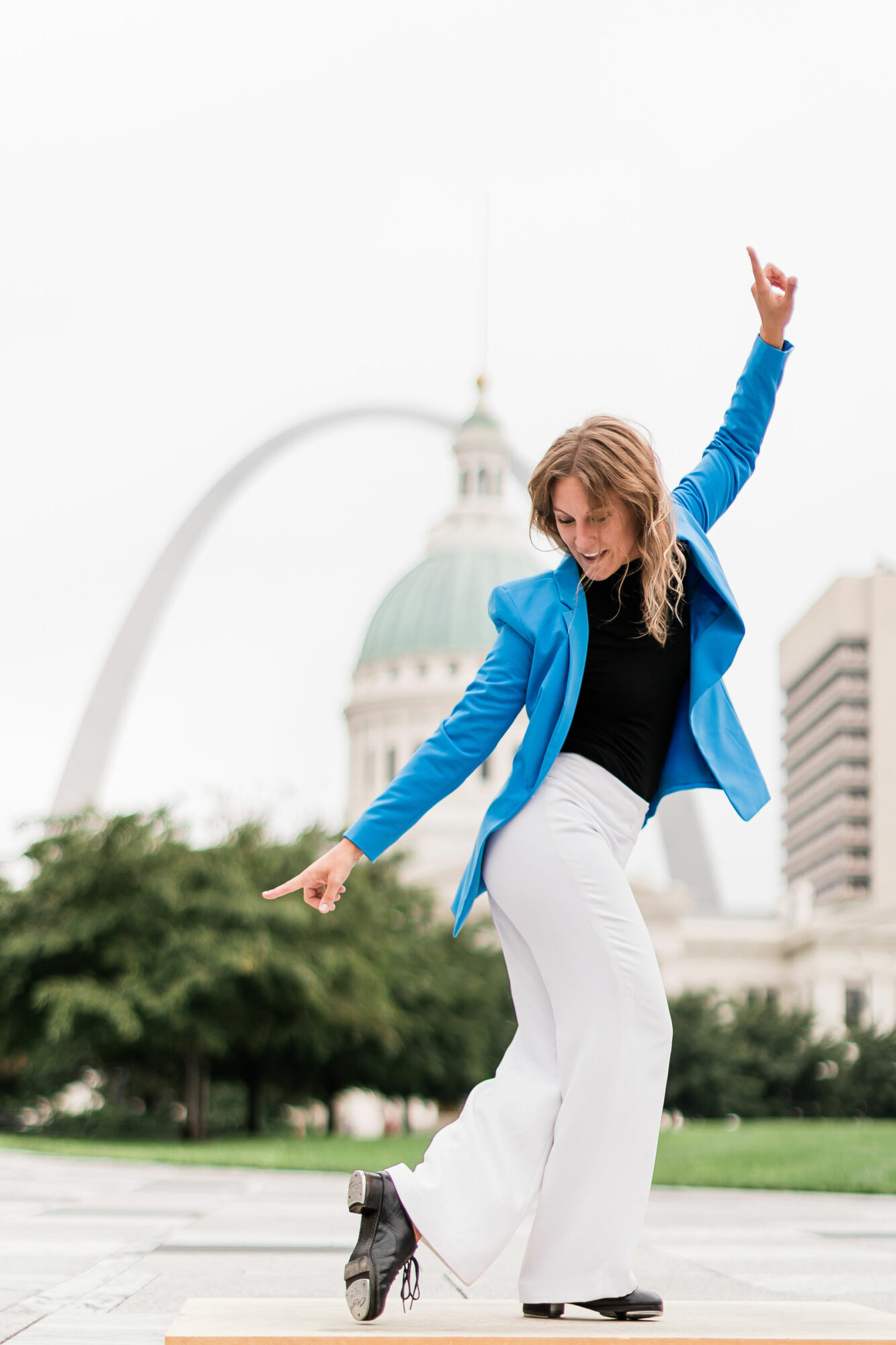
Tap dance is especially central to who I am as an artist. I am drawn to its musicality, history, improvisation, individuality, and the unique position of the tap dancer as both dancer and musician. I have performed professionally with moSTLy TAP and the St. Louis Rhythm Collaborative, appeared on stages including The Muny and the Fabulous Fox Theatre, and toured internationally in China as a performer and choreographer. My career has also moved through concert dance, musical theatre, commercial performance, dance on film, and interdisciplinary performance.
My research has grown directly out of my experiences as both an artist and a survivor of gun violence. One branch of my scholarship considers dance and embodied creative practices as potential preventative approaches to the development and manifestation of PTSD following trauma. I am interested in what happens when we give the body opportunities to process traumatic experience through movement, rhythm, improvisation, agency, community, and creative choice rather than asking healing to occur exclusively through language. My research does not position dance as a replacement for clinical treatment, but asks what dance can contribute to our understanding of trauma, resilience, embodiment, and recovery.
More recently, that research has expanded into questions of rhythm and human affect. Rhythm exists before we have language—we experience heartbeat, breath, repetition, vibration, and pulse through the body. I am interested in rhythm as a kind of human archive: something capable of carrying memory, emotion, cultural knowledge, relationship, and lived experience. My current scholarship explores what distinguishes that embodied, affective intelligence from the rhythmic structures that can increasingly be replicated by artificial intelligence. For me, rhythm is not simply something we hear or count. We feel it, respond to it, remember through it, and relate to one another through it.
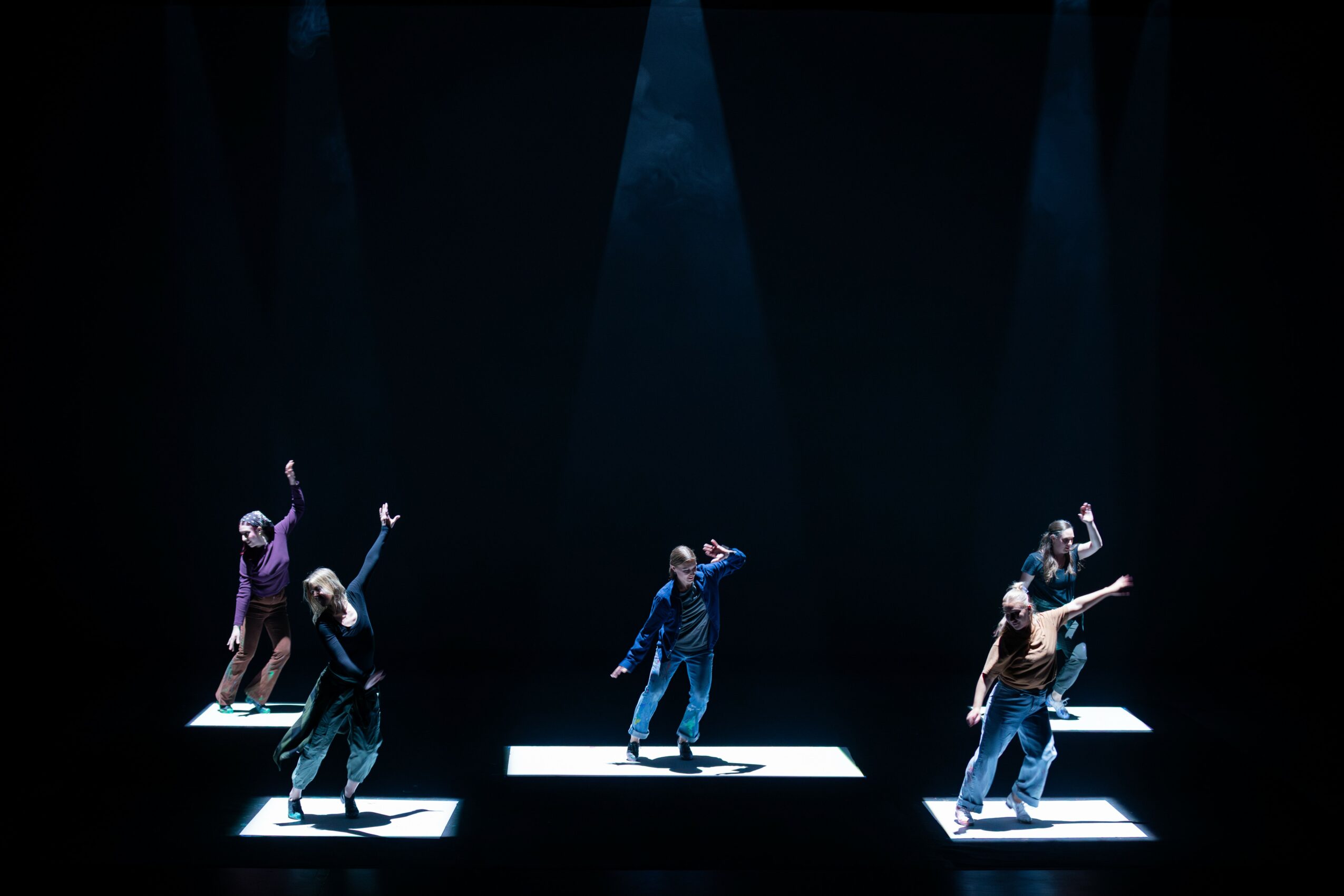
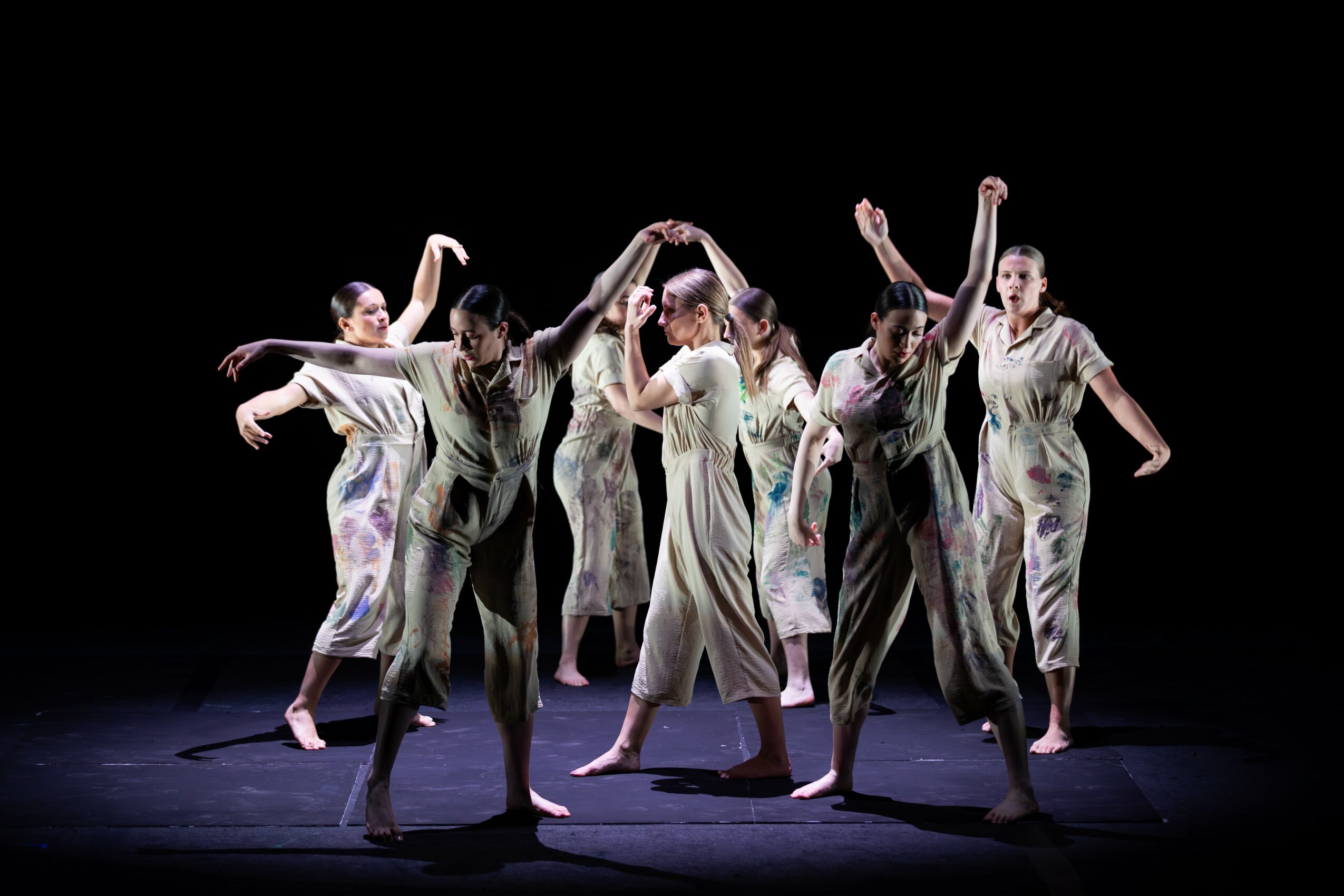
Those ideas came together in a particularly personal way during my MFA at Washington University in St. Louis through my thesis concert, Trauma’s Tapestry. The work was an interdisciplinary exploration of trauma, memory, affect, and healing that brought tap dance and contemporary dance into conversation rather than treating them as separate worlds. Tap allowed rhythm itself to become part of the storytelling, while contemporary movement explored the physical and emotional residues that trauma can leave in the body.
I also incorporated live painting into the performance. Dancers created visual art as the work unfolded, allowing movement, sound, color, and emotion to leave physical traces behind. I was interested in the idea of seeing sound—of asking what rhythm might look like as color, texture, gesture, and mark-making. The paintings became another kind of archive of the performance: evidence of something that had been felt, heard, moved through, and transformed.
The concert moved through different relationships to rhythm and trauma—from heartbeat and breath to structured music, improvisation, a cappella rhythm, polyrhythm, contemporary movement, and the eventual convergence of the dancers and artistic forms. Rather than creating a literal reenactment of trauma, I wanted to investigate its residue: how an experience can continue reverberating through a body long after the event itself has ended, and how performance might provide a space for that energy to be witnessed, reorganized, expressed, and perhaps even transformed.
That distinction is important to my work. I am interested in performance as healing, not simply performance about healing. Creating Trauma’s Tapestry allowed my research, choreography, lived experience, and artistic practice to exist in the same space. The performance itself became part of the inquiry.
Teaching is another extension of that work. I have taught dancers ranging from young children through university students, and I want the studio to be a place where rigor and humanity can coexist. I believe strongly in technical excellence and historical knowledge, particularly in teaching an African American art form like tap dance, but I also want students to develop agency, curiosity, improvisational skills, and their individual artistic voices. My experiences have made me acutely aware that every person enters a studio carrying a history we may not be able to see.
In 2026, I accepted a position as Artist-in-Residence in Dance at Missouri State University, fulfilling a goal I had carried since my undergraduate years. I am also continuing my professional development through the Ailey Horton Teacher Training Program, deepening my knowledge of Horton technique and expanding the ways I can serve students across movement practices.
What I am most proud of is that I have created a professional life in which I do not have to separate the different parts of myself. I can be a tap dancer and a contemporary artist. I can be a performer and a scholar. I can study trauma while also studying joy, rhythm, improvisation, and human connection. My lived experience can inform my research without defining the entirety of my artistry.
I think that interdisciplinary perspective is what most distinguishes my work. I am continually asking what happens when we stop placing boundaries between sound and movement, research and performance, visual art and dance, intellect and affect, or artist and audience. Whether I am tap dancing, choreographing, painting through movement, researching trauma and affect, presenting scholarship, or teaching a university class, I am ultimately interested in the same thing: how the moving, rhythmic body holds knowledge—and how accessing that knowledge can help us understand ourselves, connect with one another, and heal.
Are there any apps, books, podcasts, blogs or other resources you think our readers should check out?
I am a lifelong learner, so I am constantly reading, listening, researching, taking classes, and finding new things to be curious about. I don’t think I have one particular app or podcast that has figured out the secret to life for me—I tend to pull inspiration from a lot of different places.
The Body Keeps the Score by Bessel van der Kolk has been influential in the way I think about the relationship between trauma, memory, and the physical body. As a dancer and trauma survivor, the idea that our experiences can live within the body resonated deeply with me and eventually connected to questions I began exploring through my own research and choreography.
Professionally, I am always digging into dance history, archival footage, interviews, performances, and scholarship—especially anything related to tap dance, jazz, rhythm, improvisation, embodiment, affect, and trauma. Sometimes watching an old clip of a tap artist tells me just as much as reading an academic article. I love learning directly from the people and bodies that carried these forms forward.
I also find inspiration outside of dance. I listen to podcasts (mostly centering around tap dance, jazz music, and dance history), read across disciplines, and am constantly saving articles, music, images, quotes, and ideas that make me think differently. Some of my best creative ideas come from something that seemingly has nothing to do with dance at all.
But probably my greatest resource is movement itself. I learn by doing. Taking class, improvising, tap dancing, traveling, experiencing art, talking with other artists, and putting myself in environments where I don’t already know everything keeps me curious. Continuing my training through the Ailey Horton Teacher Training Program has been another reminder that being an educator should never mean that you stop being a student.
And honestly, some of the most important lessons I carry aren’t from an app or a book. They came from my recovery: take things one step at a time, allow yourself to have bad days, surround yourself with people who believe in you, and keep finding reasons to be curious about what comes next. I spent a long time physically learning how to take one more step, and that philosophy has stayed with me in almost every part of my life.
I think doing my best has less to do with constantly trying to be “better” and more to do with staying curious, continuing to move, and remembering to actually live the life I’m working so hard to build.
Pricing:
- * Available for guest teaching, master classes, workshops, choreography, artist residencies, research presentations, and speaking engagements.
- * Rates vary based on the scope, location, duration, and needs of the engagement. Please inquire for availability and pricing.
Contact Info:
- Website: https://www.lorrainestippec.com
- Instagram: @lorraine.stippec
- Facebook: https://www.facebook.com/lorrainestippec
- LinkedIn: https://www.linkedin.com/in/rainstip