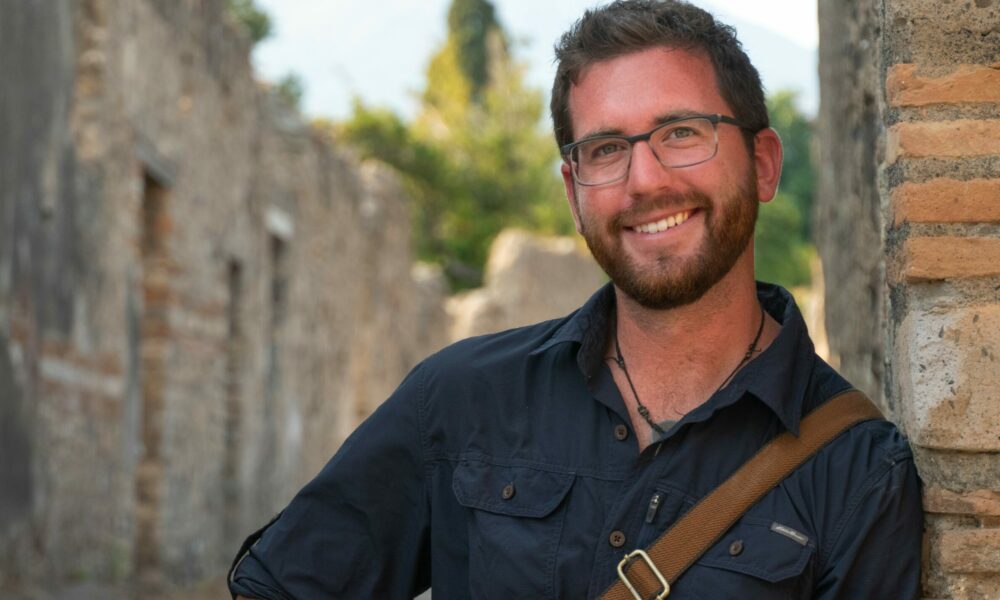
Today we’d like to introduce you to Justin Grubb.
Hi Justin, we’re thrilled to have a chance to learn your story today. So, before we get into specifics, maybe you can briefly walk us through how you got to where you are today?
My path started when I was a child where I had a deep admiration for nature. Some of my earliest memories are of being outside searching under rocks for tiny insects and spiders. Growing up, I lived in a typical suburban neighborhood but had a small creek and wooded area to play in. Here, my imagination ran wild as I explored this seemingly massive ecosystem. I built forts, searched for fossils, caught frogs, but more importantly, built a strong relationship with nature.
From those early experiences, I developed a fascination with biology and studied marine biology at Bowling Green State University in Ohio. My first job out of college was as a wildlife biologist working with reptiles, amphibians, insects, mammals, and habitat restoration efforts along Lake Erie. From there, I became a teacher, working in Florida to connect students to the marine sciences. While in these career pursuits, I developed a keen interest in photography and videography and quickly recognized its importance in sharing what it is that scientists in the field were doing. And with that being said, the field called my name, so a buddy who I met in college and I officially started a production company called Running Wild Media that focuses on wildlife conservation storytelling. This company combined all of my interests into one and allowed me to share my love of nature by educating others through visual media.
Today I live just south of St Louis with my wife – an animal care specialist at the Endangered Wolf Center, and my dog – a border collie named Ruger. Before settling into the city, my wife and I traveled around the southeastern part of the country in a camper – enjoying the road and the various internship opportunities my wife participated in. Now, when I am not traveling on an assignment, we can be found exploring the many wonderful parks in the region, drinking the finest brews, and eating at some of the tastiest restaurants in the country.
I’m sure you wouldn’t say it’s been obstacle free, but so far would you say the journey has been a fairly smooth road?
Creating your own path in life is never without its struggles, and I have encountered a lot of challenges along the way. When I first started out, my friend and business partner and I would pay our production budgets out of our pockets to tell stories that we thought were important to tell. A lot of times, we would ration food, sleep on the ground, and do whatever was necessary to document something we believed in. Eventually, we were able to gain attention for our work and were able to begin working with people and organizations to support our storytelling. This did not happen overnight, and has been years in the making. Also, we have encountered many unknowns in this field, as it is still a very new and emerging field. There aren’t any set standards of practice for the industry and organizations are always changing and adapting to fluid situations. Funding for projects is extremely hard to come by and requires a lot of work to be able to work.
Thanks for sharing that. So, maybe next you can tell us a bit more about your work?
Swimming with sharks, running with bison, and getting face to face with venomous snakes is a pretty typical day for me as a science communicator. I am really happy with what I do as this is a particularly exciting career field. No two science communicators are alike, our approach to our work is completely different depending on our experiences, interests and talents. For me, I focus on filmmaking, photography, writing, education, public speaking, and adventure guiding to communicate exciting science stories to the public.
I am currently the director and co-founder of Running Wild Media as well as the International Communications and Outreach Officer for Planet Indonesia – a non-profit organization focused on a human-rights-based approach to nature conservation in Indonesia.
With Running Wild Media, I work on a variety of projects that center around impact. Inspiring conservation action is at the heart of what we do, so we strive to connect with various audiences through visual storytelling. One of my favorite projects was developing a 360-degree educational video series for Kodak and the Roatan Marine Park in Honduras. This project developed several underwater episodes featuring sea life, including the shark, found within the clear blue water of the Mesoamerican Reef and how to protect them. One of our recent projects featured the most endangered wolf in the world – the red wolf. This species lived throughout the eastern part of the United States, but was declared extinct in the wild in the 1980s. Conservation efforts by federal agencies along with conservation organizations around the country brought the species back, but the wild population still struggles to gain a foothold. Our film was created to serve as a tool to clear up misconceptions about wolves, discuss the history of the red wolf program, and feature incredible stories from the field highlighting the release of an adult red wolf into the wild for the first time in over a decade. This film is a tool in the toolbox of our conservation partners to communicate with the community who live in and around red wolf country. We are currently working on another film about the rights of nature and how it can be used as a tool to protect landscapes and species at risk due to exploitation. This film follows the efforts of a small township in Pennsylvania and their victory against the fracking industry to save a nationally threatened amphibian called the hellbender. This film will be an instrumental part of an impact campaign we are putting together to promote the rights of nature as a solution and to connect marginalized communities to empower their actions to fight back against exploitation. Other projects include wildlife photo exhibitions, education programs, international photography workshops, internships, and more. We have worked with many organizations such as National Geographic, the BBC, PBS, and more to help amplify the stories of animals, habitats, and the individuals to work to protect them. We have several new films in the works but are always excited to meet new people who have fresh perspectives to explore. What makes our production company unique is our breadth of experiences with biology, environmental sciences, education, and production technology. We combine all of these fields to create projects that can inspire change by implementing a cohesive campaign spearheaded by visual storytelling.
My work with Planet Indonesia is equally as rewarding as I get to work with some of the greatest conservationists on the planet. As an organization, we exist to support the work of rural communities and their efforts to conserve their natural resources. I regularly get to visit these communities and document their stories to inspire a global movement towards the right-based approach to nature conservation. Social justice and nature conservation go hand-in-hand and you can’t have one without the other. Recently, I was able to witness several nesting helmeted hornbills in Western Borneo which was a direct result of the hard work of the communities we support. This species is one of the most endangered birds in the world and is targeted for its solid casque fixed atop its head. Poachers seek this casque because it can be carved into intricate designs and sold on the black market. This “rose ivory” as the material is called, is worth six times more per kilogram than elephant ivory according to the BBC. Several years ago, there were very few nests in this region, but because of community-led ranger patrols, wildlife research, and other resilience-building programs, this incredible bird’s call can be heard echoing throughout the rainforest once again.
My entire body of work is dedicated to promoting environmental health. Whether it is relating to social justice, wildlife conservation, habitat restoration, or sustainability, I believe these themes are essential in creating a healthy equitable world where humans and nature thrive.
Before we let you go, we’ve got to ask if you have any advice for those who are just starting out?
For those interested in being a champion for conservation, there is a whole community out there that is ready for your voice. Everyone brings a unique perspective to the world and everyone is needed to help build a healthy future. My advice would be to reach out and connect with local, regional, and international organizations that offer opportunities for growth in this field and develop leadership skills at an early age.
One thing that is really important to remember is that there are many creative ways of expressing your voice and being heard. Using personal interests and talents is a great way to combine something you love with something that can be very impactful and life-changing for a lot of people.
For those interested in getting into visual storytelling, now is honestly the best time to do it. With so much technology at our fingertips, there are many ways for individuals to share photography, videos, and more. The technology used to create content is not as important as the story behind the content. If you take a photo with a really compelling story, people will see it and it will have an impact. Look for local stories and stories in your backyard and practice sharing your perspectives. Develop your eye in your art form and do what makes you happy.
Contact Info:
- Email: justin@runningwild.media
- Website: www.runningwild.media
- Instagram: https://www.instagram.com/journeying_justin/
- Facebook: https://www.facebook.com/runningwildmedia


Image Credits
Running Wild Media
Justin Grubb
Planet Indonesia