
We’re looking forward to introducing you to Claire Welton. Check out our conversation below.
Hi Claire, thank you for taking the time to reflect back on your journey with us. I think our readers are in for a real treat. There is so much we can all learn from each other and so thank you again for opening up with us. Let’s get into it: What do you think is misunderstood about your business?
The cool thing about being a therapist in 2025 is that the stigma is slowly becoming detached. Something that still exists though, is that people tend to still believe that something has to be “wrong” with you to go to therapy. That couldn’t be further from the truth. Sometimes, therapy is just a place to get your thoughts out to process with someone who has your best interest in mind from an unbiased perspective. Even if you’re going there to process trauma through talk-therapy, or great modalities like EMDR, it still doesn’t mean anything is wrong with you. It means you’re curious, brave, and ready to break molds.
Can you briefly introduce yourself and share what makes you or your brand unique?
Yep! My name is Claire Welton, I’m 36, I’ve been married *almost* six years, and we have two beautiful, wildly wonderful girls. I moved back to St. Louis in 2013 to pursue my master’s in school counseling. Upon graduating in 2016, I had the pleasure of working at Vianney, SLUH, Ladue H.S., and Barnwell Middle School. I graduated in 2020 with my Doctorate of Education in Teacher Leadership. In 2023, God made huge moves in my life and I started working at CrossRoads Counseling as a clinical mental health therapist, which has been the most fulfilling part of my 9 years in counseling.
One of the more unique aspects of my career is that I am a faith-based therapist, and I absolutely love being able to marry psychology with theology. Not all of my clients are faith-based, but it is a wonderful piece to bring in during people’s healing journeys.
Attachment styles are my love-language as a therapist. I think it is so fascinating to help people discover their attachment style with themselves, their significant others and their parents, and how it motivates the way they move. Knowing and understanding your attachment style is like being able to have an operating manual to some of the most difficult parts of yourself.
Using Eye Movement Desensitization and Reprocessing (EMDR) has been a game changer working with clients. EMDR uses the left and right side of the brains simultaneously to help make sense of traumatic experiences or stuck thoughts or beliefs. Seeing clients heal using neurological techniques has been so rewarding.
Thanks for sharing that. Would love to go back in time and hear about how your past might have impacted who you are today. What breaks the bonds between people—and what restores them?
The lack of trust is what I believe creates the biggest rupture between people; and forgiveness and grace is the key to repair. Think about a time where your trust in someone was broken. It’s one of the hardest things to move past because it bleeds into every aspect of the relationship. And then trying to regain trust after someone you so deeply care about has shattered it? Well, that’s one of the hardest things to do, because then you’re fighting the anxiety of not just the unknown, but the known of the heartache if it happens again.
But forgiveness, That’s the antidote to resentment and the hardening of the heart. Forgiveness can take time, and it certainly does not mean that you forget. But, if we are to expect others to forgive us, it’s important that we learn to do the same. Forgiveness can look like restoring the relationship, or it can look like forgiving from afar.
If you could say one kind thing to your younger self, what would it be?
Trust that God has you, and you don’t have to worry about being in control. Some of the greatest lessons and strengths came from the hardest times.
So a lot of these questions go deep, but if you are open to it, we’ve got a few more questions that we’d love to get your take on. How do you differentiate between fads and real foundational shifts?
A fad is something that is temporary and fades quickly, while foundational change becomes part of your lifestyle or mindset. A fad is usually driven by emotion or socially, while a foundational change is driven by conviction, understanding, and an internal motivation. A fad is more surface level, while foundational shifts are more deeply rooted.
Before we go, we’d love to hear your thoughts on some longer-run, legacy type questions. If you laid down your name, role, and possessions—what would remain?
My faith in God, family, and purpose to make His name known.
Contact Info:
- Website: https://www.stl-ccc.org/claire-welton
- Instagram: @jesus_andtherapy and @clairelilywelton
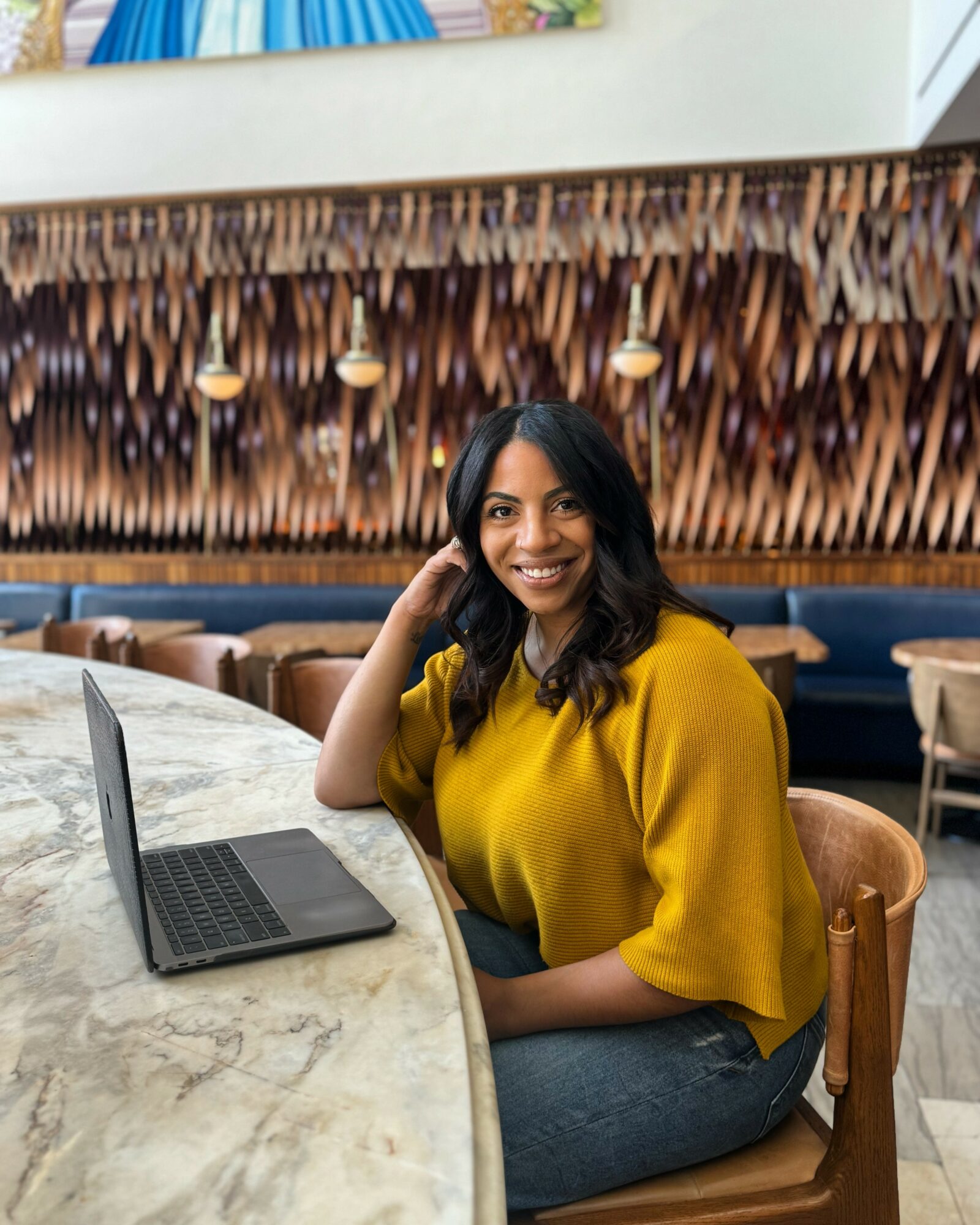
Image Credits
Danielle Ambry Photography