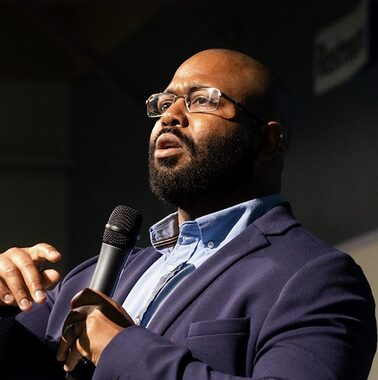
We recently had the chance to connect with Herman Armstrong and have shared our conversation below.
Herman, so good to connect and we’re excited to share your story and insights with our audience. There’s a ton to learn from your story, but let’s start with a warm up before we get into the heart of the interview. What makes you lose track of time—and find yourself again?
Going for hikes and spending time in nature. It helps me have a sense of getting away to relax and focus.
Can you briefly introduce yourself and share what makes you or your brand unique?
I’m Herman Armstrong, founder of Kathairo Solutions, where our mission is to help leaders and teams build cultures that reflect both clarity and connection. “Kathairo” is a Greek word meaning to make clean or to prune; a reminder that growth often comes through intentional reflection and hard conversations.
At Kathairo, we come alongside organizations, schools, and ministries that want to lead well across differences; cultural, generational, or organizational. We offer leadership coaching, team workshops, and cultural development consulting that help people not just perform better, but understand one another more deeply.
What makes Kathairo unique is that we don’t separate personal formation from organizational health. We believe better culture starts with better character. Right now, we’re expanding our work with Christian schools and nonprofits; helping leaders navigate change, conflict, and cross-cultural challenges with wisdom and grace.
Great, so let’s dive into your journey a bit more. What breaks the bonds between people—and what restores them?
Preconceived notions break bonds. When we stop seeing people as individuals and start reducing them to categories or assumptions, distance grows. It’s easy to talk about people; it takes intention to listen to them.
What restores those bonds is slowing down long enough to truly connect. Listening without an agenda. Asking one more question before offering an opinion. In our workshops, we often say “speed is the enemy of understanding.” When we pause long enough to see the image of God in another person, empathy returns. Then, relationships can begin to heal.
When did you stop hiding your pain and start using it as power?
When I realized that sharing our pain creates empathy bridges. For a long time, I thought strength meant hiding the hard parts of my story. I grew up without my father, lost my mother at a young age, and faced more than a few relational and financial challenges along the way. For years, I tried to push through those experiences quietly—believing that if I just worked harder, I could outrun the hurt.
But over time, I learned that transparency doesn’t make you weak—it makes you relatable. As I began sharing more of my journey, I noticed people leaning in rather than pulling away. They saw their own struggles reflected in mine. My pain became power when I stopped trying to protect my image and started using my story to invite others into honest growth and healing.
Alright, so if you are open to it, let’s explore some philosophical questions that touch on your values and worldview. What’s a cultural value you protect at all costs?
That every person deserves to be treated with dignity. As a Christian, I believe all people are made in God’s image—and that truth shapes how we lead, coach, and communicate.
Whether I’m working with a corporate team or a small nonprofit, I want to create spaces where people feel seen and valued. That doesn’t mean avoiding hard truths; it means speaking them in love. Protecting dignity means we can challenge one another without tearing each other down. It’s the foundation for real transformation—organizationally and personally.
Before we go, we’d love to hear your thoughts on some longer-run, legacy type questions. Are you doing what you were born to do—or what you were told to do?
I’m moving closer in the direction of doing what I was born to do every day. For a long time, I followed a traditional path of leadership and ministry; doing what was expected of me. But through Kathairo, I’m stepping more fully into what I was created to do: help others grow in clarity, connection, and courage.
It feels less like striving and more like alignment. The more I help leaders navigate change, conflict, and cross-cultural relationships, the more I sense this is where God designed me to serve. My hope is that through Kathairo, others find that same alignment between who they are and how they lead.
Contact Info:
- Website: https://kathairo.com/
- Instagram: https://www.instagram.com/therevwrites/
- Linkedin: https://www.linkedin.com/in/kathairo/


Image Credits
Daniel Kayamba