We’re looking forward to introducing you to Mardie. Check out our conversation below.
Mardie, it’s always a pleasure to learn from you and your journey. Let’s start with a bit of a warmup: What are you most proud of building — that nobody sees?
I’ve always believed in continuously investing in my learning and feeding my curiosity. Earning my Master’s Degree in Secondary Education was one of my proudest accomplishments, but it also reminded me that both art and education are lifelong journeys. As an artist and educator, I see endless opportunities to grow—whether through studying history, math, science, literature, or simply learning from life beyond the classroom.
My mother, an immigrant, instilled in me the deep belief that education is one of life’s most powerful tools—and she was right. As she would always say: “Con la educación, todo asegura” — “With education, everything is secured.” While that statement may not be entirely true, it does encourage individuals to think for themselves, navigate the world with empathy, and nurture their love for learning. I think that’s why I am so proud of continuously building on the responsibility of educating both others and myself.
My mom, who only had the opportunity to attend school until the 8th grade, believed deeply in the power of learning. Because of her, that same value was instilled in me—to carry forward what our family holds tightly to, especially in turbulent times.
In today’s world, I truly believe that education helps us build empathy and understanding for others. What many don’t realize is the time, dedication, and care it takes to sustain a lifelong commitment to learning. I’ll be the first to admit that I don’t know everything about art or teaching, but I do know there is always room to learn, explore, and evolve.
My curiosity drives me to teach myself new skills, expand my understanding, and refine how I see and engage with the world. It’s also what fuels my passion for creating artwork that honors and celebrates Hispanic traditions, practices, and beliefs—presented in ways that are both respectful and contemporary.
Can you briefly introduce yourself and share what makes you or your brand unique?
My legal name is Maribel Ramirez-Bohnenkamp, but I create under the name Mardie. The name was inspired by my father, who affectionately called me Mardibel. After his passing, I chose to keep that part of him close — a name that belongs to both of us.
I am a Mexican-American visual artist exploring the emotions of living between two worlds that can sometimes make one feel “ni de aquí, ni de allá” (neither from here nor from there). My mixed-media work combines painting, cutting, and layering to capture the moment or story within each piece. My work is known for its intricate cut-paper layers, bold color palettes, and storytelling rooted in cultural symbolism. Through my art, I aim to celebrate cultural identity, resilience, and the beauty of duality — because sí soy de aquí y soy de allá! (I am from here and from there.)
My artwork draws inspiration from the intricate designs of papel picado — cut paper often seen during Hispanic and Latin American celebrations such as Cinco de Mayo and Día de los Muertos. I am drawn to the delicate balance of positive and negative space, and the way that tension mirrors my own dual identity.
Much of my process begins with sketches and written notes. I paint on various watercolor papers of different textures and weights, then hand-cut each piece — including the papel picado details — with my trusty craft knife. I often collage my own paintings together to create compositions full of color, texture, and symbolism, drawn from my Mexican household upbringing rich with traditions, beliefs, and pop culture.
My imagery often centers on death, portrayed not as darkness but as part of life’s vibrant story. In Mexican culture, death is viewed as another chapter of existence — inevitable yet celebrated. Other pieces focus on everyday joy and cultural nostalgia, such as the game of Lotería, played late into the night with laughter, café, and pan dulce. Whether my work addresses grief, identity, or shared moments of joy, I aim to capture the resilience and warmth of our people — finding beauty in both the heavy and the light.
Currently, I’m focusing on a body of work that reflects the deep emotions and realities of what is happening in our country today. Writing has begun to accompany my pieces — expanding the visual story into words that capture both my anger and strength, my sadness and hope. I find joy in creating, in dancing, in time with family and friends, and in the radiant colors of a sunset.
My work is influenced by Mexican folk art, papel picado craftsmanship, and contemporary collage. Mardie’s work is a celebration of color, culture, and memory — transforming tradition and emotion into layered visual stories.
Amazing, so let’s take a moment to go back in time. Who taught you the most about work?
Both my mother and father taught me from an early age what it means to fight for what you want while holding on to your integrity. As immigrants from Mexico, the odds were stacked against them, yet they built a life in America centered on legacy—one rooted in hard work, belief, and tradition.
I still remember waking up at 5 a.m. just to watch them get ready for work at the meat processing factory. Sometimes, I’d fall asleep sitting nearby and have to be carried back to bed. Even after we moved, their dedication never wavered—they kept working toward their dream. Both continued at the meat packing plant until they had saved enough to open their own business.
Keeping one’s integrity with the work we do is also an important aspect. Without integrity, the work we were putting in would mean nothing. Not only did my parents have their own business, but they also helped the community by providing products that were meaningful and useful to an ever-growing Hispanic and Latin neighborhood. They made sure that if a community member couldn’t pay for their groceries right away, they would have time to pay it back. They approached their business with morals that never wavered from their beliefs or compromised their character. And I think that is a very important part of what it truly means to work.
I’d often travel with them to places like Oklahoma, Texas, and Mexico to pick up product. At the store, I sat by the entrance greeting customers, helping them check out, and stocking shelves. My parents always believed that with enough hard work, you could achieve just about anything.
My dad used to tell me that one day I’d be a famous artist—a dream he once held himself. I remember watching him draw his favorite caricatures of customers or donkeys, his hand moving effortlessly across the page.
Growing up surrounded by our culture and traditions shaped my drive in profound ways. From my parents, I learned that failure is part of the journey—that setbacks are only pauses before continuing the good work.
What did suffering teach you that success never could?
Suffering and failure are two things most people spend their lives trying to avoid. But for me, those moments have been my greatest teachers—lessons that success could never offer. They’ve taught me resilience.
The younger version of myself would never have believed that the heartbreak I once feared would be the very thing to make me stronger. Through those painful moments, I’ve found clarity in my purpose and traction toward my goals. Suffering slows me down just enough to think deeply, to listen, and to rebuild. It gives me strength in the most unexpected ways.
It forces me to check in with myself—what I’m doing, how I’m doing it, and why. And, most importantly, it reminds me that I matter in this world, whether to a handful of people or a classroom full. What I do matters, because it comes from a place of truth that words can’t always capture.
Suffering keeps me human. It humbles me when I’m too hard on myself, grounds me when I drift too far, and reminds me that growth often comes wrapped in pain. That’s what suffering has taught me—lessons that success never could.
Next, maybe we can discuss some of your foundational philosophies and views? Is the public version of you the real you?
No. The public version of me is not the real me.
The real me loves to dance—wherever and whenever—while holding onto hope for a better future. The real me doesn’t feel the need to code-switch so that coworkers, students, or people who barely know me can understand me. The real me speaks Spanish freely, without being told, “This is America, speak English,” or being talked down to because I’m a person of color who speaks another language.
The real me can have deep, meaningful conversations about what moves me, and still be unapologetically goofy and lighthearted. I love sharing my culture, traditions, and food with those who are close to me.
In public, I often present a watered-down version of myself—to protect who I am, my family, and my culture. I’ve learned that not everyone has good intentions, and I grew up hearing people shout things like, “Go back where you came from,” or “You don’t belong.” So I protect myself. Not out of weakness, but out of wisdom.
I see it as a filter—a way for others to earn the privilege of knowing the real me.
Because the real me feels safe, loved, and seen.
And the real me no longer needs to play the code-switching game just to blend into society.
Okay, so before we go, let’s tackle one more area. If you knew you had 10 years left, what would you stop doing immediately?
If I had only 10 years left, I would quit public education immediately. The artist in me comes first—that’s what brought me into teaching in the first place. I love inspiring kids to explore their creativity, but teaching today is exhausting in a way that’s impossible to understand unless you live it. The constant sacrifice, the endless demands—it drains you down to your core.
I refuse to give up the part of myself that keeps me alive. Being an artist isn’t just making art—it’s salvation, reflection, and a way to communicate the deepest parts of who I am. Leaving teaching would give me the time and energy to fully commit to my work, to create with passion instead of surviving on caffeine and routine. It would let me show up fully for my family, fully for myself, and fully for the art that has always defined me. I would be gambling on myself—and finally, that gamble would be worth it.
Contact Info:
- Instagram: mardie_art
- Facebook: @MardieArt


Image Credits
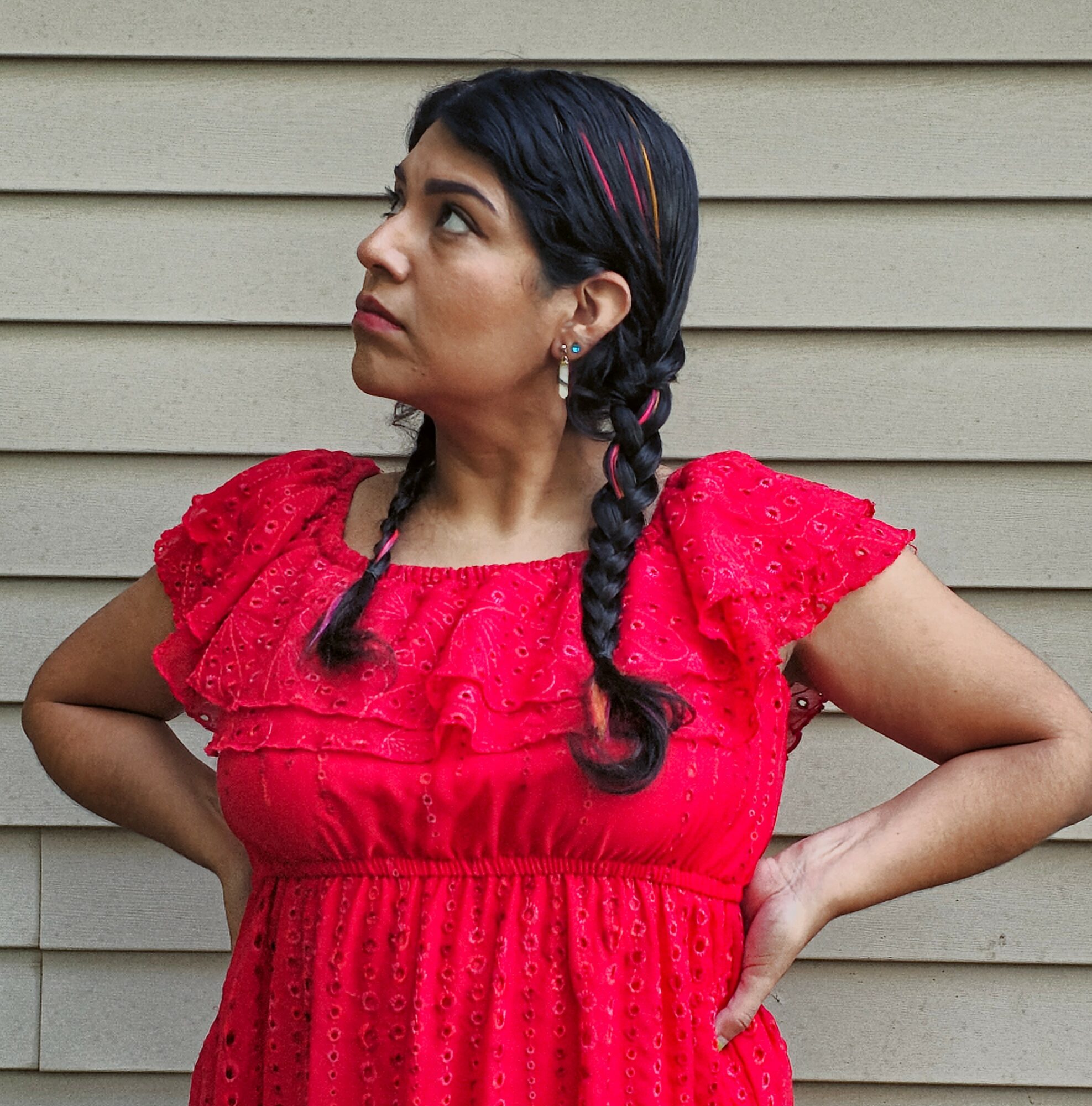
Headshot: Kevin Bohnenkamp- Bohnenkamp Illustrations