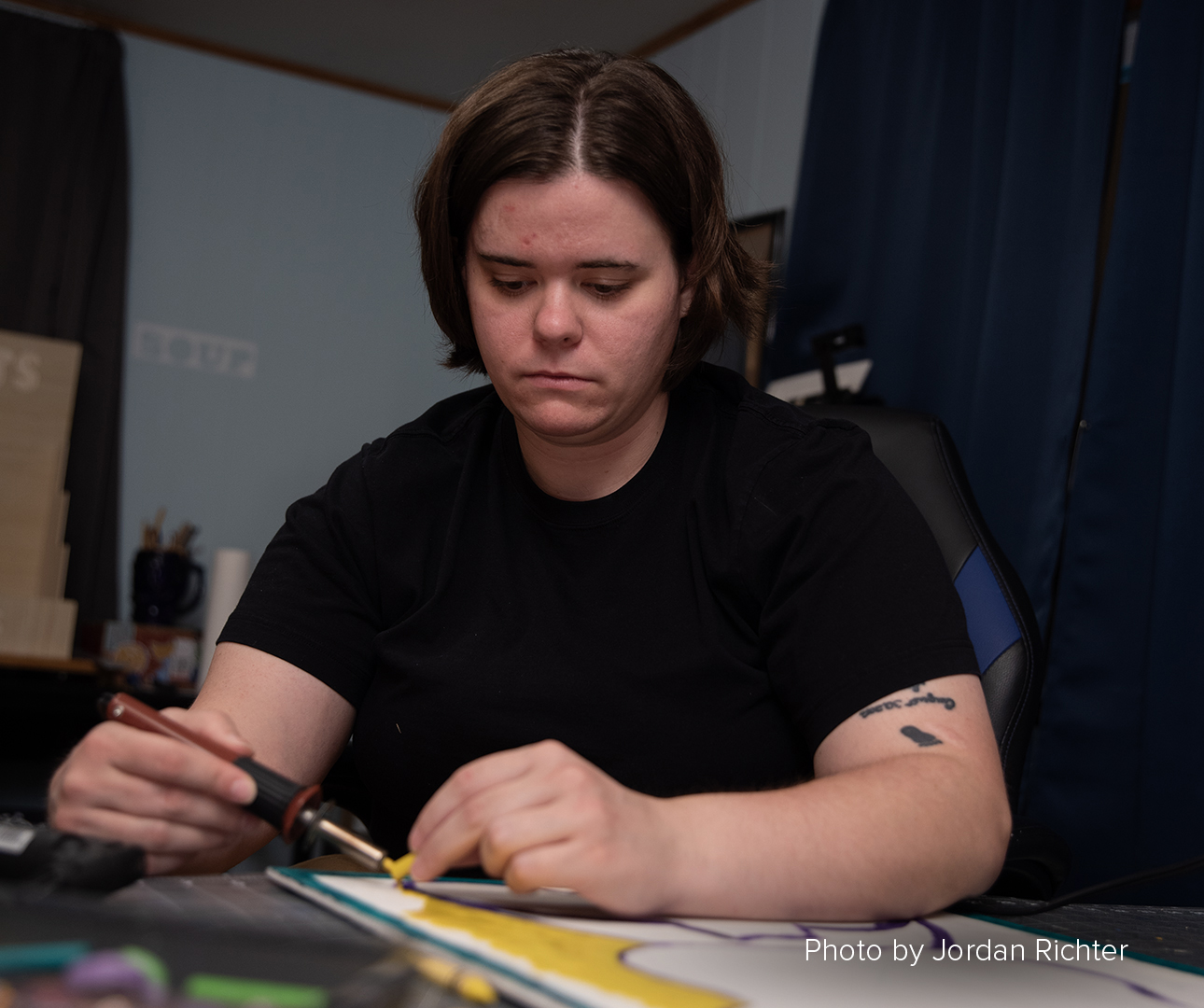
Today we’d like to introduce you to AC Greenwalt.
Hi AC, please kick things off for us with an introduction to yourself and your story.
When I was a kid I was incredibly frustrated with how crayons worked. I wanted to draw pieces, but I needed to plan where they were going, but I didn’t want pencil marks. That is where the journey begins.
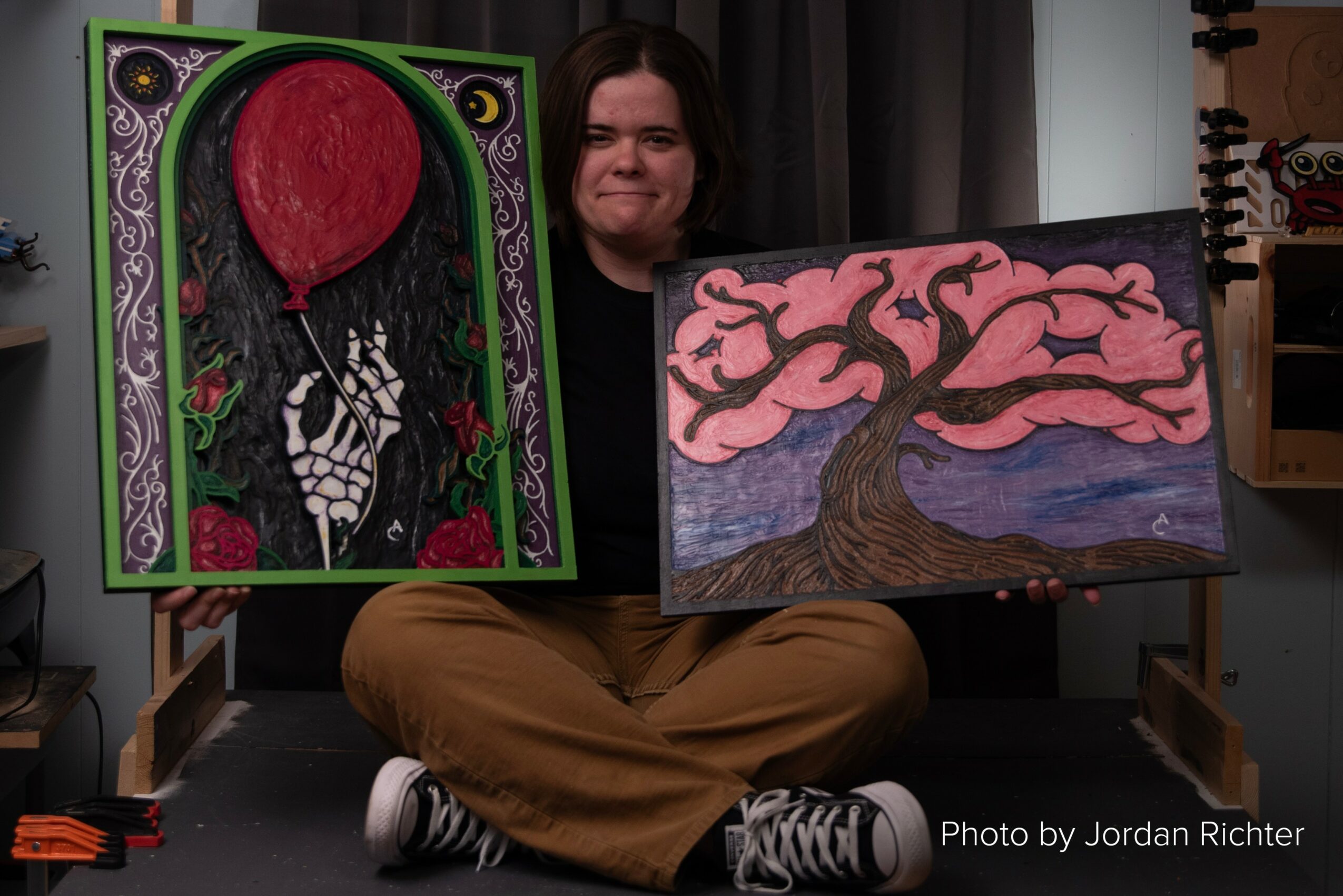
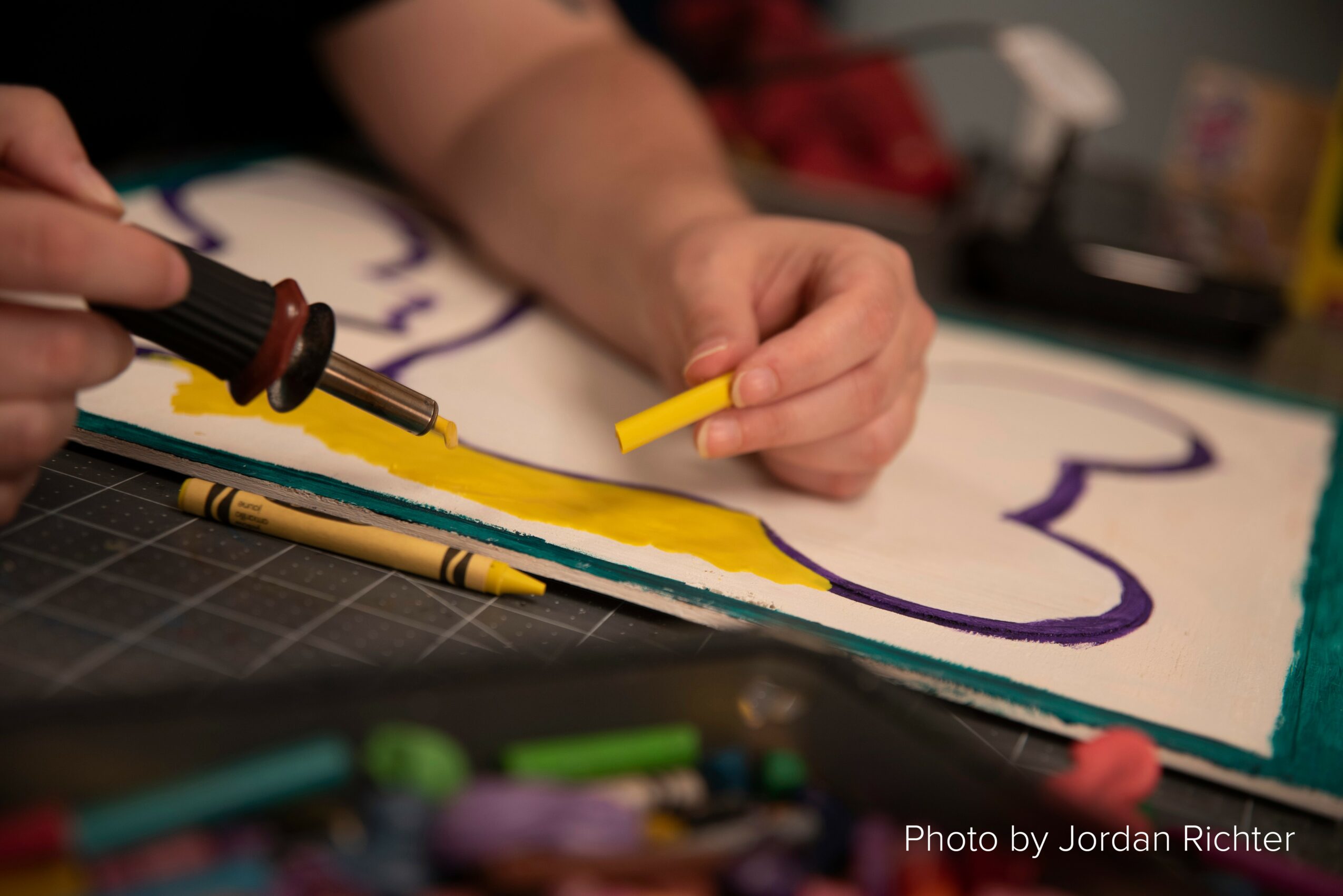
But we are going to fast forward to where we started making our pieces using melted crayons. I’ve been working and evolving it alot over the last 8 years. It started as a flat canvas with crayons being melted by using a bic lighter and a sculpting tool, and now we use a CNC machine to carved into pieces of wood and a wood burning tool to melt into the recessed areas.
The wood knife we use has a dial on it where we can control the heat applied to the crayon. A higher temperature means less texture, where lower temperature means more texture.
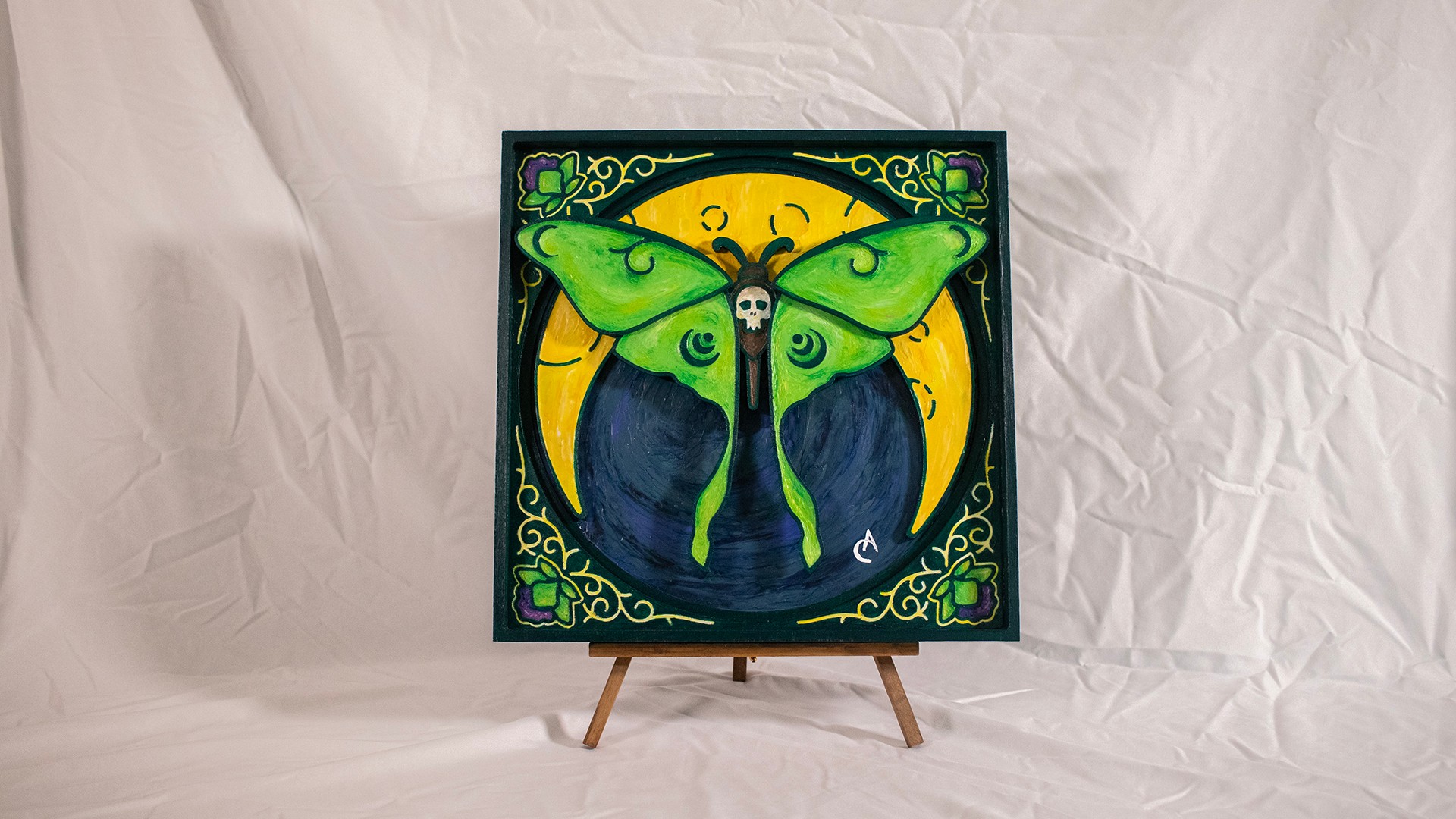
Recently I’ve gone from doing a single flat piece into using several layers of wood to carve into to add more depths to the pieces.
I’m sure it wasn’t obstacle-free, but would you say the journey has been fairly smooth so far?
There have definitely been struggles as this has evolved. The second piece I cut into wood was 30″ w x 54″ h and I spent about a year cutting into it and filling it with crayon. After that piece was done I learned what a wood router was.
That sped up my process greatly! But I didn’t know that doing a long amount of carving could hurt your wrist. I then looked into getting a CNC machine to do the wood cutting part of it.
The melting of the crayon has also has its developments. Most people that do something similiar would use a hot glue gun to melt the crayon onto the canvas. I did that one time, lifted the gun up and hot crayon ran down my arm.
Since then I have been looking at different ways to melt crayons to achieve the look I want.
As you know, we’re big fans of you and your work. For our readers who might not be as familiar what can you tell them about what you do?
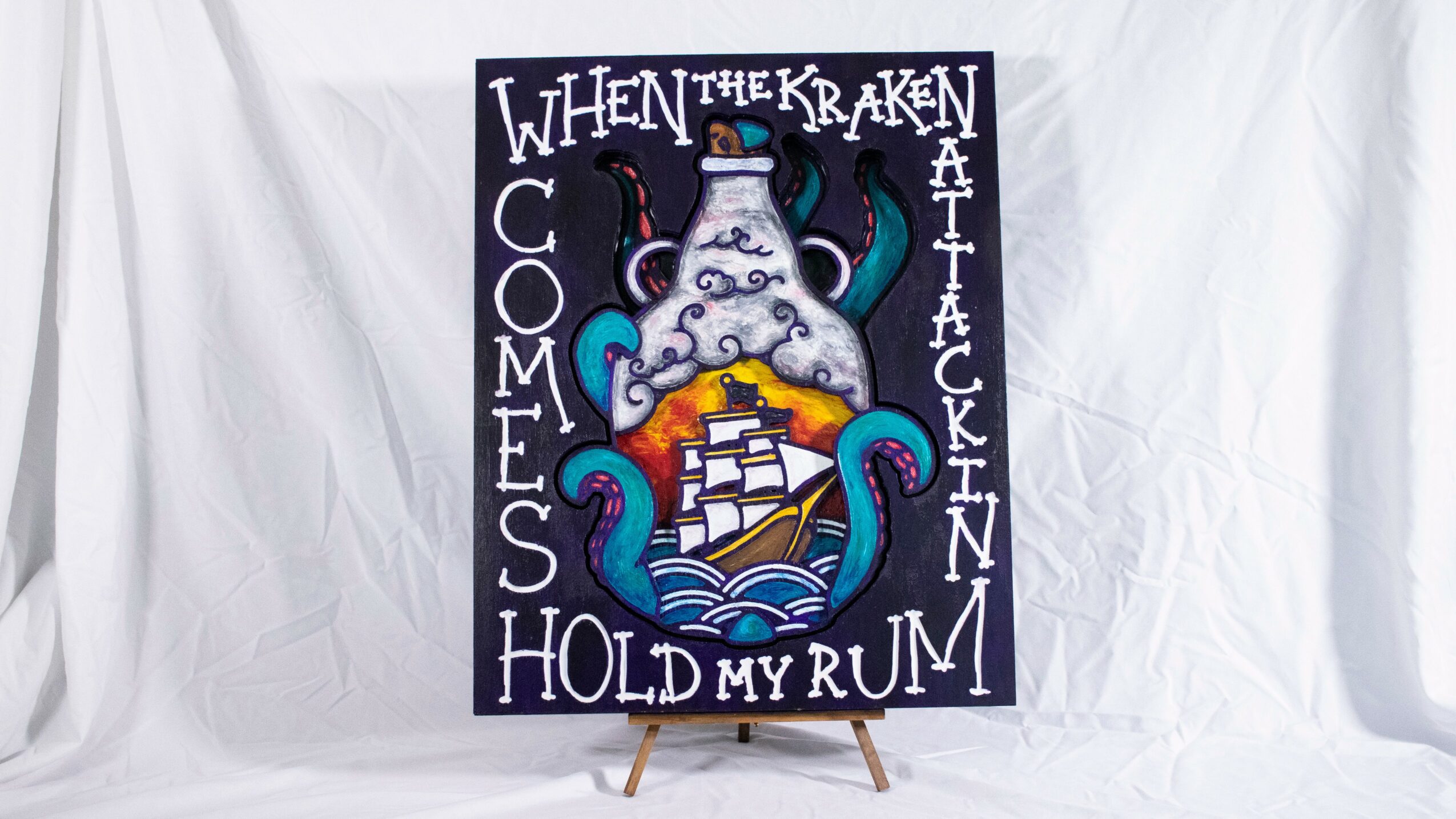
I take pieces of wood, cut into them, and then fill the recessed areas with melted crayon. I would say what sets me apart from people that do similar works are the textures I am able to achieve with the tools I use. Most people melt crayons with a hot glue gun or a heat gun, but using a heat knife gets textures that I haven’t seen achieved using other methods.
I am most proud of the evolution of the process. I’ve learned alot along the way, not only in the process of how I make but how to promote and get out into the amazingly talented art community St Louis has.
What would you say have been one of the most important lessons you’ve learned?
Things will be frustrating, that is just facts, but keeping an open mind to adapt as needed will save a lot of headaches.
Pricing:
- Pricing is available on my site for originals
- Pricing for commissions will vary
Contact Info:
- Website: https://duckduckstudios.com
- Instagram: https://www.instagram.com/duckduckstudios/
- Youtube: https://www.youtube.com/@duckduckstudios
- Other: https://www.tiktok.com/@doubleduckstudios