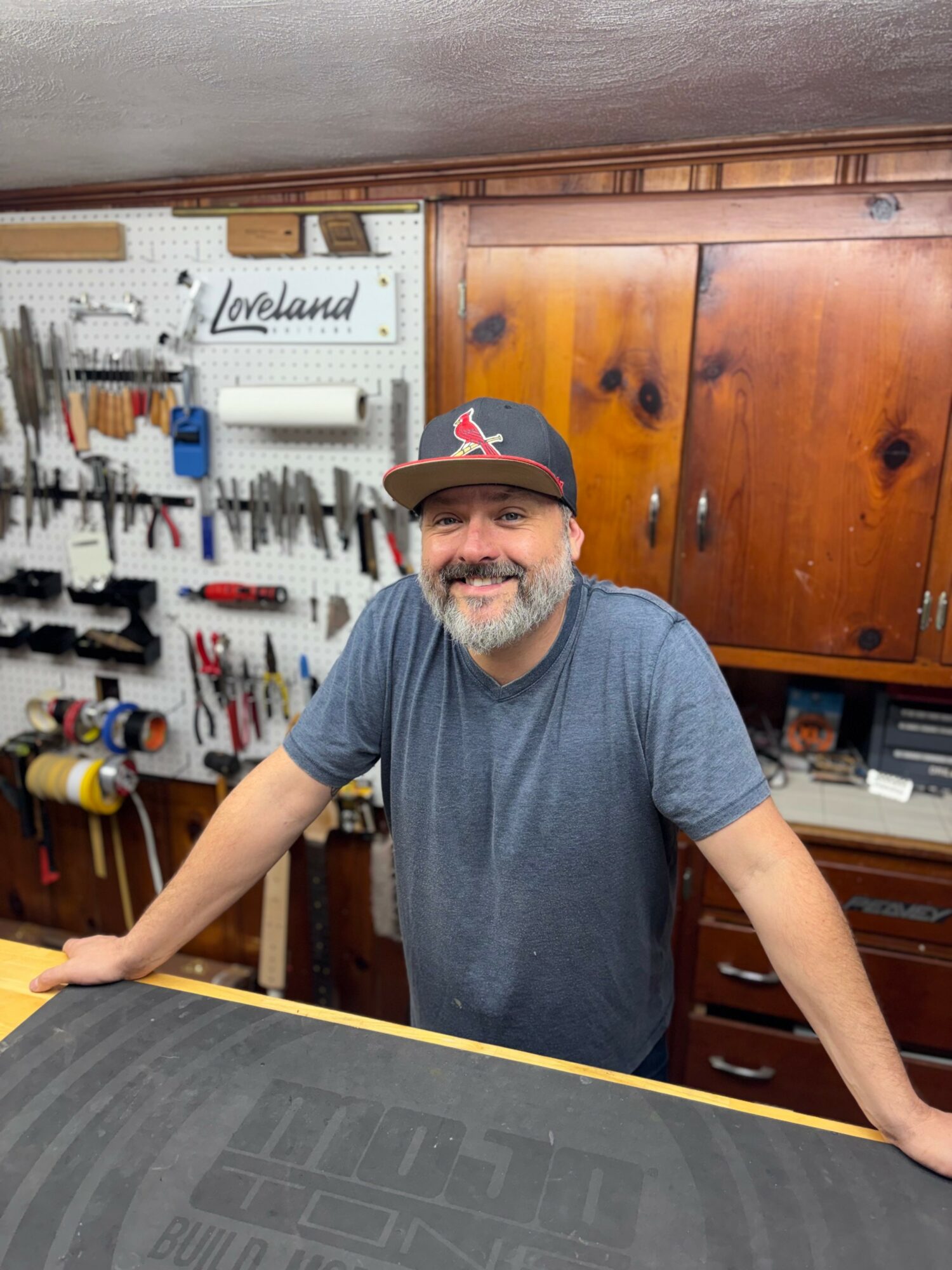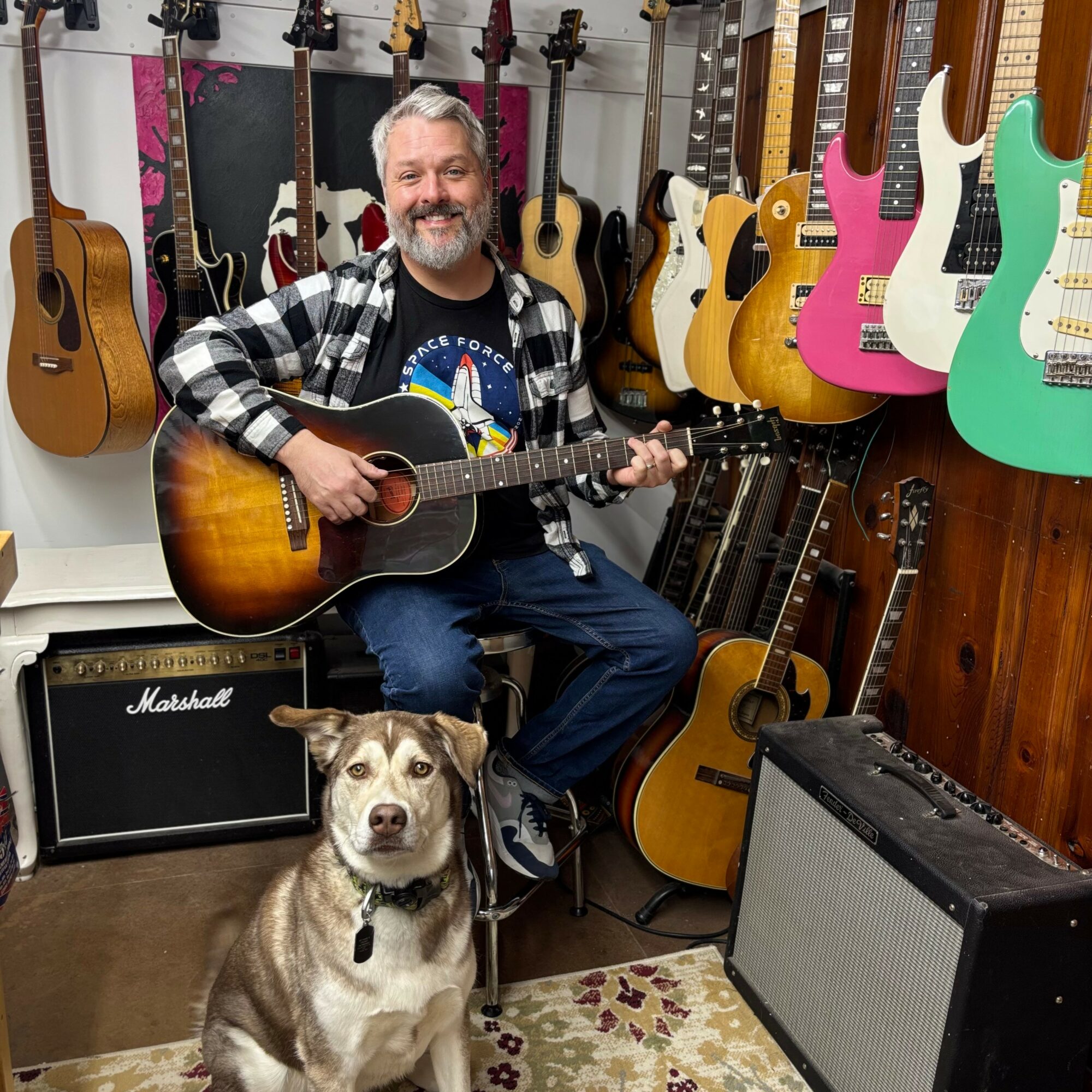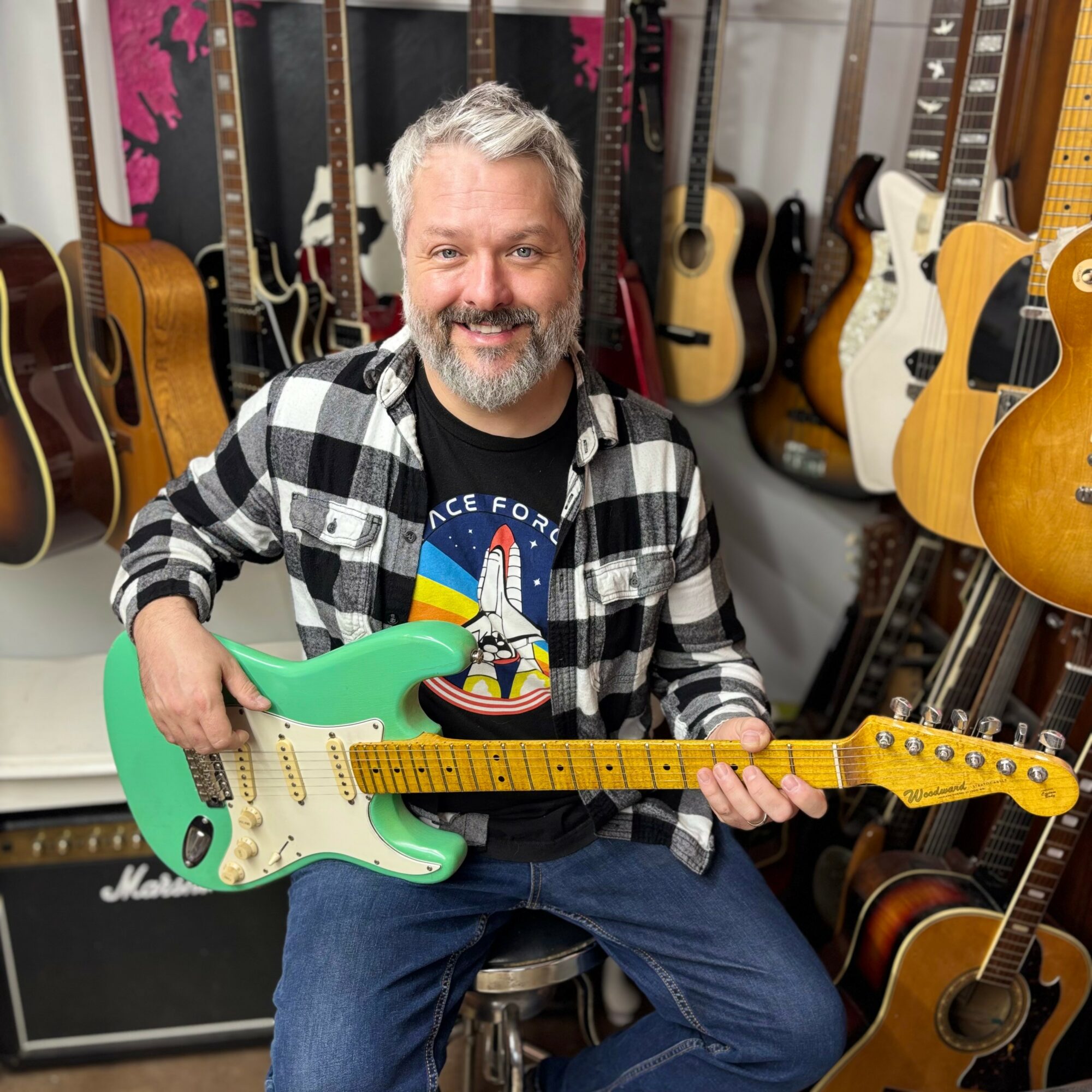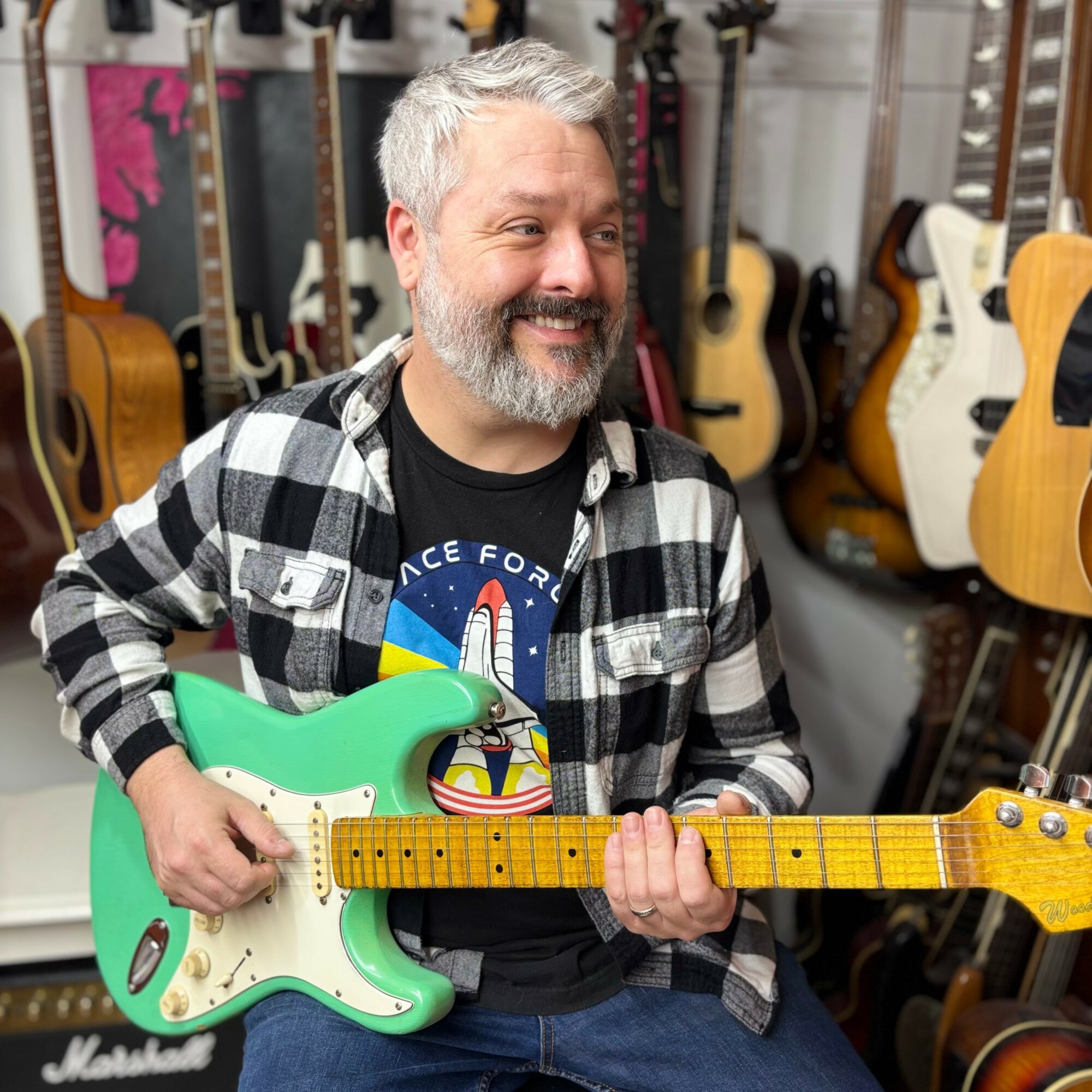
Today we’d like to introduce you to Johnny Woodward.
Hi Johnny, so excited to have you on the platform. So before we get into questions about your work-life, maybe you can bring our readers up to speed on your story and how you got to where you are today?
Loveland Guitars didn’t start as a business plan. It started long before that—when I was a kid watching my grandfather’s crude guitar repairs on the old basement pool table. The kind where glue goes everywhere and you learn just as much from the mess as from the fix.
My dad added to that early education in his own way. He was always chasing the perfect cheap guitar—the underdog that somehow played better than it had any right to. He taught me early on that great instruments don’t have to be expensive; they just have to be put together right. That idea stuck with me, and after years of chasing tone, perfect materials, and better craftsmanship, it eventually shaped everything Loveland Guitars would become.
By the time I was living in Loveland, Colorado, I’d been repairing guitars for about ten years and started looking into a luthier school in Denver. They were charging $1,000 for a week-long “luthier” course. The more I thought about it, the clearer it became: I wanted more, and I wanted to push the boundaries. So I took that money to Austin Hardwoods instead and learned the old-fashioned way—through trial, plenty of error, and repetition.
For the better part of two years, I scraped, routed, shaped, and discovered the limits of wood and patience. I probably ruined ten Strat bodies and at least a half dozen necks before I figured out how to shape them cleanly. Some jobs—like carving nuts by hand—I must’ve done a hundred times before I could get them consistently perfect. Nothing came quickly, but every mistake paid for the skill set I use now. Colorado also has some excellent luthiers, and a couple were kind enough to point me in the right direction when I needed it. That’s really where I became a luthier.
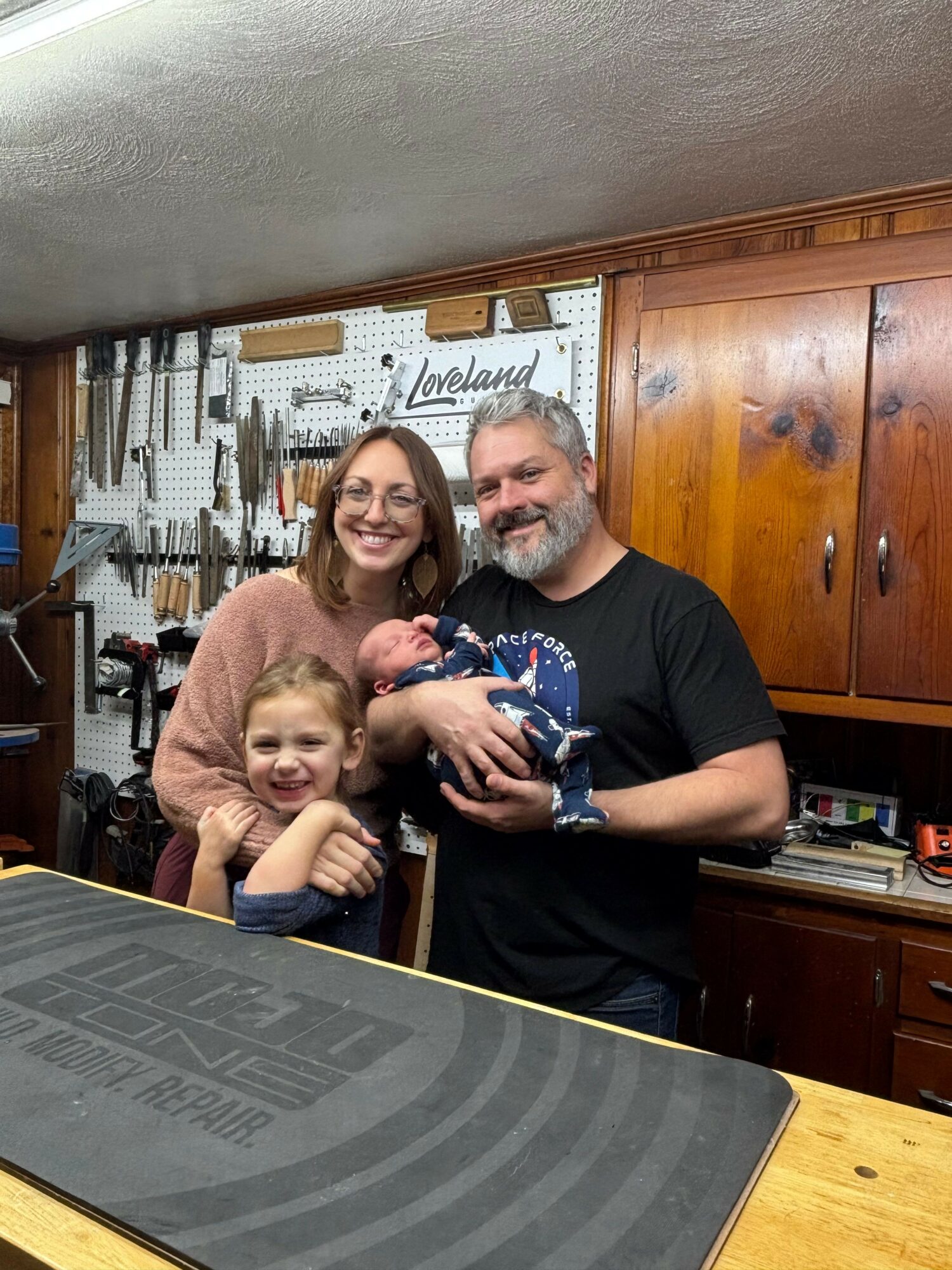
Life eventually brought me back to St. Louis. During COVID, I took on a different kind of rebuild—an old farmhouse in North St. Louis that needed just as much patience as any vintage guitar. One fix at a time, no shortcuts, and keep going. That home pulled me deeper into the community and eventually led me to Chatham Bible Church—where I met my wife. Somewhere along the way I also ended up repairing almost every guitar and bass in the congregation. It wasn’t planned; it just grew naturally, the way good community things tend to.
Now we’re raising our family here, and the shop has grown with us—something honest, local, and rooted.
Loveland Guitars represents all of that: family, craftsmanship, the belief that old things are worth saving, and the idea that simple work done well can create something meaningful. I’m not trying to be a huge company. I just want to keep doing good work. It doesn’t pay great and it isn’t glamorous, but it’s a sincere passion I love sharing with the people around me.
Some days that means installing a free set of strings and doing a full setup on a kid’s guitar because I can see the fire in their eyes. There’s no way I could charge what the work is worth—or charge them at all—because I remember exactly what it’s like to be that kid.
Some days it’s taking a $10,000 handmade instrument and dialing it in with the patience, precision, and respect it deserves—making it as perfect as human hands can get it.
And plenty of days, it’s taking a $150 beater and giving it more time and care than anyone expects, because sometimes the “starter guitar” is the one that opens doors and quietly puts someone on a different path—a small push, the way faith often works.
The next chapter is already underway. We’re planning to convert our 185-year-old barn into a full retail and building space—a place where people can walk in, talk guitars, watch work happen, learn something, and feel welcome. A space built not around scale, but around sincerity.
Loveland Guitars has never been about being big.
It’s about being meaningful—
little by little: a repair, a build, a kid with their first instrument, a musician rediscovering their sound.
And that’s more than enough.
Would you say it’s been a smooth road, and if not what are some of the biggest challenges you’ve faced along the way?
Learning the craft the hard way — lots of mistakes, lots of wood wasted, and a lot of patience.
Starting with almost no budget — buying tools slowly and making my own jigs to get by.
Balancing perfectionism with profitability — caring more about the result than the clock.
Earning trust in a crowded field — proving myself one repair at a time.
Competing with cheap, mass-produced fixes — showing people the value of real workmanship.
Running every part of the business — the luthier, the bookkeeper, the communicator, all in one.
Riding unpredictable workflow waves — busy seasons, slow seasons, and everything in between.
Working in limited spaces — basements, corners, and makeshift setups until I could grow.
Keeping the craft alive through major life changes — moves, marriage, kids, and rebuilding a farmhouse.
Doing free or underpriced community work — especially for kids and church musicians who need it.
Trying to grow without losing the soul — keeping the shop meaningful, not just bigger.
As you know, we’re big fans of Loveland Guitars. For our readers who might not be as familiar what can you tell them about the brand?
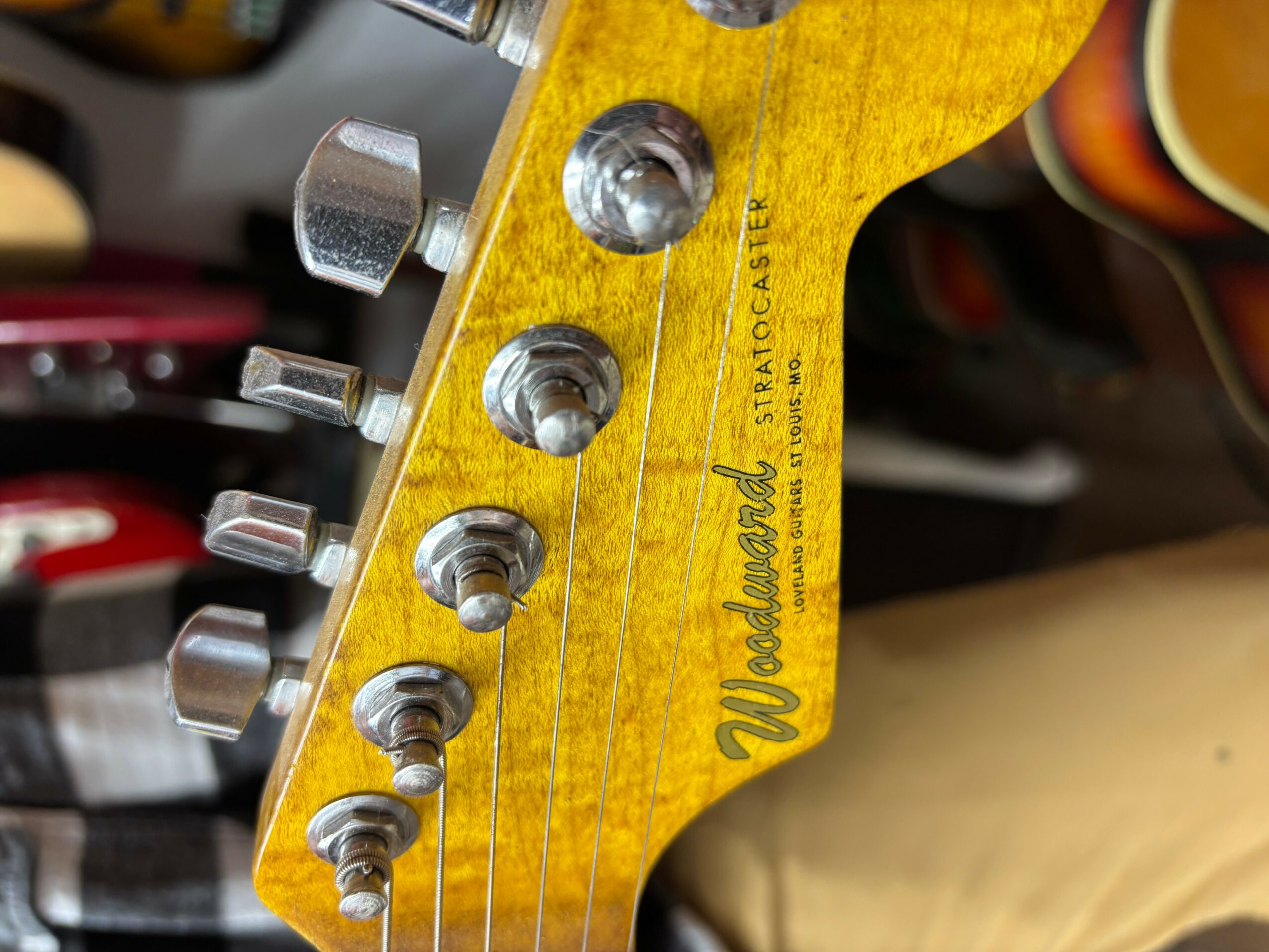
Loveland Guitars is a small, detail-driven repair, finishing, and building shop focused on making instruments play and look their absolute best. I work on everything—entry-level guitars, vintage pieces, custom builds—and approach each one with the same level of care. The goal is simple: help players get more out of the instruments they love.
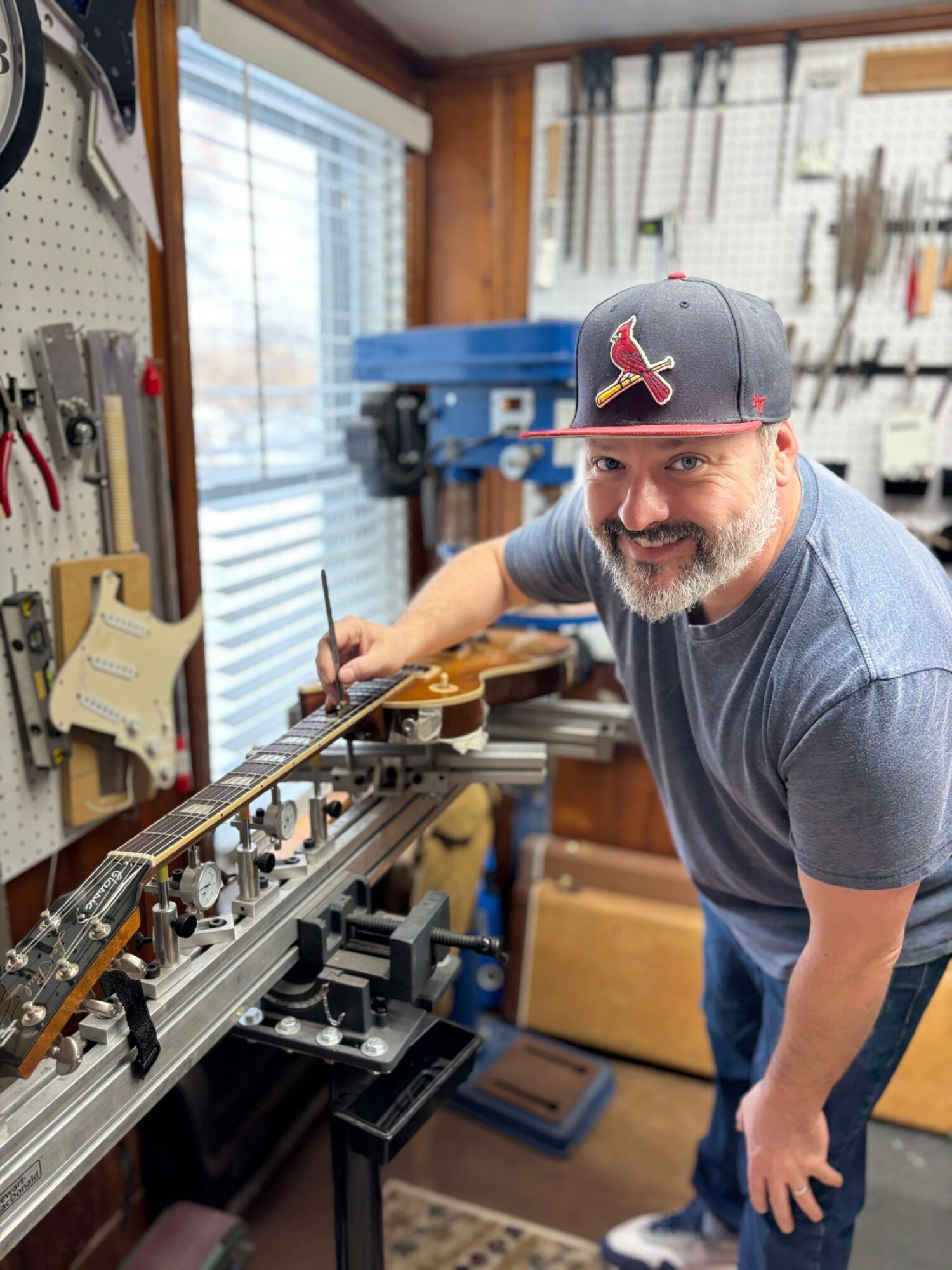
I specialize in precision setups, fretwork, structural repairs, electronics, refinishing, and restoring problem instruments so they feel effortless to play. People tend to notice the extra time that goes into each job. Nothing is rushed; every guitar gets treated like it matters.
What sets Loveland Guitars apart is the mindset behind the work. I’m not trying to build a high-volume shop. I’m building something personal—rooted in honesty, patience, and real craftsmanship. I take pride in surprising players with how good their instrument can feel after quality work, and in helping musicians at every level get inspired again.
Brand-wise, I’m proud that Loveland Guitars has stayed grounded, approachable, and community-focused. Whether someone brings me a professional’s main instrument or a beginner’s first guitar, the goal is always the same: send it back better than expected and ready to create music.
For readers, all you need to know is this:
Loveland Guitars exists to make good instruments great, bring worn-out guitars back to life, and give players a trustworthy place for repairs, finishing, and careful craftsmanship.
If we knew you growing up, how would we have described you?
Growing up, I was always hands-on and curious. I liked fixing things, improving things, and figuring out how stuff worked. I wasn’t afraid to start from scratch or fail a few times to get something right. I had a steady work ethic, a resourceful mindset, and I liked being useful—traits that ended up becoming the foundation of how I run my business today.
Pricing:
- Most setups $80
- Level, crown and polish starts at $120
- Full Refret starts at $320
- Nuts and Saddles start at $80
- Finish touch ups start at $100
Contact Info:
- Website: https://lovelandguitars.com
- Instagram: https://Instagram.com/lovelandguitars
- Facebook: https://Facebook.com/lovelandguitars