Today we’d like to introduce you to Edo Rosenblith.
Hi Edo, we’d love for you to start by introducing yourself.
When reflecting on my own story, the one consistent thing I did as far back as I can remember is draw. My family and I moved around a lot as a kid. First from Tel Aviv, where I was born, then to the suburbs around New York City. Both places I do not remember. My first memories are of the desert landscapes that surrounded our suburban ranch-style house outside of Phoenix. I started drawing then, picking up my father’s art supplies. My father had no more time to use them; he had to focus on his career as a shoe designer, but I had all the time in the world. I drew before I knew how to read or write; it is a way of communicating that comes most naturally to me. Soon after, we moved to the St. Louis suburb of Chesterfield. My parents put my twin brother and me into a Montessori-style school, but once they realized I was spending all my time drawing scenes from Star Wars and not learning how to read, they put us back in public school. Back in public school, I was put into a classroom for kids on a “slower” track until I improved my reading comprehension; meanwhile, my twin brother started in the school’s gifted program. I felt so much shame over my situation. I would hide under the table, pretending I had dropped my pencil when outsiders walked by the area where the “slow” track kids worked. The one place I could find any self-worth was through drawing. My classmates and eventually teachers noticed my skills, and I started getting asked to make posters for school functions. At the same time at night, my twin would read to me; at first, it was comic strip compilations, but eventually he must have read half the Harry Potter books plus whatever fantasy and science fiction books he had finished. My older brother would bring home superhero comics, MAD magazine, and even subscribed to a now long-defunct magazine called WIZARD, which specialized in covering comic book culture. I learned about the whole history of the comic medium in those issues.
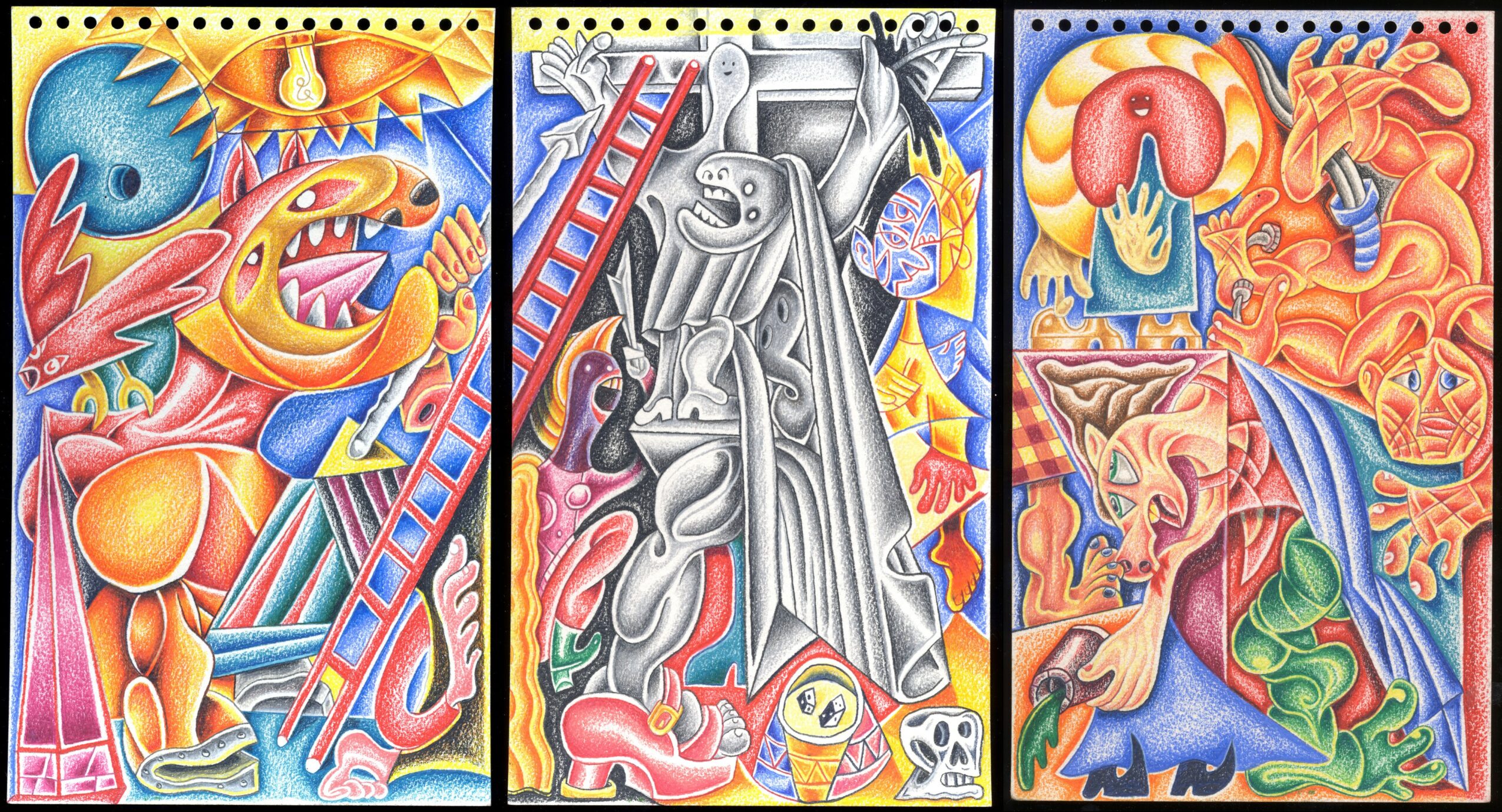
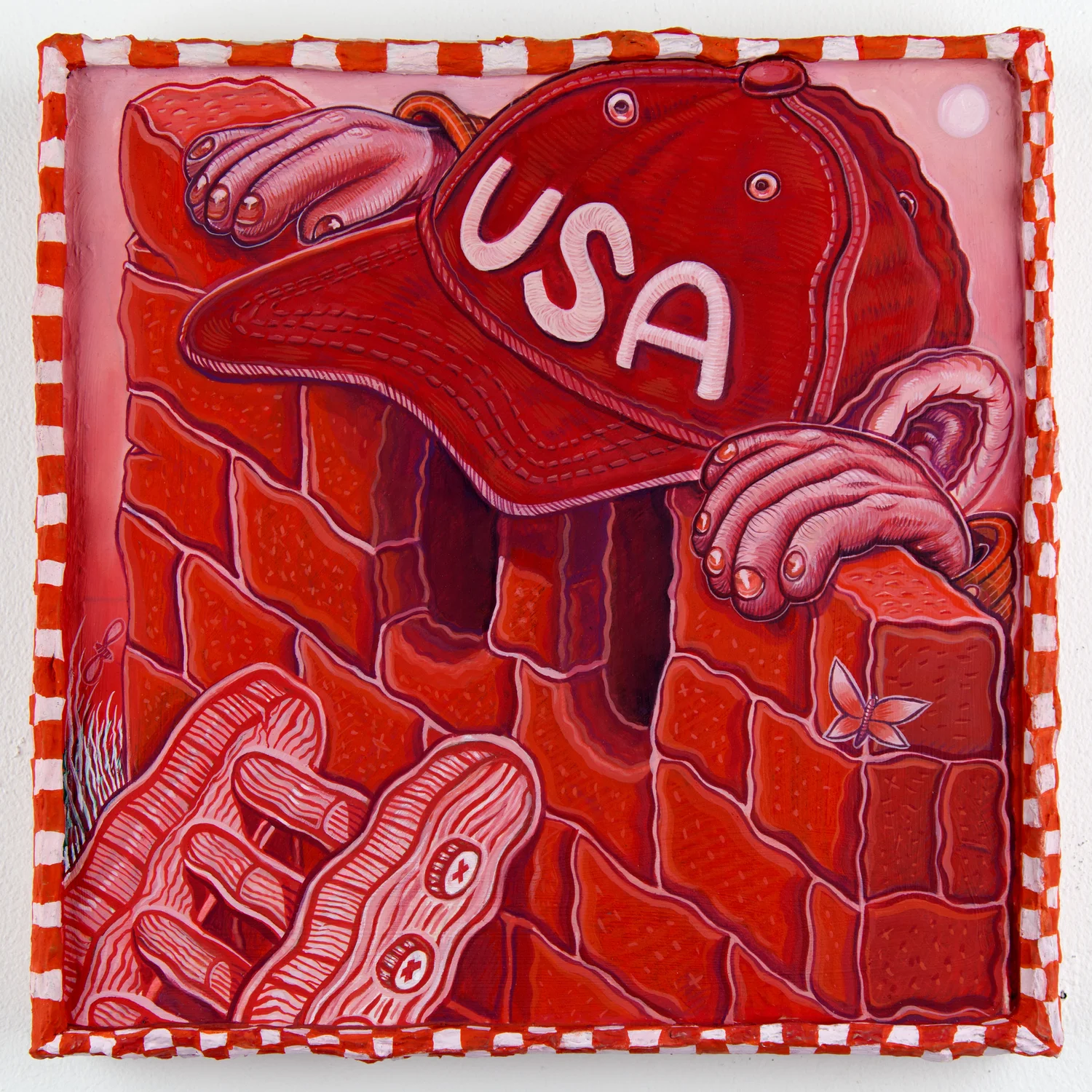
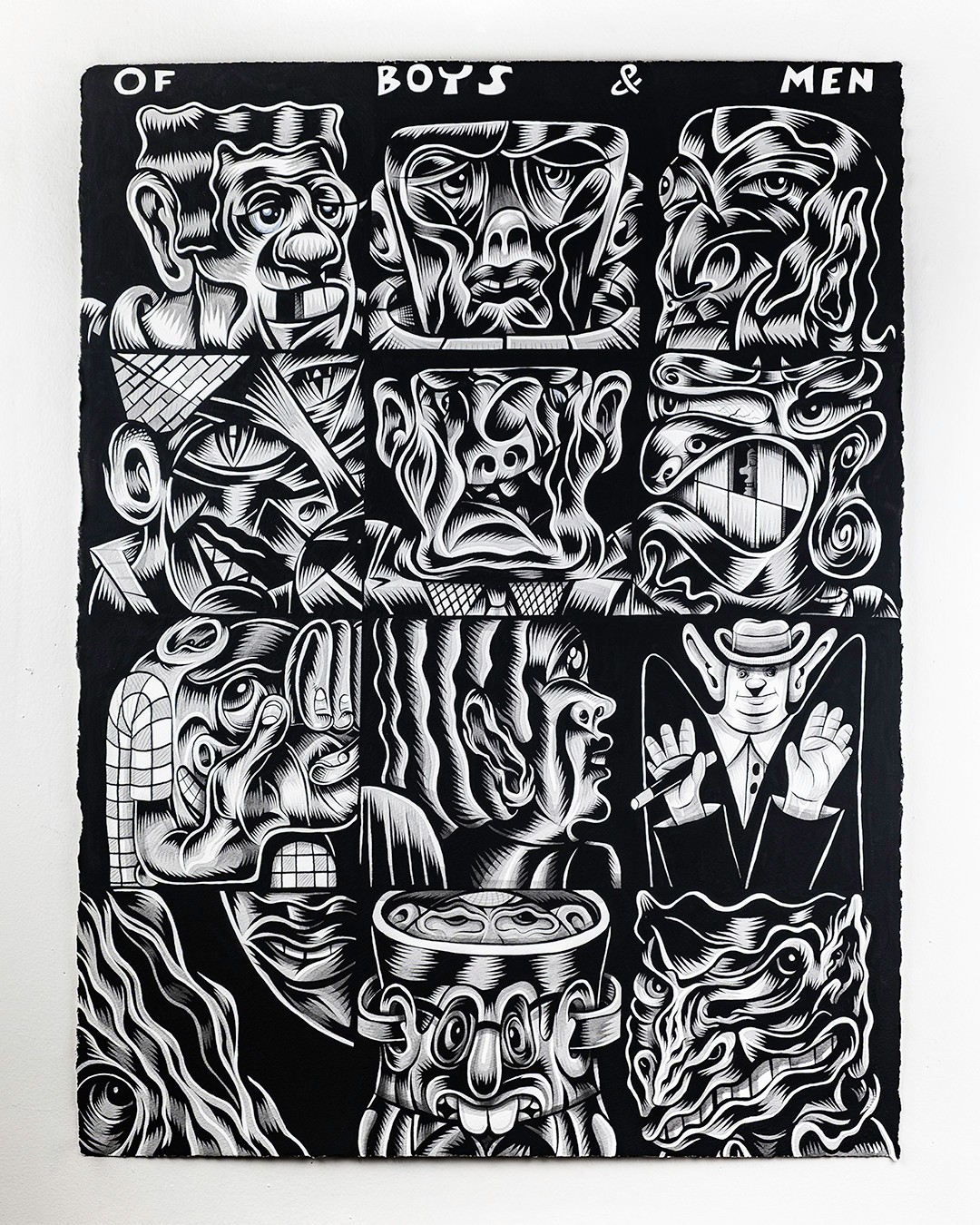
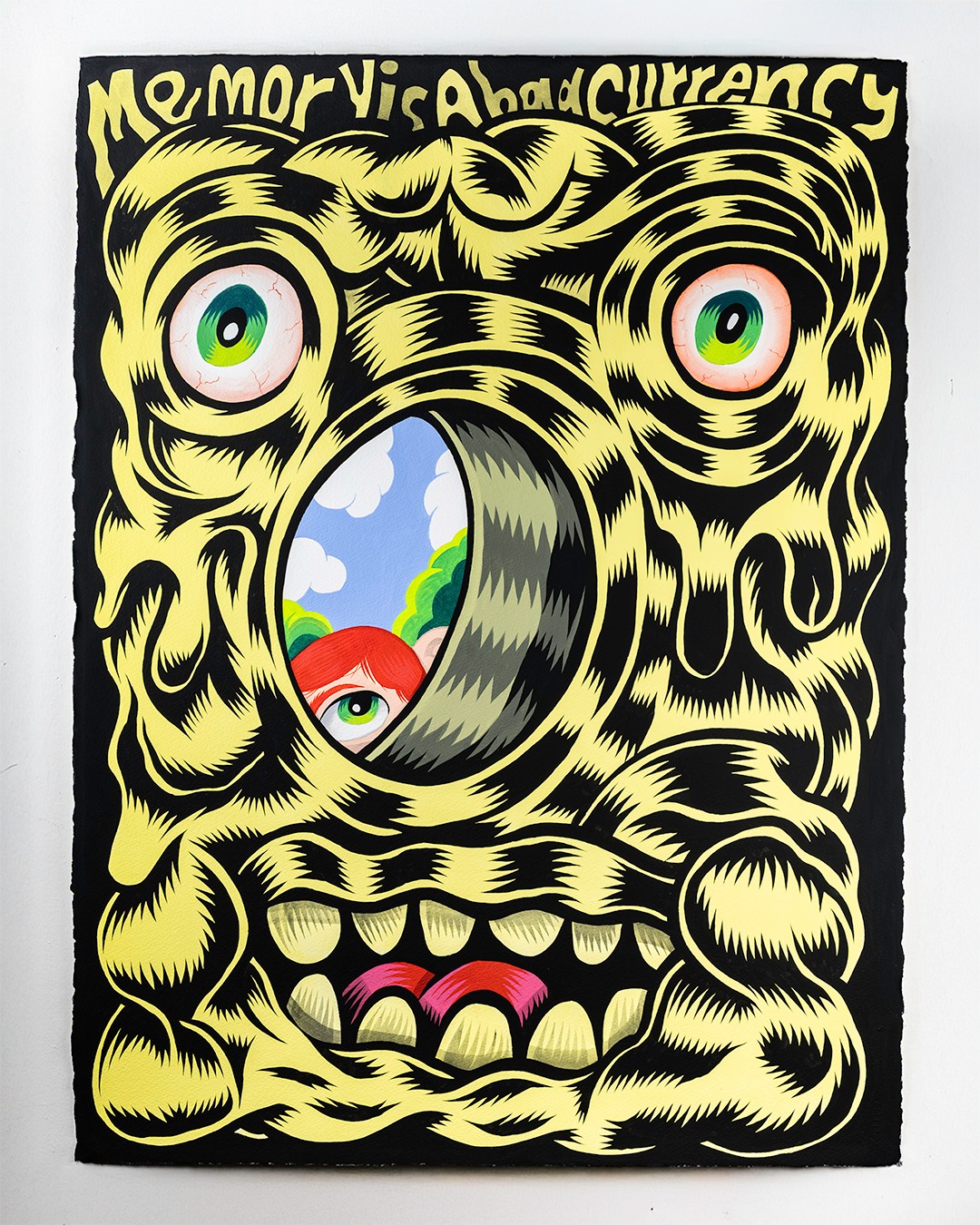
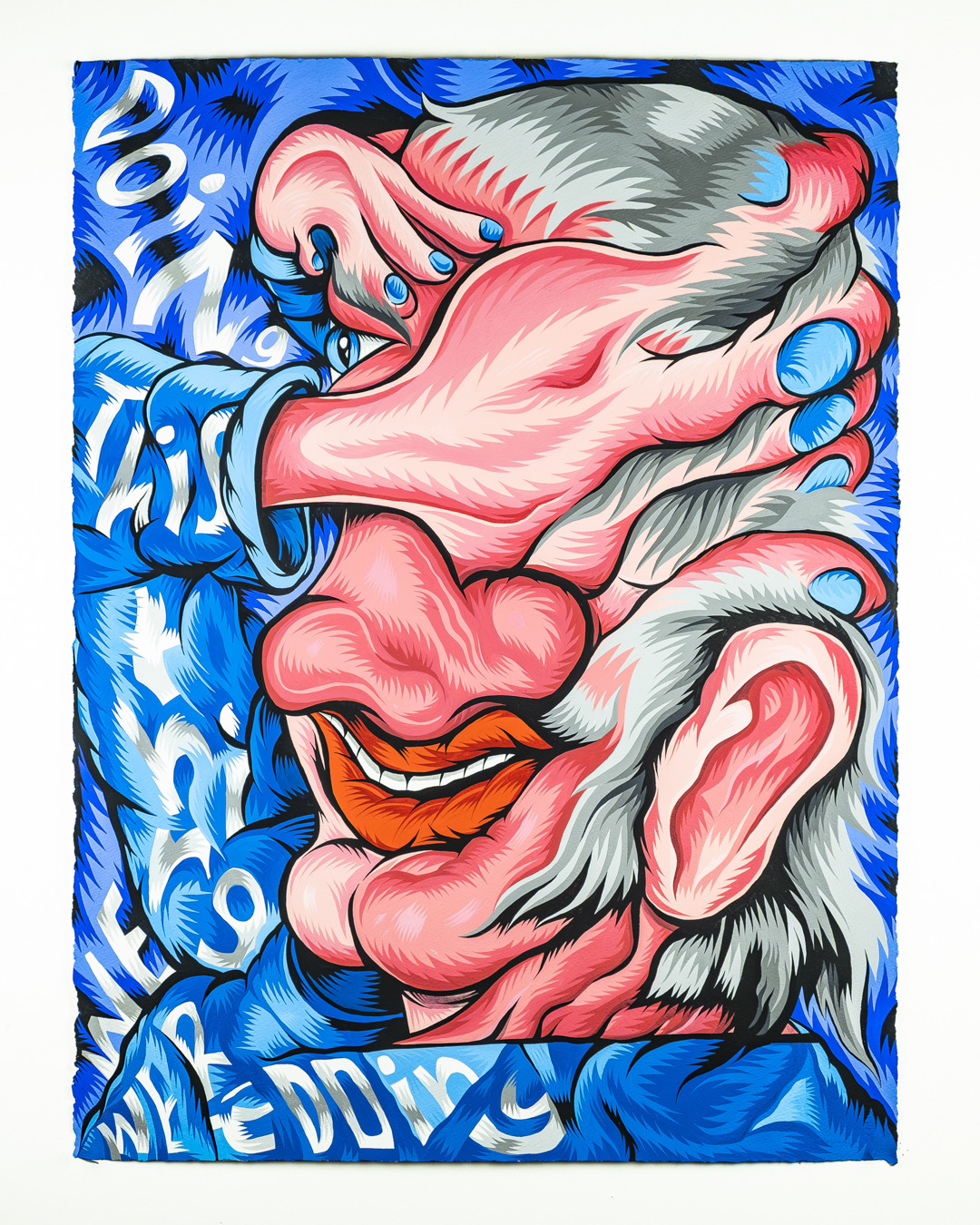
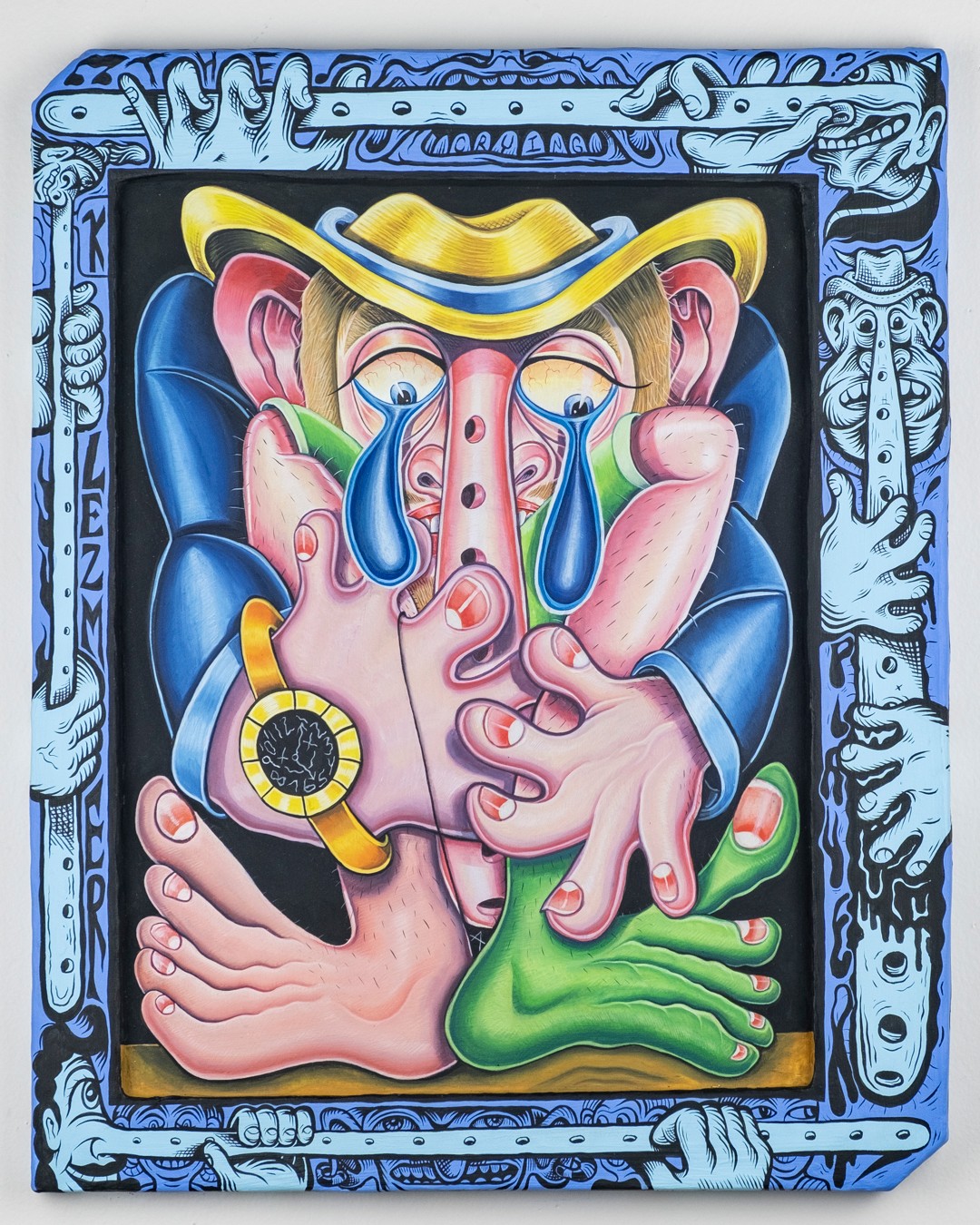
Reflecting now, I see how those early experiences shaped my art practice. The imagery found in my work today uses a personalized cartoon language. This style lends itself to various populist mediums: murals, books, and printmaking as different arenas to employ a dense web of cartoon imagery. The comic image or caricatures have a unique ability to depict our collective trauma and cultural derangements. Both are extremely critical tools, allowing for an engaging image. Since it can often be the first art form so many of us are exposed to, comic imagery can act as a kind of visual hook to entice the viewer to engage with my work, rewarding them the longer they linger looking at my art.
I’m sure it wasn’t obstacle-free, but would you say the journey has been fairly smooth so far?
A few weeks before graduating High School, my twin brother committed suicide. The timing was dramatic; he died about an hour or two after the last performance of a one-act play I had directed at our high school. A play he had acted in. He died the day before our senior prom, so I had to call up his date and tell her the news. My life and whole identity up to that day had intertwined with my twin. He was my brother, best friend, and my artistic collaborator. We used to paint side by side together, and now I was alone. After all, it was my twin’s idea that we go to art school together, and now that dream was gone. For the first time in my life, I was just a singular person, no longer a multiple. Many surviving twins who experience this profound loss go on to experience a lifetime of grief; they feel as though they are now living a “half-life.”
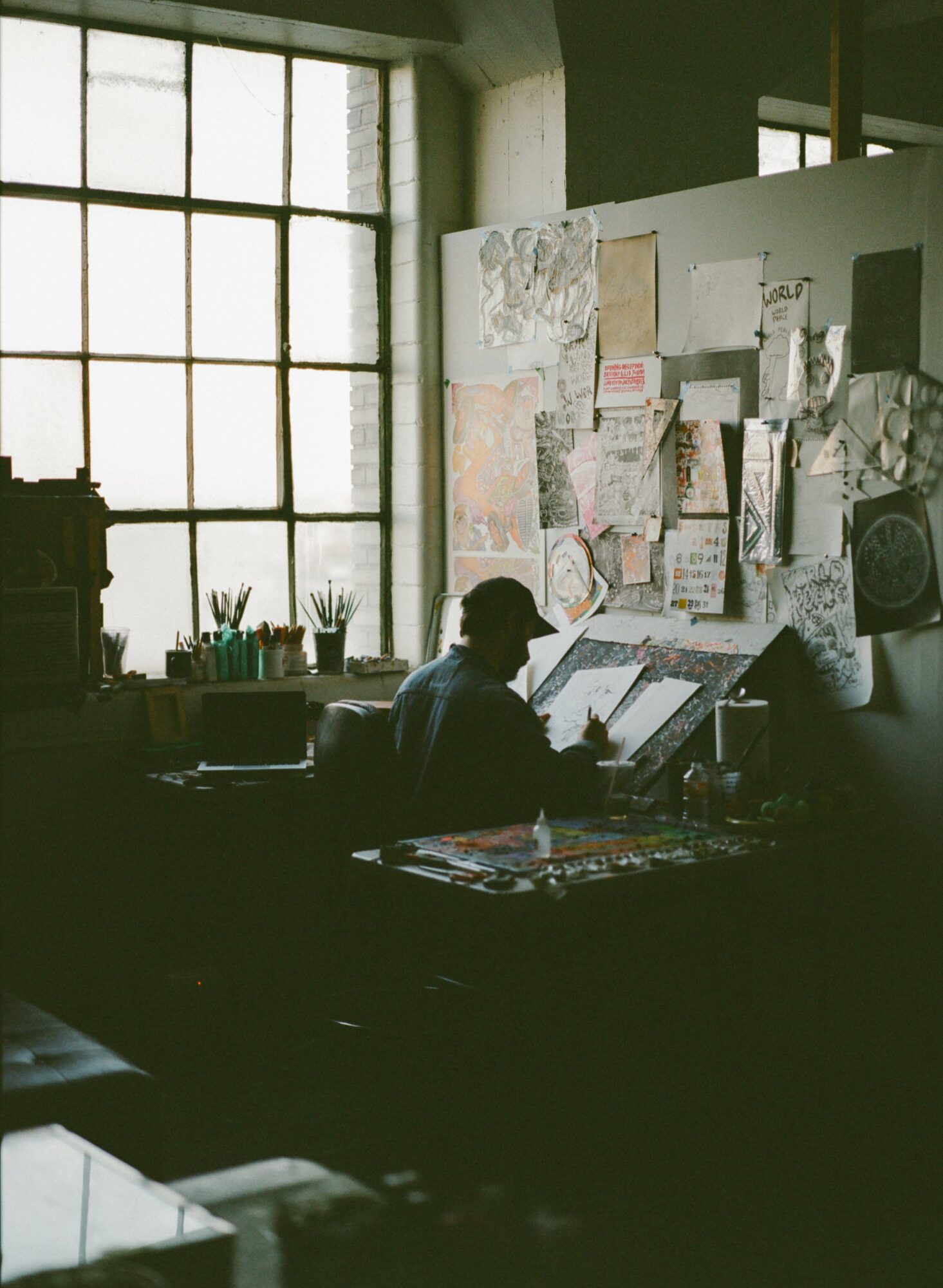
The last time I saw my twin filled with ecstatic joy was a few months before his death; it was the day we both found out we had gotten into The Rhode Island School of Design (RISD). This was my twin’s number one school; he wanted to study at their famous industrial design program. I realized the best way to honor his memory was to go to RISD, even though I had gotten a full ride to Kansas City Art Institute. Once at RISD, I spent the next four years developing my own artistic voice and found myself most attracted to mediums that would help me tell my story in the most direct way possible, with drawing. It does not matter if it is for five minutes in a sketchbook at a coffee shop or five hours drawing a mural on the side of a three-story building. Drawing has become my daily meditative practice to show myself and the world around me that I am still alive.
Alright, so let’s switch gears a bit and talk business. What should we know about your work?
So, I have been a “full-time” artist since the end of graduate school at WashU in 2017. I have never had gallery representation; however, in 2018 I was asked to join an artist-run gallery space in St. Louis called Monaco and was a part of running that space until it closed in 2024. To be an artist without gallery representation is the same as being a freelancer. As any freelancer knows, the best way to make a living this way is to provide a wide variety of services to a diverse set of clients. These are some of the arenas I like to play in:
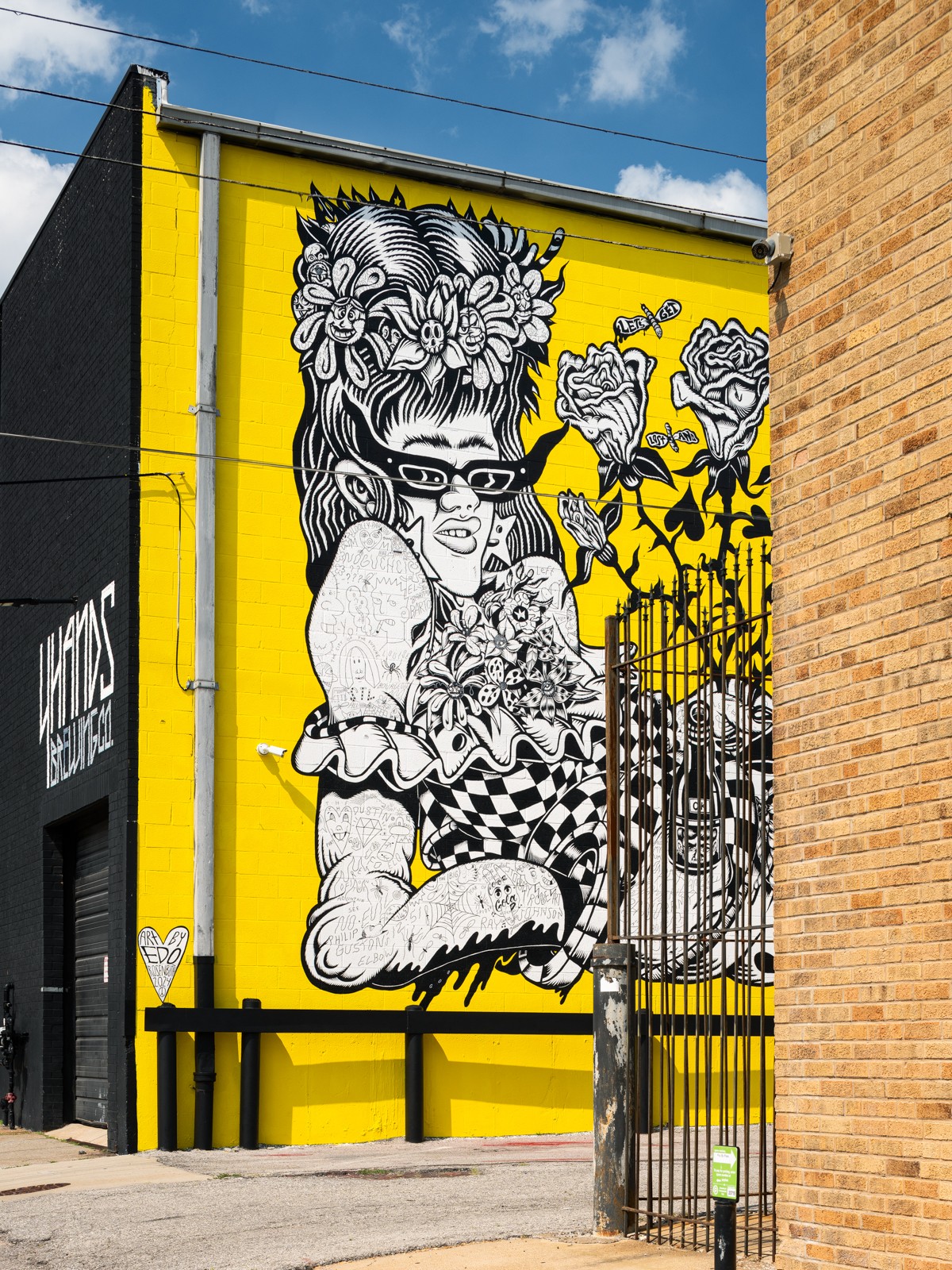
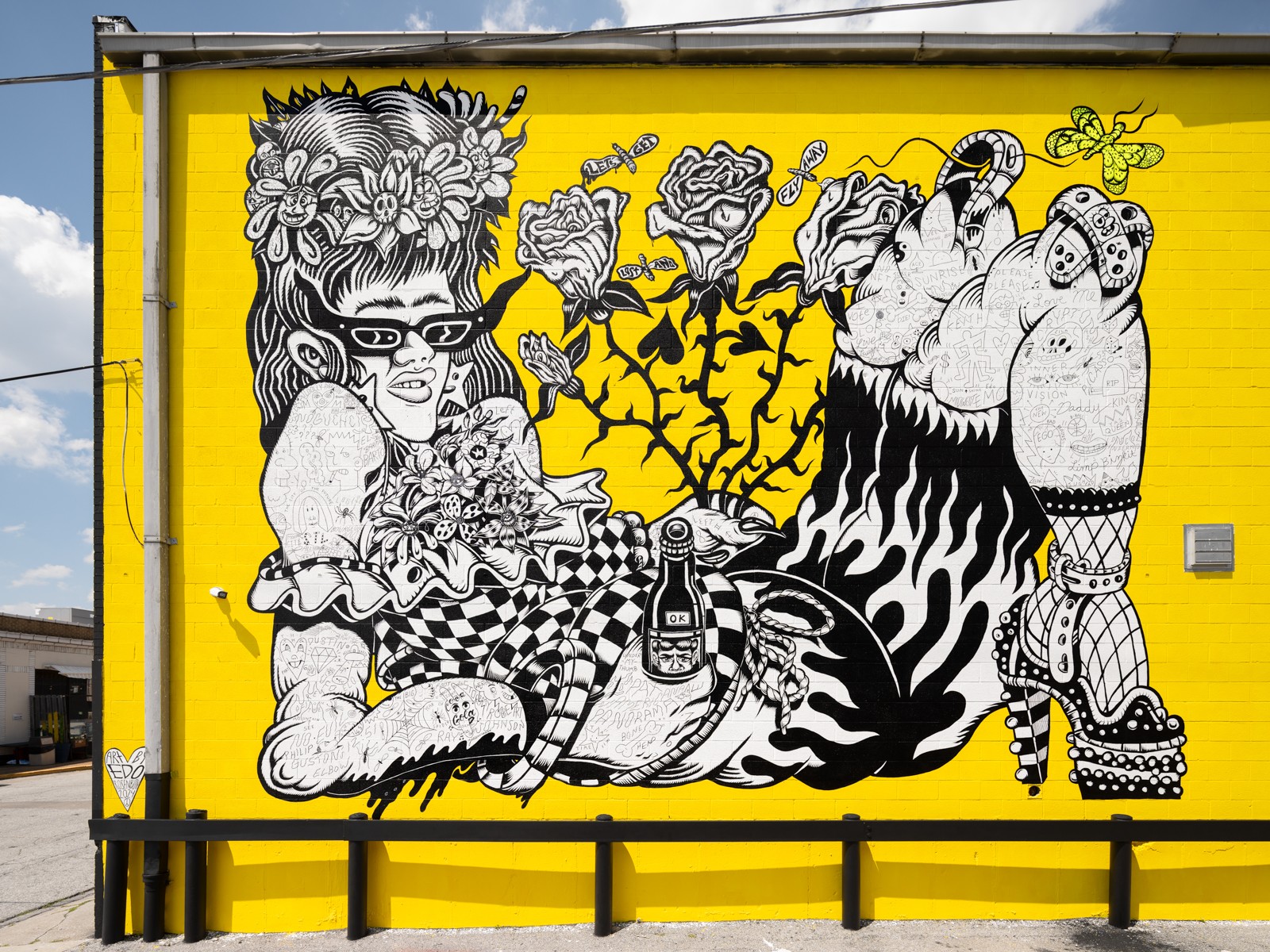
Murals/commissioned based paintings: The thing I am most known for is my mural work. Since returning to St. Louis in 2011, I have done over twenty-five of these types of works all over the St. Louis Metro area. Clients range from art museums, galleries, festivals, restaurants, beer companies, schools, art centers, hotels, universities, office buildings, and concert venues. While I really enjoy making work for art spaces, it is great to go out into the wider world and bring my art more directly to a greater variety of publics.
Printmaking: Even though I would never refer to myself as a printmaker, I have returned to the medium of printmaking repeatedly over the years, for two distinct reasons. First, I really enjoy collaborating with printmakers whom I have hired to edition my work. Secondly, I love how accessible it is for the public to buy one of my prints. My mural work can cost thousands and even tens of thousands of dollars to commission. While the prices for my prints range from $5 to $500, so anyone could afford to buy one.
Books: In 2013, my first big “break” as an artist was when my first book, PINK, was published. Having a book that compiled almost two hundred of my sketchbook drawings taken from a two-year period acted as the perfect object to introduce someone to my art practice. In 2017, I illustrated a book of poetry, What Dorothea Did by Paul Legault. Both these books you can buy for less than $35, although they have now been out of print for quite some time. My current book project is my most ambitious one to date, one I have been working on since 2015 entitled The Tower. It is another collaboration between me and Paul. Right now, it only exists as an artist book; my dream is to publish it someday, whenever I get around to finishing it.
Illustrations: A more recent development in my practice is doing more freelance illustration and design work. After years of being a Luddite and doing everything by hand I finally had the funds to invest in an iPad and have been using Procreate to make digital illustrations and other types of design work for a variety of clients including The New York Times/Wire-cutter, A24, Contemporary Art Museum of St. Louis, Knucklehead Bike Company, Back Yard Trail Builds, Sump Coffee, Angad Arts Hotel, The Luminary, 4 Hands Brewing Company, and Stag Beer.
How do you think about luck?
Luck can play a key role in one’s career; the trick is that you must be ready to capitalize on whatever good fortune comes your way. At this point in my career, I am lucky that many of the commissions and other opportunities I get these days come from folks reaching out to me first, usually through social media. At the same time, I am still always on the lookout for gigs; I am not above applying to open calls and grants. Over the years, I have learned the language of grant writing, which has improved my success rate. Both approaches have been important for sustaining my career.
I will end this interview with a little story about how I accidentally became a muralist. When I was in my third year as an art student at RISD. I was walking out of my studio, and in the hallway, I ran into one of my painting professors, the great Holly Hughes. Holly asked me, “Edo, you know how to paint murals right?” “Of course,” I replied. Of course, I didn’t. Flash forward to the next semester, and I find myself climbing two-story-tall scaffolding at the American Academy in Rome, working for the artist Stephen Westfall. That experience demystified the mural-making process and, in retrospect, was the most important thing I learned during my time in art school. Sometimes the most important skills you learn are far away from any classroom.
Pricing:
- Mural commission: $2,500 – $35,000
- Painting commission: $1,000 – $8,000
- Digital Illustration design work: $500 – $1,500
- Original drawings: $100 – $1000
- Prints: $15 – $500
Contact Info:
- Website: https://Edorosenblith.com
- Instagram: @edorosenblith