Today we’d like to introduce you to McKinzie Duesenberg-Marshall.
Hi McKinzie, it’s an honor to have you on the platform. Thanks for taking the time to share your story with us – to start maybe you can share some of your backstory with our readers?
As a kid, I had a few adverse experiences that eventually led me to sitting in a therapist’s office — silent. I refused to talk. It’s hard to feel safe with an adult that other adults are telling you to open up to. From an early age, I knew I wanted to help kids feel genuinely comfortable, not pressured to process their experiences on someone else’s timeline.
On a personal level, I also have an ADHD diagnosis and navigate executive functioning challenges myself — so I understand firsthand what it’s like to need support and to work differently than the systems around you expect.
Those experiences pointed me toward psychology, and I went on to earn my doctorate in educational, counseling, and school psychology with an emphasis in school psychology from the University of Missouri – Columbia. From there, I had the opportunity to work across community, clinical, and school settings. I was especially drawn to schools because every child has access to school — not every child has access to mental health care. That felt like a meaningful place to be.
Through my training and hands-on work as a school psychologist, I developed deep familiarity with tiered support systems, the IEP and 504 processes, and research around reading and writing development and progress monitoring. I also received extensive training in autism evaluations, which gave me a strong foundation in comprehensive, multidisciplinary assessment and deepened my understanding of how complex the diagnostic and support process can be for families. But I kept noticing a disconnect — the evaluation and eligibility process can be overwhelming for families, and coordinating between clinical providers and schools is often a maze with no clear guide.
That’s ultimately what led me to start Minds in Progress. My goal is to bridge that gap…to support coordinated care, demystify the process for families, and serve as a resource connecting schools, clinicians, and physicians. And beyond the professional piece, this work is personal in more ways than one. I know what it’s like to be a child who struggled, who needed support, and who didn’t always feel safe enough to accept it. And as a parent myself, I know what it’s like to want to move mountains for your child. That lived experience, both as someone who has navigated challenges firsthand and as a parent who understands that fierce desire to put your child first, is what drives me to show up as not just a provider, but a genuine advocate for every child and family I work with.
Alright, so let’s dig a little deeper into the story – has it been an easy path overall and if not, what were the challenges you’ve had to overcome?
Honestly, no…and I think anyone who tells you otherwise is leaving something out.
Starting your own business is a genuine mix of emotions: excitement and fear. And interestingly, those two feelings can trigger nearly identical physiological responses in the body, which makes the experience equal parts motivating and disorienting.
One of my biggest internal struggles has been reconciling private practice with my values. As someone who is deeply aware of the disparities and inequities within the healthcare system, building a self-pay practice has been hard to sit with at times. I got into this field because I want mental health care and neuropsychological evaluations to be accessible and affordable — and navigating the business side of that without compromising those values has been a real tension I’ve had to work through.
Market research, networking, and learning to recognize the worth of my own work have all been growth edges for me. But I’m finding my footing. I’m learning that knowing my practice’s value and staying committed to quality, accessible care aren’t mutually exclusive…and holding both of those things at once is something I’m growing more confident in every day.
As you know, we’re big fans of you and your work. For our readers who might not be as familiar what can you tell them about what you do?
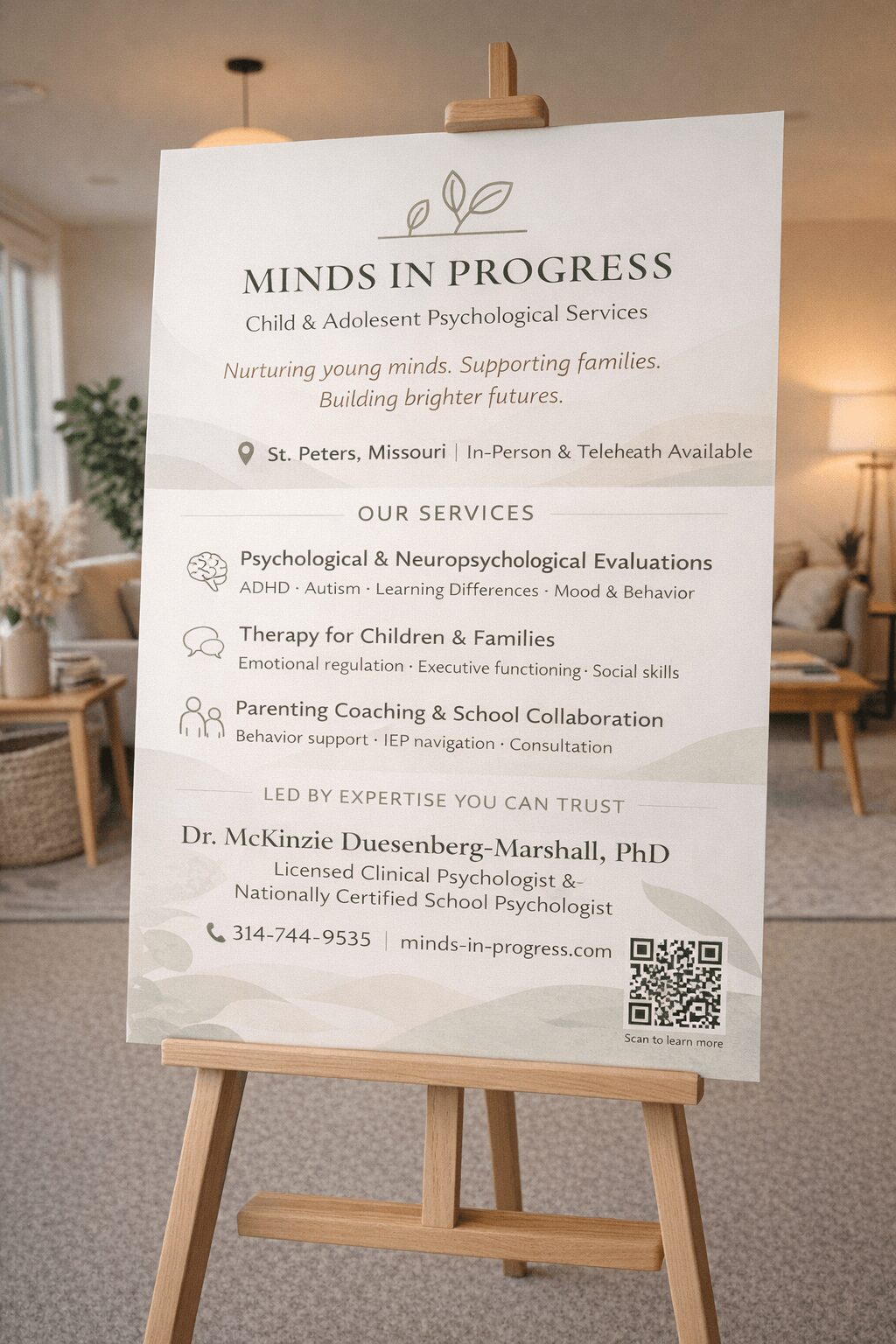
At Minds in Progress, I offer specialized psychological services for children, adolescents, and families, with a focus on three core areas: comprehensive neuropsychological and psychoeducational evaluations, strength-based individual therapy, and parent and co-parent coaching. I also provide school and professional consultation, as professional training is a passion of mine, helping bridge clinical findings and classroom success.
On the evaluation side, I specialize in assessments for ADHD, autism, learning disabilities, giftedness, and other developmental and behavioral concerns, serving clients from age three through adulthood. I hold ADOS-2 certification and have completed over 500 hours of specialized training in autism evaluation.
What I’m most proud of is the model I’ve built around what I call coordinated, whole-child care. Families shouldn’t have to choose between clinical support and school support, or piece together the puzzle on their own. Everything under one roof: evaluations, therapy, parent coaching, and school consultation.
What sets me apart comes down to a few things. First, my training and credentials spanning both clinical and school psychology give me a perspective most providers don’t have…I understand not just what’s happening inside a child, but how it plays out in the classroom, at home, and in relationships. Second, I’m authorized through PSYPACT, meaning I can provide telehealth therapy across 40+ states…quality care without geographic limits. And third, Minds in Progress is an LGBTQIA+ affirming, strength-based practice…we don’t just identify what’s hard, we illuminate what makes each child remarkable.
What would you say have been one of the most important lessons you’ve learned?
The most important lesson I’ve learned is that everything worthwhile takes time — and that resisting that truth is where most of the struggle lives.
Time to grow a practice. Time to build trust with a child who isn’t ready to talk. Time to earn the confidence of a family navigating one of the hardest seasons of their life. Time to observe before you conclude, and to listen before you respond. I’ve learned that some of the most important clinical information comes not from what someone says, but from what you notice when you slow down enough to really pay attention.
That lesson shows up personally too. My own journey — navigating ADHD, processing my own childhood experiences, becoming a parent — none of that happened on a timeline I controlled. Growth rarely does. And I think that’s made me a better psychologist, because I don’t rush my clients through their process any more than I’d want someone to rush me through mine.
The other side of that coin is knowing your worth. Time and patience don’t mean waiting passively — they mean showing up consistently, doing the work with integrity, and trusting that the relationships and reputation you’re building will reflect that over time. I’ve had to learn that I don’t have to discount my value to prove my accessibility. Both can be true.
So if I had to distill it: slow down, stay present, and trust the process — yours and theirs, as we are all minds in progress.
Pricing:
- Individual psychotherapy: $150
- Evaluations: $1,500-3,000
- Initial intake: $200
Contact Info:
- Website: https://www.minds-in-progress.com
- Instagram: https://www.instagram.com/mindsinprogressllc/
- Facebook: https://www.facebook.com/profile.php?id=61580739806428
- LinkedIn: https://www.linkedin.com/company/minds-in-progress/