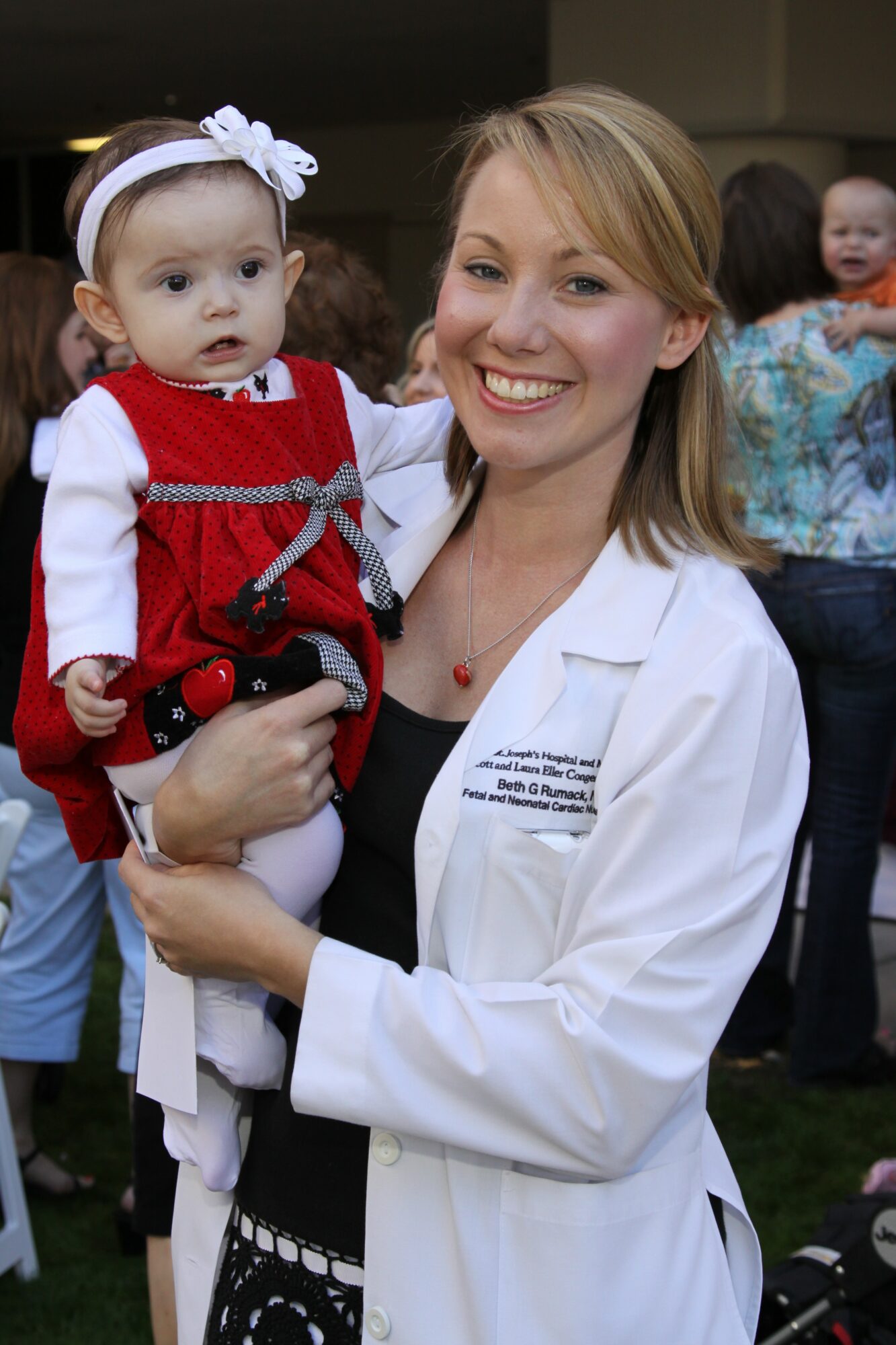
Today we’d like to introduce you to Beth Rumack.
Hi Beth, it’s an honor to have you on the platform. Thanks for taking the time to share your story with us – to start maybe you can share some of your backstory with our readers?
I grew up in Soulard in St. Louis in the 1980s, an only child being raised primarily by my mom. We didn’t have much money or much space, but I don’t remember thinking about my childhood in terms of what we didn’t have. I remember family. I remember being fiercely independent. And I remember having a mom who was determined that where I started would never determine where I could go.
My mom had dropped out of high school, and when I was four or five years old, she went back and earned her GED. I didn’t understand the significance of that at the time. As an adult—and especially as a mother—I understand it very differently.
She wanted opportunities for me that she hadn’t had herself, and education was non-negotiable.
My dad wasn’t very involved in the day-to-day parts of my early childhood, but he did uphold his financial responsibilities. That mattered. His support helped give my mom the ability to prioritize my education and send me to St. Francis de Sales/Notre Dame Elementary, the Catholic parish school connected to St. Francis de Sales Church in our Soulard neighborhood.
And while my relationship with my dad was more distant in those early years, his parents made sure I was connected to that side of my family. My grandmother—my dad’s mom—was a consistent presence in my childhood. I spent countless nights sleeping over at my grandparents’ house, and those visits gave me a relationship with my grandma and grandpa that became an important part of growing up.
My father’s family also has deep roots in St. Louis through Hoy Shoe Company, one of the area’s longstanding shoe manufacturers. My great-grandfather was a British shoemaker, and generations of my family carried that work forward. There is something about knowing that your family built something with their hands and sustained it across generations that stays with you. I think some of that drive to build, create, and keep going found its way into me too.
Meanwhile, my everyday life was pretty simple.
We lived in a four-family flat with my stepdad’s family. Our apartment had three rooms—a kitchen, a bedroom, and a living room. There wasn’t a bedroom for me.
So my bed was the couch.
And I was okay.
I didn’t grow up feeling sorry for myself or believing I was missing something. The couch was simply where I slept. I had people who loved me, a mom who believed fiercely in what I could become, grandparents whose home was another place where I belonged, and a childhood that taught me how to be independent long before I understood how important that quality would become.
Eventually, when I was in my early teens, my parents were able to renovate space upstairs and create a bedroom for me. For the first time, I had a room and a bed that were completely mine.
Looking back now, I think a remarkable amount of the woman I would become was being shaped in those three little rooms.
I learned that you don’t need perfect circumstances to imagine a bigger life.
I learned that people can love and support you in very different ways.
I learned how to figure things out.
And most importantly, I learned from my mom that education could change the trajectory of a life.
I went on to Bishop DuBourg High School and then received a full scholarship to Deaconess College of Nursing.
After graduation, I did something very intentional.
I left St. Louis.
Not because I was running away from where I came from. I loved my hometown. But I had spent my entire life here, and I wanted to know what existed beyond it. I wanted to experience different places and people, travel, challenge what I thought I knew, and see just how big the world could be.
Nursing gave me that opportunity.
I started my career caring for critically ill babies and children in Colorado and then California. Eventually, I earned my master’s degree from the University of California, San Francisco and became a neonatal nurse practitioner. My career later took me to Arizona, where my work expanded into pediatric cardiology, congenital heart disease, high-risk infant care, program development, and leadership.
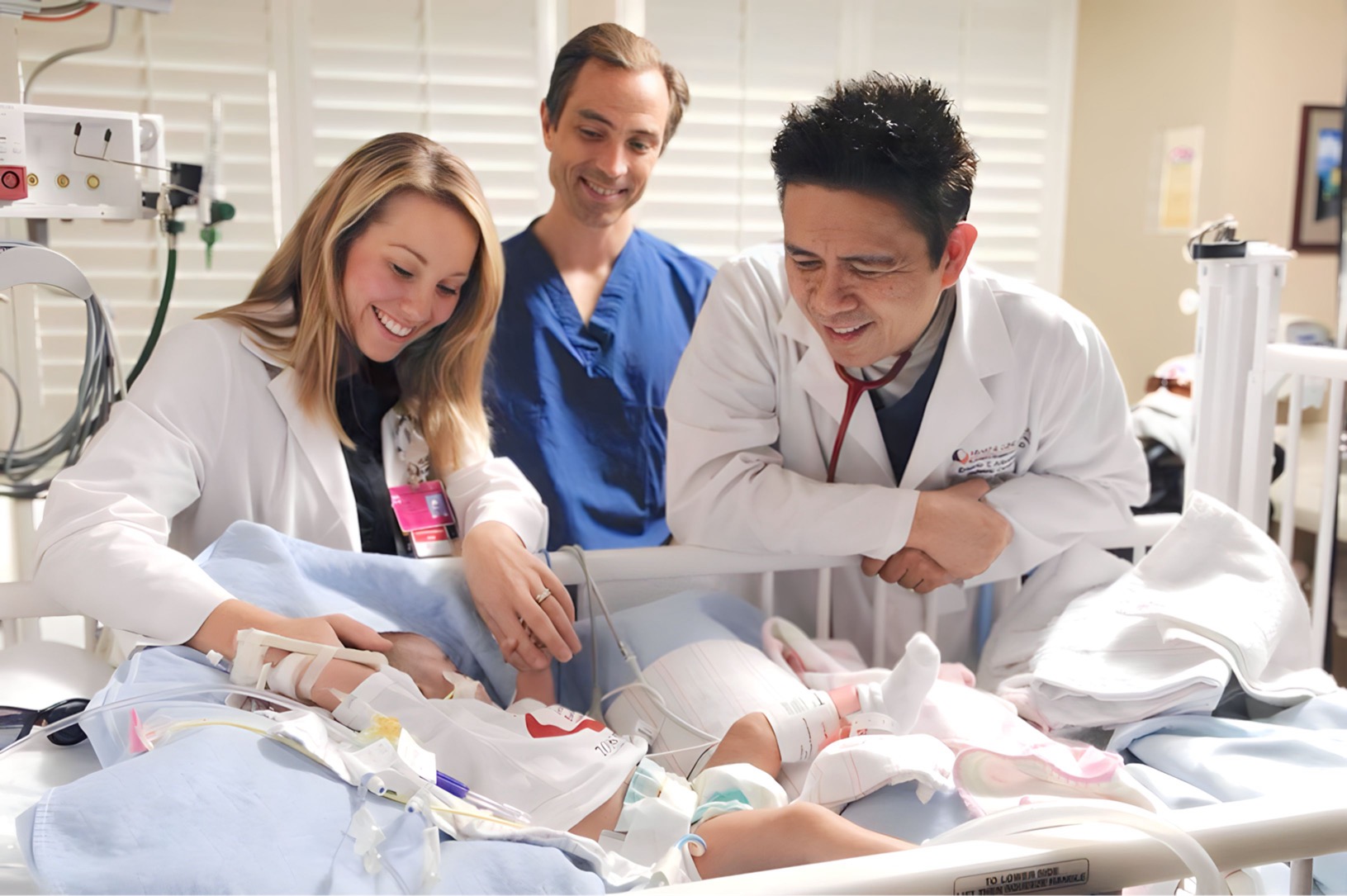
I spent years caring for premature babies and critically ill children and standing beside parents during some of the most terrifying moments of their lives.
Nursing taught me how to walk into a room on someone’s worst day and stay.
Then life put me on the other side of the hospital bed.
I married my husband, Marc, an American Airlines pilot, and together we have three children. Two of our three children would experience significant, frightening hospitalizations.
Our son spent the first few weeks of his life critically ill in the NICU with persistent pulmonary hypertension of the newborn. He was intubated and had a chest tube. I had spent years caring for babies just like him.
Except this time, the baby in the bed was mine.
Years later, our oldest child became critically ill at four years old with life-threatening hemolytic uremic syndrome and spent four weeks in the ICU.
And there was another layer to that experience that has never left me.
Although she didn’t have a heart condition, the pediatric heart team insisted that she be cared for in the Cardiac Intensive Care Unit—the CICU. They knew me, they knew our family, and they wanted to take care of her.
It was an incredible blessing.
And it was also incredibly hard.
The CICU wasn’t an unfamiliar place to me. It was a place filled with children and families I knew through my work. While my own four-year-old was lying there fighting for her life, some of the patients and families I cared about professionally were just a few doors away, fighting battles of their own.
I was surrounded by people who knew me as a nurse practitioner and colleague at the exact moment when I felt least like either of those things.
I was simply a mom who was scared she might lose her child.
I could walk down a hallway and understand clinically what was happening behind many of those doors, then walk back into my daughter’s room and be completely powerless to change what was happening behind ours.
That experience blurred every boundary I thought existed between being a healthcare professional and being a parent.
Once again, I wasn’t the nurse practitioner.
I wasn’t the person with the answers.
I was the mom.
There is something profoundly humbling about standing beside your child’s hospital bed and realizing that all of your knowledge and experience cannot protect the person you love most.
I understood the terminology. I could read the monitors. I knew the questions to ask. I knew the physicians, nurses, and healthcare system surrounding us.
And I was still terrified.
In some ways, knowing more made it harder. I understood what could go wrong.
But I was also profoundly aware of the privilege we had. We had a team that knew us, advocated for our daughter, and wrapped around our family when we needed them most.
That realization changed me.
Because if navigating a medical crisis could feel overwhelming to me—a nurse practitioner surrounded by people I knew and trusted—what did it feel like for the parent who didn’t know anyone?
What about the parent who didn’t speak the language of medicine? The family without financial resources? The parent afraid to ask questions? The family juggling other children, jobs, transportation, insurance, and bills while trying to comprehend what was happening to their child?
And what happened to those families emotionally after everyone else thought the crisis was over?
Those questions followed me back to St. Louis.
In 2012, I returned home and joined St. Louis Children’s Hospital and BJC HealthCare. Over the next nine years, my responsibilities grew significantly. I ultimately led the Heart Center and multiple complex clinical programs while serving as Chief Advanced Practice Provider. I was responsible for teams, operations, quality, patient experience, access to care, financial performance, and programs caring for some of the most medically complex children and families in the healthcare system.
I loved the complexity of the work. I loved building teams and solving problems. I loved asking why something had always been done a certain way—and whether there might be a better way.
But underneath all of that was the perspective I carried as both a clinician and a mother.
I kept coming back to one question:
**What is this experience actually like for the family?**
Not simply: Did we successfully treat their child’s disease?
But: Did they understand what was happening?
Did they have what they needed to get through it?
Did we notice when they were struggling?
Did they have access to mental health support?
Did we see the siblings?
Did we understand the financial strain?
Did they feel like partners in their child’s care?
And when everyone finally celebrated that child walking out of the hospital doors, was anyone asking whether the family had survived the journey too?
That question eventually became impossible for me to ignore.
I joined the Ollie Hinkle Heart Foundation board in 2018 because I saw an organization willing to address some of those gaps, particularly the mental health needs of families affected by congenital heart disease. In 2021, I made a significant career leap and left traditional hospital leadership to join OHHF professionally—first leading strategic partnerships and ultimately becoming Chief Operating Officer.
It was a different kind of risk.
I was leaving a large healthcare system and an established executive career to help build something much smaller.
But I’ve learned that some of the most meaningful chapters of my life have started by being willing to leave what is comfortable.
At OHHF, I’ve had the opportunity to help take big ideas and turn them into sustainable systems. We’ve grown from four employees to a multidisciplinary team of more than 20, increased annual operating revenue from approximately $1 million to more than $3 million, developed more than 30 strategic partnerships, and expanded our reach nationally. We built Ollie’s Branch, an integrated mental health access model that brings together behavioral health, care navigation, telehealth, interpreter services, and financial assistance to remove barriers for families affected by congenital and childhood-onset heart conditions.
But when I think about that work, the numbers aren’t what I think about first.
I think about the parent sitting beside a hospital bed.
Because I’ve been her.
I think about the mom trying to make the best decisions she can with the resources and opportunities available to her.
Because I was raised by her.
And I think about what can happen when someone is given an opportunity and then chooses to use that opportunity to create opportunities for other people.
Because that has been the story of my life.
In some ways, there is an enormous distance between the little girl sleeping on a couch in a three-room flat in Soulard and the woman I am today.
I’ve been a bedside nurse, a neonatal nurse practitioner, a healthcare executive, a nonprofit leader, a board member, a coach, a consultant, a wife, and a mother. I’ve cared for critically ill children, led hundreds of healthcare professionals, built programs, helped transform organizations, and had the privilege of learning from people and communities around the world.
But when I look closely, it doesn’t feel like a collection of different careers or chapters.
It feels like one story.
My childhood taught me resourcefulness and independence.
My mom taught me that education creates possibility.
My dad taught me that support and responsibility can show up in different ways.
My grandparents taught me the importance of belonging and staying connected to where you come from.
Nursing taught me to listen, pay attention, and stay when things get hard.
My children taught me vulnerability and gave me an entirely different understanding of what families experience inside healthcare.
Leadership taught me that caring deeply isn’t enough—we have to build systems that allow people to receive the care and support they deserve.
And leaving the traditional healthcare system taught me that sometimes, when the thing you believe people need doesn’t exist yet, you have to be willing to help build it.
Today, 26 years after I first became a nurse, I’m beginning another evolution in my career—bringing together my experience in healthcare, operations, leadership, nonprofit growth, strategy, coaching, and human-centered systems to advise organizations and leaders tackling complex problems.
I’m still endlessly curious. I still want to go places I’ve never been, sit with people whose lives look nothing like mine, ask questions, learn, and challenge myself to see things differently.
And despite all the titles I’ve held, I still consider myself a nurse at my core.
Because nursing taught me much more than how to care for a patient.
It taught me how I want to move through the world:
Stay curious.
Listen closely.
Notice the person who isn’t being heard.
Don’t be afraid to walk into the hard places.
And when someone is experiencing one of the most difficult moments of their life, don’t always try to fix it.
Sometimes, just stay.
When I think about that little girl growing up in Soulard, sleeping on the couch while her mom worked to create opportunities she hadn’t had herself, I’m struck by how much of her is still part of who I am today.
I’m still independent. Still curious. Still willing to figure things out. Still willing to leave what’s comfortable to discover what’s possible.
And my mom is still very much part of this story. The woman who earned her GED when I was little and made education non-negotiable for me gets to see what grew from the opportunities she worked so hard to provide.
Maybe that’s one of the things I appreciate most as I’ve gotten older: none of us gets where we’re going alone.
My story started in a three-room flat in Soulard, with a couch for a bed and a mom who believed education could give her daughter choices.
Twenty-six years into my career, I have more choices than either of us could have imagined.
What matters most to me now is what I choose to do with them—and how many doors I can help open for someone else.
Would you say it’s been a smooth road, and if not what are some of the biggest challenges you’ve faced along the way?
Another important chapter in my journey was becoming an inventor and entrepreneur.
As a neonatal nurse practitioner, I kept seeing a problem with how infants were positioned in seating products. When babies were poorly supported, positioning could contribute to issues such as torticollis, plagiocephaly, and positional asphyxia. I didn’t just want to talk about the problem—I wanted to create a solution.
So I designed and patented my own infant positioning device, Snuggin Go, and then did something I had absolutely no formal training to do: I figured out how to manufacture it and bring it to market.
For nine years, I operated that business while continuing my healthcare career and raising our family.
It taught me an entirely different kind of leadership.
I learned about product development, intellectual property, manufacturing, quality, marketing, customers, and what it actually takes to turn an idea into a physical product someone can hold in their hands.
I also learned one of entrepreneurship’s hardest lessons: a good idea and a meaningful product aren’t always enough to build a scalable business.
Ultimately, I made the difficult decision to close Snuggin Go. I wasn’t willing to sacrifice product quality in order to scale, and the market increasingly struggled to distinguish an infant positioning product designed to address positioning concerns from the growing category of infant sleep aids. That confusion created challenges I couldn’t solve without compromising things I wasn’t willing to compromise.
Closing something I had invented, patented, manufactured, and poured nine years into was difficult.
For a long time, I probably would have described that chapter as something that didn’t work.
I don’t anymore.
Snuggin Go taught me how to take a bedside observation and turn it into an idea, take an idea and turn it into a product, and then confront the reality of whether that product could become a sustainable business.
It also taught me that knowing when to stop is sometimes just as important as knowing when to start.
That experience influences how I approach innovation today. When someone comes to me with a great idea, I don’t just ask whether the idea can work.
I ask: Can we implement it? Can we maintain quality? Can people understand it? Can we scale it? And can we sustain it?
I learned those questions the hard way.
And I wouldn’t trade that experience either.
Appreciate you sharing that. What should we know about COO of Ollie Hinkle Heart Foundation and CEO of BGR Consulting, LLC.?
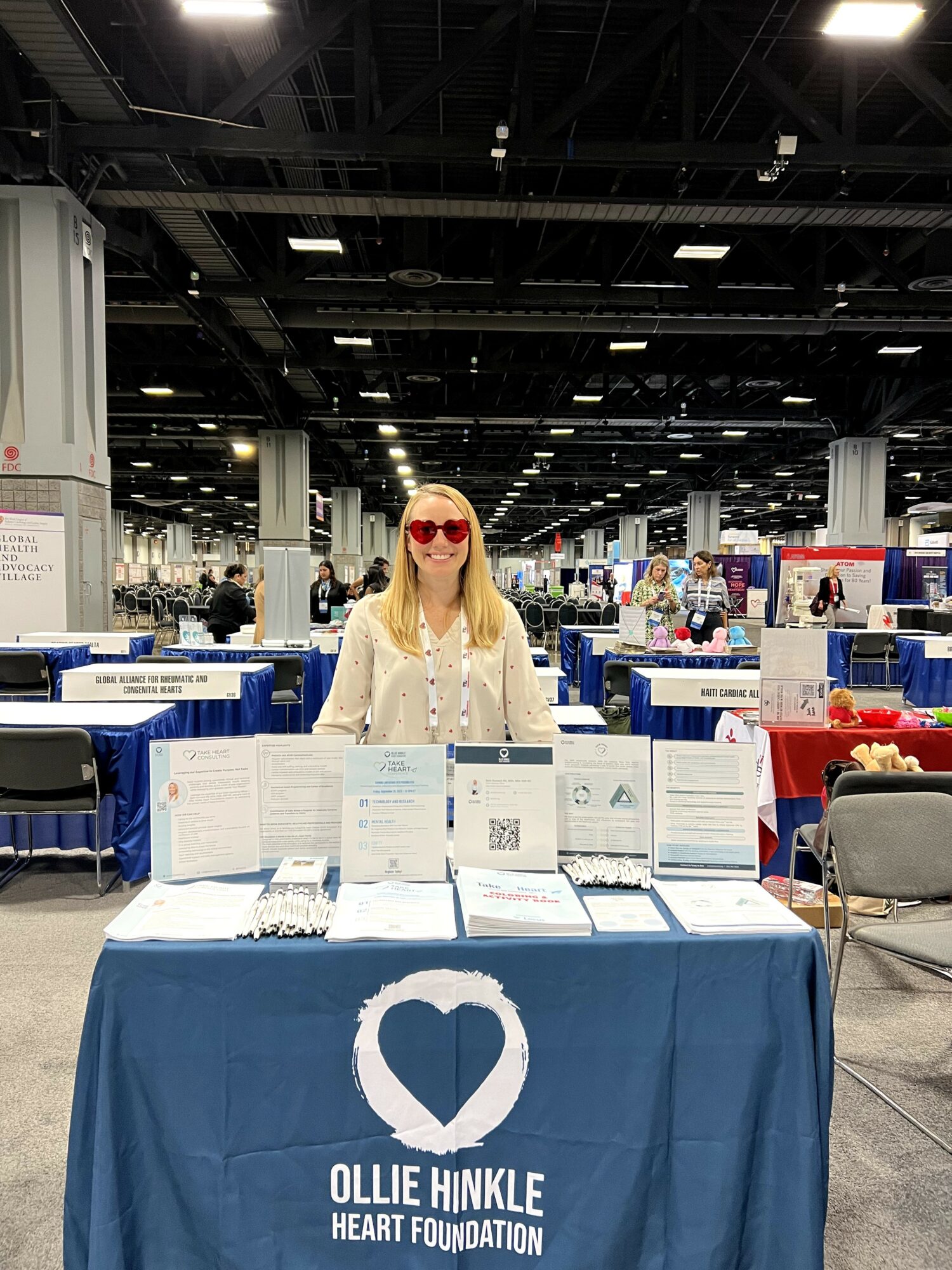
My work today really has two homes: the Ollie Hinkle Heart Foundation (OHHF), where I serve as Chief Operating Officer, and BGR Consulting, where I’m bringing 26 years of healthcare, leadership, operations, innovation, and nonprofit experience to organizations and leaders trying to solve complex problems and create meaningful change.
They may look like two different paths, but to me, they are deeply connected.
People are at the center of both.
I have spent my entire adult life caring for children and families—first as a bedside nurse, then as a neonatal nurse practitioner, healthcare executive, nonprofit leader, and now strategic advisor.
Over those 26 years, I’ve been invited into people’s lives during some of their most vulnerable moments.
People have asked me over the years, “How can you do this work when you lose patients?”
And yes, that is part of it.
There have been seasons of my career when I’ve attended more funerals than birthday parties.
There are children I cared for who are now adults building lives and families of their own, and there are children who earned their angel wings far too soon.
I know their names.
I remember their parents and siblings. I remember conversations at bedsides and in hallways. I remember victories we weren’t sure would come and losses none of us were prepared for.
Every one of those children and families has shaped my heart and my mind. They have influenced how I care, how I lead, what I fight for, and what I believe healthcare can and should become.
As heartbreaking as some of those experiences have been, I wouldn’t trade the heartbreak if avoiding it meant giving up the privilege of knowing and caring for those children and families.
I carry them with me.
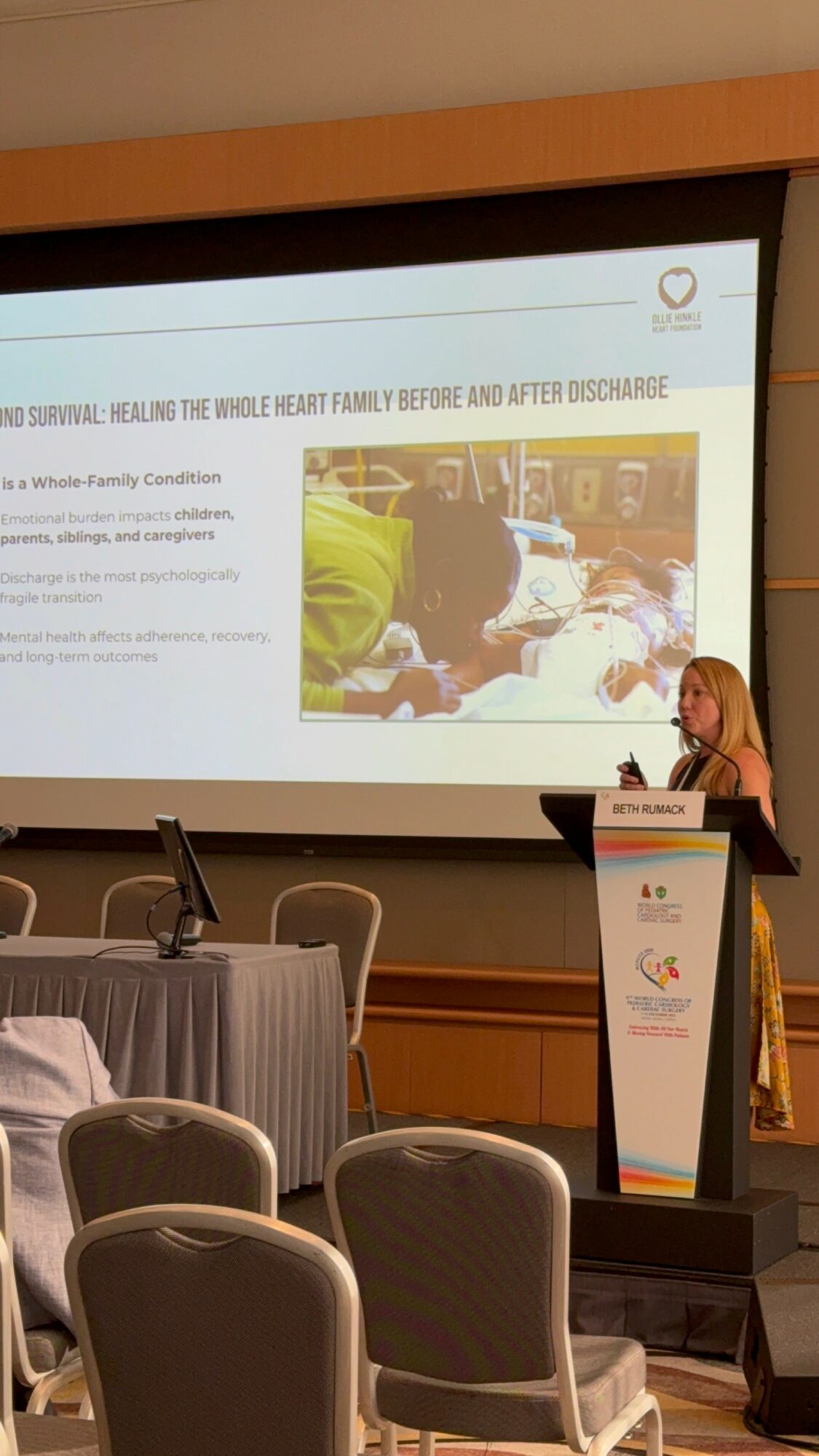
And that is a significant part of what my work at the Ollie Hinkle Heart Foundation means to me.
OHHF exists because of a little boy named Ollie Hinkle and a family’s decision to turn unimaginable loss into a legacy that could change what other families experience.
I consider it an incredible honor to help carry Ollie’s legacy forward.
But when I walk into a room representing OHHF, I also feel like I’m carrying far more than one story.
I’m carrying all of my heart families.
Those who are here with us today and those whose children have earned their angel wings.
They are part of why I’m so passionate about what we are building through Take Heart.
Take Heart represents where much of my life’s work has been leading.
For decades, pediatric and congenital heart care has understandably focused on extraordinary advances in survival. We have become remarkably good at helping children survive diagnoses that once had very different outcomes.
But survival cannot be the finish line.
A child with a heart condition doesn’t experience healthcare in isolated pieces, and neither does their family.
Their journey can involve cardiologists, surgeons, nurses, mental health professionals, primary care providers, schools, insurance companies, community organizations, financial pressures, transportation barriers, technology, siblings, parents, and eventually the transition into adult care.
Yet many of the systems surrounding them still operate separately.
Take Heart is about changing that.
It is a collective-impact approach that brings healthcare systems, families, community organizations, industry, philanthropy, researchers, and other partners together around a shared question:
What would heart care look like if we designed the entire journey around what children and families actually need to thrive—not simply survive?
That distinction matters deeply to me.
My career has allowed me to see that journey from almost every angle.
I’ve been the bedside nurse caring for the critically ill child.
I’ve been the neonatal nurse practitioner making clinical decisions alongside families.
I’ve built and led fetal and high-risk cardiac infant programs.
I’ve led a major pediatric Heart Center and complex clinical service lines.
I’ve worked across quality improvement, patient safety, care coordination, utilization management, patient and family experience, access to care, operations, financial stewardship, and healthcare leadership.
I’ve been a nonprofit leader building solutions for needs that traditional healthcare often lacks the infrastructure or resources to address.
And perhaps most importantly, I’ve been the mom standing beside my own critically ill children’s hospital beds.
I’ve experienced healthcare as both the person providing the care and the person desperately needing it to work.
Those experiences have taught me that no single hospital, nonprofit, clinician, company, donor, researcher, or program can solve our most complicated healthcare problems alone.
We need each other.
That’s what excites me about Take Heart.
Rather than creating another siloed program, we’re building the connective tissue between the people and organizations already doing important work, and asking what becomes possible when we align around families rather than institutions.
That means looking beyond clinical outcomes to mental health and family well-being, access to care, social drivers of health, care navigation, prevention and early identification, research and innovation, transition across the lifespan, and the many other factors that determine whether a child and family truly thrive.
And our vision is much bigger than St. Louis.
We’re building and learning with the goal of helping transform heart care across the United States and, eventually, contributing to how children and families experience heart care globally.
It’s an ambitious vision.
But I’ve spent enough time around children with heart conditions to know something about big ambitions.
Many of the children I’ve cared for have spent their lives doing things someone once thought might not be possible.
They’ve taught me not to be afraid of imagining something better.
BGR Consulting is another extension of that same philosophy.
After 26 years, I’ve developed a perspective shaped by healthcare and organizational leadership from many different seats: clinician, advanced practice provider, operator, executive, nonprofit leader, board member, coach, strategist, entrepreneur, caregiver, and parent.
And one of the chapters that shaped how I think about innovation actually began years ago at the bedside.
As a neonatal nurse practitioner, I saw infants being poorly supported in seating products and the positioning challenges that could result, including torticollis, plagiocephaly, and concerns related to positional asphyxia.
I didn’t just want to identify the problem.
I wanted to solve it.
So I designed and patented an infant positioning device called Snuggin Go.
Then I had to figure out how to manufacture it, bring it to market, and build a business around it—all while continuing my healthcare career and raising a family.
I manufactured Snuggin Go for nine years.
Ultimately, I made the difficult decision to close the business when I couldn’t find a path to scale that allowed me to maintain the quality standards I believed were essential. At the same time, increasing market confusion between positioning products and infant sleep aids made it difficult to communicate clearly what the product was—and, equally importantly, what it wasn’t.
At one point in my life, I probably would have viewed closing that business as a failure.
Today, I consider it one of my most valuable business educations.
Snuggin Go taught me that innovation isn’t simply having a great idea.
You have to operationalize it.
People have to understand it.
You have to protect quality.
You have to understand the market.
You have to build the right infrastructure.
And ultimately, you have to determine whether something can be scaled and sustained without compromising the very thing that made it valuable.
Sometimes leadership means having the courage to build something.
And sometimes it means having the courage to stop.
Those lessons have followed me into every organization and program I’ve helped build since.
I’ve seen extraordinary healthcare, and I’ve also seen places where extraordinary people working incredibly hard are still limited by systems that weren’t designed for the complexity they’re trying to solve.
That’s where BGR Consulting comes in.
Through BGR Consulting, I work with healthcare organizations, nonprofits, businesses, and leaders to step outside of “the way we’ve always done it” and get very clear about one of my favorite questions:
What problem are we actually trying to solve?
Because I’ve learned that organizations sometimes spend enormous amounts of time, money, and energy solving the wrong problem.
My work can include strategy, operational and organizational transformation, leadership development, program and care-model design, partnerships, growth, innovation, or helping someone turn a powerful idea into something that can be implemented, measured, scaled, and sustained.
What sets my approach apart is that I don’t come to this work solely as a consultant.
I come as a nurse who has spent 26 years close to patients and families.
I come as an operator who has made things work when strategy meets reality.
I come as an executive who has led complex teams, budgets, programs, and organizational transformation.
I come as an entrepreneur who has invented, patented, manufactured, built—and ultimately made the difficult decision to close—a product-based business.
I come as a nonprofit leader who understands how to build something while simultaneously finding the resources to sustain it.
I come as someone who believes deeply in collective impact—that our hardest problems won’t be solved by one organization protecting its piece of the puzzle.
And I come as a mother who has sat beside her own children’s ICU beds and knows what healthcare feels like from the other side.
Those perspectives are inseparable for me.
At this stage of my career, I’m less interested in titles and much more interested in impact.
I want to sit at tables where people are willing to ask difficult questions, challenge assumptions, share power, listen to the people closest to the problem, and imagine something that doesn’t exist yet.
Because ultimately, everything I know about healthcare, innovation, business, and leadership has been taught to me by people.
Some were extraordinary mentors.
Some were colleagues.
Some were my own children.
And many were patients and families who probably never realized how much they were teaching me while I was supposed to be caring for them.
I know their names.
I carry their stories.
They have shaped mine.
So when I think about what I’m most proud of professionally, it isn’t one title, one program, one patent, or one organizational accomplishment.
It’s that after 26 years, I still care deeply enough to believe we can do better.
Through OHHF and Take Heart, that means bringing people and organizations together to help transform what it means to live with a childhood-onset heart condition in the United States—and eventually around the world.
Through BGR Consulting, I take everything I’ve learned from the bedside, the boardroom, entrepreneurship, motherhood, nonprofit leadership, successes, failures, and the families who entrusted me with their children—and help other leaders turn complex problems into meaningful, sustainable change.
Different work.
Same purpose.
Leave the systems we touch better than we found them—and never forget the people whose lives are the reason we’re trying to change them in the first place.
Are there any important lessons you’ve learned that you can share with us?
The most important lesson I’ve learned is that there really is no such thing as work-life balance.
There is just **life balance**.
For a long time, I think I approached balance the way many ambitious working mothers do—as if work belonged on one side of a scale and family belonged on the other, and if I were organized and disciplined enough, I could somehow keep them perfectly even.
Twenty-six years into my career, three children, two of my children’s significant hospitalizations, two furloughs in my husband’s career, countless sporting events, missed dinners, incredible trips, career changes, successes, failures, funerals, celebrations, and a lot of life later, I don’t believe that anymore.
Life happens in seasons.
Sometimes my career has needed more of me. Sometimes my children have. There were periods when my husband Marc was furloughed and my career became the financial foundation supporting our family. There have also been times when his career gave me the flexibility and support to take a risk with mine.
We have taken turns carrying more.
And somewhere along the way, I stopped trying to make everything equal and started trying to make the whole of our life meaningful.
I work hard.
And I play hard.
I travel. I explore. I say yes to adventures with my kids. I want to see places I’ve never seen and meet people whose experiences are different from mine. I want to sit around a dinner table longer than planned. I want to show up for the people I love. And I also want to do work that challenges me, matters deeply to me, and hopefully leaves something better behind.
Those aren’t competing lives.
They’re my life.
Two pieces of advice have particularly stayed with me.
Michelle Obama wrote in *Becoming* about her mother’s philosophy that she wasn’t raising children—she was raising adults. That idea has resonated deeply with me as a mother. My job isn’t to create a perfectly protected path for my children. It’s to give them roots, opportunities, expectations, love, and enough independence to eventually navigate their own lives.
Maybe that resonates so much because it’s also what my own mom did for me.
The other came from a female neonatologist early in my career. She taught me the importance of being present for the moments that matter because careers are long, but some moments in our children’s lives only happen once.
I’ve carried that advice with me for years.
Being present doesn’t mean I’ve attended everything. I haven’t.
It doesn’t mean I’ve never answered an email on vacation or thought about work while sitting in the bleachers. It doesn’t mean I haven’t felt guilty walking out the door for work—or guilty about work while choosing my family.
It means I’ve learned to ask a different question:
**Where do I need to be right now?**
Sometimes the answer is work.
Sometimes it’s home.
Sometimes it’s halfway across the world having an adventure with one of my children.
And when I make that choice, I try to actually be there.
I’ve learned that our children don’t need us to build our entire lives around them. They need to see us build lives that are meaningful too. I want my children to see a mother who loves them fiercely and also loves her work, remains curious, takes risks, serves others, travels, learns, fails, gets back up, and keeps evolving.
I want them to understand that becoming an adult doesn’t mean becoming finished.
Maybe that’s the biggest lesson of all.
There isn’t a perfect formula.
There isn’t a moment when the scale suddenly balances and stays there.
There are just choices—thousands of them over a lifetime—about where we give our time, attention, energy, and love.
So I no longer chase work-life balance.
I chase a life that feels full.
One where I work hard and play hard. Where meaningful work and family coexist. Where there is room for ambition and adventure, responsibility and curiosity, heartbreak and joy.
And when the people I love need me for one of those moments that won’t come around again, I want to be wise enough to recognize it—and present enough not to miss it.
Pricing:
- BGR Consulting engagements are customized based on scope, complexity, and organizational needs. Contact me to discuss your project.
Contact Info:
- Website: https://theohhf.org/
- Instagram: https://www.instagram.com/beth.rumack/
- Facebook: https://www.facebook.com/beth.rumack.7
- LinkedIn: https://www.linkedin.com/in/beth-rumack-rn-msn-mba-nnp-bc-06b534116/
- Youtube: https://www.youtube.com/@theohhf