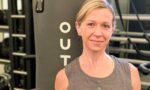
Today we’d like to introduce you to Dr. Jennifer Marks.
Hi Dr. Marks, we’d love for you to start by introducing yourself
When I was twelve years old my mom and I went to see a family therapist. She helped my mom and me through some communication problems that we were having.
In fact, she helped us so much that I decided I wanted to be a therapist to help others the way that I was helped. Knowing that I wanted to major in psychology, I took my first psychology course my junior year in high school.
I didn’t do well. Taking my college counselor’s advice, I applied to colleges with an intended major in sociology since I clearly wasn’t cut out for psychology.
I toured sociology departments and spoke with their chairs but my heart was still set on psychology so I took a chance and majored in psychology with a minor in sociology. Eleven years later I had earned a bachelor’s, master’s, and a doctorate in psychology and a master’s degree in sociology. Although I’m not employed as a sociologist, I think of myself as a social psychologist of sorts because I use my knowledge of sociology and the dynamics of groups a lot in therapy.
During the three years that I worked at a Federally Qualified Healthcare Facility and I had the chance to see a lot of maladaptive patterns of behavior occurring between mother-daughter pairs. This leads me to write my book Breaking Down Barriers Between Mothers and Daughters: An interactive Guide to Mother-Daughter #RelationshipGoals and eventually to create the VAE brand.
Alright, so let’s dig a little deeper into the story – has it been an easy path overall, and if not, what were the challenges you’ve had to overcome?
I struggled a lot in my personal life along the way but I had one major struggle towards the end of my doctoral program.
During my final year of graduate school, my mother has diagnosed with stage four cancer. I was living in Orange County, CA at the time and was completing my pre-doctoral internship. I remember one of my family members telling me that if my mom died and I was still living in CA, they would never speak to me again.
I had already withdrawn 2 years after the birth of my son, so I had six months of internship left and no more withdrawals to take. So, I made the extremely difficult and very unpopular decision to wait until my internship was over to move back to Missouri to be with mom. It worked out. She lived another 7 months, attended my graduation, and got to see me working as a psychologist in my first job at the prison.
It was after my mom passed and I was working at the FQHC, that I started my private practice and I really enjoyed supplementing my full-time job with a practice bearing my own name. However, a position as assistant director, became available and i applied but didn’t get it.
After that, I started to feel undervalued which got worse and worse over time. So, I quit and threw all of my energy into my own business, and here I am!
Great, so let’s talk business. Can you tell our readers more about what you do and what you think sets you apart from others?
Jennifer Marks-Foster, PsyD is the name of my private practice. Technically, my real name is Jennifer Marks and I married into the Morris family but I have not changed the business name because (as of now) my eleven-year-old son wants to be a psychologist and I want the business to continue to bear his surname even though Foster is no longer my name.
I primarily see teens and adults but am willing to see some children as young as 11 years old depending on the case. I specialize in mood disorders ranging from adjusting to sudden change (Adjustment Disorders) to Schizoaffective Disorder which is a psychotic disorder with mood symptoms and everywhere in between. I also specialize in effective interpersonal communication.
In fact, in my Interactive Guide to Mother-Daughter #RelationshipGoals, I talk about the importance of learning to validate, affirm, and encourage (VAE) children. Validate, Affirm, Encourage (trademark pending) became such a large part of my therapeutic approach that I started selling merchandise with VAE on it. The VAE brand is my attempt to extend my therapeutic reach and provide psychoeducation beyond my therapy sessions.
I am really proud of the VAE brand. It’s still in the very early stages but it is the culmination of years of personal development. Throughout my life, people have always given me positive feedback for my creativity whether it was the way that put together accessories, or my obsession with Christmas tree decorating but I always had a fear that my style was too specific.
I kind of do my own thing which may or may not be what other people are into and I didn’t want something that I love to turn into a burden or to get tainted with failure. But, I’ve always valued mental health and I’m rarely afraid to offer up psychoeducation.
So, marrying that value with my creativity to start this brand helped me to overcome any fears of failure because as long as I help one person to realize the importance of validation, affirmation, and encouragement, then I’ve succeeded.
I’d like readers to know that I feel confident about my ability to help people struggling with mental health issues. I am also secure enough to verbalize when I don’t have the answer or need time to figure it out. As a result, I am genuine and authentic in therapy.
I do not feel the need to intellectualize or make people feel unknowledgeable. You are the expert on what you have experienced in your life. I am a tool to help you sort through what those experiences mean and how to make your future experiences better than the past.
Can you talk to us about how you think about risk?
I have to say, I am in awe of people who make life-changing decisions with no plan or cushion. Even when it doesn’t work out, I appreciate the strength that it took to step out on faith and try. Realistically, risk is everywhere.
We take risks every day but sometimes we get so comfortable with the risks that we take that we don’t see them as risks anymore. Other times, we become so fearful of the outcome of taking a risk that we avoid things that feel unfamiliar in any way. I think that for most of us, planned risk taking is best.
For example, some might say that leaving my full-time job to be an entrepreneur in the middle of a pandemic was a risk. In some ways, it was. I was very worried about not being able to pay my mortgage without a steady paycheck but the decision to go through with it was not impulsive.
I made a plan to build my practice enough to cover my living expenses before I left my job. In the six months leading up to my exit, I slowly added more clients until my private practice brought in the same amount as my paycheck from the FQHC.
All that is to say, I support risk-taking but impulsive decision-making, not so much.
Contact Info:
- Email: dr.jennifermarks@gmail.
com - Website: www.
DrJenniferMarksPsychologist. com; www.TheVAEShop.com - Instagram: instagram.com/
psychdrjen - Facebook: facebook.com/
jennifer.marksfoster


 Image Credits
Alexius Robertson and Diamond Designs Photography