Today we’d like to introduce you to Jessica LeMaster.
Hi Jessica, it’s an honor to have you on the platform. Thanks for taking the time to share your story with us – to start maybe you can share some of your backstory with our readers?
I didn’t set out to do this work. I didn’t even know this work existed.
My starting point was being a parent who knew something wasn’t right. My child was being suspended over and over again, more days out of school than in, and I was being told by professionals that he was “too smart” to qualify for an IEP or a 504.
At the time, I believed them. As a parent, you trust that the people in those roles are the experts and that they are doing what is best for your child. I didn’t know what I didn’t know, and that is a very real place to be.
Everything changed when I was referred to a special education advocate. That was the first time I realized there were options, rights, and an entire system I had never been made aware of. It felt like my whole world opened up, but it also came with a hard realization. I had been navigating something incredibly important without the information I needed.
That experience is what started all of this.
Once I went through it, I made a decision that I have not moved from since. I do not want another parent or family to feel the way I felt. The confusion, the frustration, and the guilt that comes when you realize later that you did not have the information you needed.
What makes this even more personal is that I am still living it. I am navigating this system as a parent while also supporting other families through it professionally.
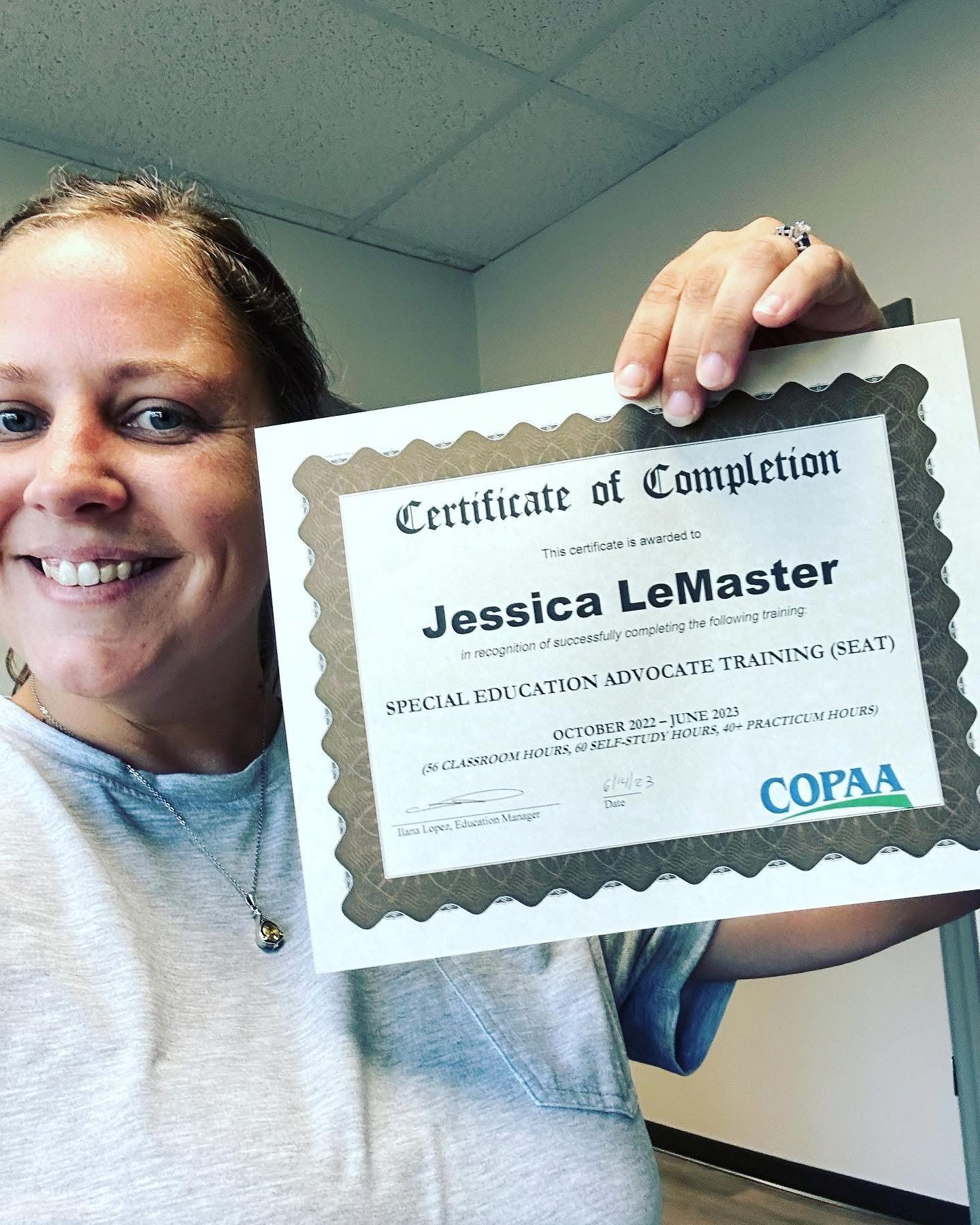
Today, as a COPAA SEAT Certified Educational Advocate and the founder of AnchorED Advocacy, I help families understand what is actually happening, what their rights are, and how to advocate in a way that is clear, informed, and effective. I have also worked in compliance and trained educators, so I understand how decisions are made on both sides of the table.
A big part of how I do this work is not just showing up and speaking for families. I teach them. I teach them how to communicate effectively with schools, how to interpret the data, what the data actually means, what the law says, and how to access that information themselves.
My goal is not for families to rely on me forever. My goal is to work myself out of a job. Parents are the experts on their child and their child’s most important advocate. Most have simply never been taught how to navigate the system.
At the core of everything I do is a simple goal. No parent should be left in the dark while decisions are being made about their child.
I’m sure it wasn’t obstacle-free, but would you say the journey has been fairly smooth so far?
This work is emotional on every level because at the center of it is always a child. Whether it is my own child or a family I am supporting, the impact is real and it matters.
There is a difference, though, between the personal and the professional side of that.
When I am supporting other families, I am able to stay grounded. I can focus on the data, the law, and the strategy. I can ask the right questions and help move things forward in a way that is clear and effective.
When it is my own child, it is different. I am emotionally invested in a way that no amount of professional knowledge changes. I can walk into a meeting for another family and do exactly what needs to be done, but when I am sitting there as a parent, it is harder. Your mind races, emotions take over, and it is not always easy to access everything you know.
And that is exactly the point.
Families are expected to navigate these meetings while carrying that emotional weight, and that is not a fair expectation. That is why this work matters so much.
Another challenge has been balancing that reality with building something sustainable. I want to help every family, but I also know that in order to keep doing this work long term, I have to create boundaries and structure.
There is also the ongoing challenge of navigating systems that are not always clear or transparent. That requires persistence, documentation, and the ability to stay focused even when situations become frustrating.
Those struggles have made me more intentional, more grounded, and more committed to making sure families are not left trying to figure it out on their own while carrying everything that comes with being a parent in that moment.
Great, so let’s talk business. Can you tell our readers more about what you do and what you think sets you apart from others?
AnchorED Advocacy, LLC supports families navigating special education, Section 504, evaluations, school discipline, behavior concerns, and parent-school communication.
I provide record review, meeting preparation, parent coaching, issue-spotting, and advocacy support before, during, and after school meetings. A lot of my work is helping families organize concerns, understand what documentation matters, prepare clear questions, and make informed decisions without feeling like they are walking into the room blind.
I also support families in understanding the connection between disability, behavior, data, services, placement, and school responsibility. Many parents know something is not working, but they do not always know how to name the issue, what to ask for, or how to document it in a way that moves the conversation forward.
The work is practical, individualized, and focused on helping families become more confident and informed advocates for their children.
Is there a quality that you most attribute to your success?
Clarity.
Most families are not struggling because they do not care or are not trying. They are struggling because they do not have clear, accurate information. They are sitting in meetings hearing terms, data, and decisions that are not being explained in a way that actually makes sense.
I know what that feels like because I have been there.
So everything I do is centered around making things clear. What the data actually says. What the law actually requires. What the school is responsible for. And what that means for their child.
But clarity is not just me explaining things. It is teaching families how to find, understand, and use that information themselves. How to ask the right questions. How to communicate effectively. How to walk into a meeting and actually know what is happening.
When families have clarity, everything changes. They stop reacting from fear and start making informed decisions.
That is what drives my work.