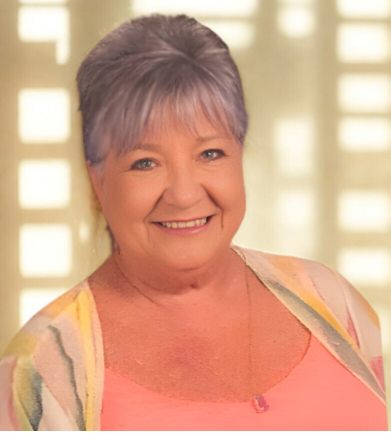
Today we’d like to introduce you to Lisa Bell.
Hi Lisa, thanks for sharing your story with us. To start, maybe you can tell our readers some of your backstory.
If you’re asking how I got here, it’s hard to separate my professional work from the story that shaped me. What I built grew directly out of what I experienced.
Like many people in this field, my path includes trauma — not dramatic, headline-grabbing trauma, but cumulative, systemic instability. My parents weren’t terrible people. They were simply unprepared to raise children in a way that felt emotionally grounded. I was the youngest of three. My older brother had developed a reputation in high school — not a positive one — and I grew up in the shadow of that. Ours was a family where appearances and reputation mattered. We’d been in the grocery business for more than a hundred years. I worked there from the time I was old enough to butter bread. Work wasn’t optional. It was identity. The family message was always, “We did the best we could. We taught you how to work.” That was true — and it was incomplete.
I learned discipline and responsibility early. What I didn’t learn was emotional safety.
My mother spent much of my childhood either recovering from surgeries or in inpatient psychiatric care. Many of her physical symptoms were likely manifestations of her own trauma and untreated mental health struggles. My father was running a business and raising three children without having had secure attachment himself. His father struggled with alcoholism. His mother oscillated between idealizing and guilt-inducing. My mother was born into unresolved grief after the loss of a male child in her family. Layer in a rigid, stoic cultural environment, and you have two adults doing the best they could without having been shown how to do better.
As a kid, I noticed everything. I noticed inconsistencies. I noticed shifting rules. I noticed how differently people behaved depending on who was watching. I asked questions — sometimes too many. And when my perceptions didn’t match the story being told, I doubted myself. Those questions didn’t disappear; they just went underground.
Seventh grade changed that.
A significant event shattered the internal scaffolding I had built to manage my doubts. Trust snapped. By high school, anger had become armor. If adults were going to assume the worst about me — because of my last name, because of my brother, because I questioned authority, because I didn’t smile on command — then I decided I would stop trying to correct them. I adopted a working theory that adults held only limited, superficial power in my life. On the outside, I projected indifference. I became what I call the “Queen of I Don’t Care.” On the inside, I cared deeply.
There were two adults who disrupted that narrative.
The first was Carol Perkins, my eighth-grade teacher. I wrote a story that worried her — the kind of writing that signals something heavier underneath. Instead of calling my parents or labeling me problematic, she pulled me aside and asked how she could help. She was curious. She didn’t approach me with suspicion. She engaged me. That mattered more than she could have known.
The second was Judy Kandlbinder, my high school psychology teacher. I was chronically bored in school until I sat in her classroom. Psychology required me to think about why people behave the way they do. When she assigned me a paper on strokes and I pushed back, she didn’t indulge me. She held the line. I wrote it. And I learned something bigger than the topic itself — I learned discipline in curiosity.
Somewhere between Carol’s curiosity and Judy’s structure, there was a shift. I wasn’t just surviving anymore. I was awake.
I graduated high school early and started at Mizzou at seventeen. There wasn’t much college planning. My mother helped me carry one load into my dorm room, said “Good riddance,” and left. That confirmed what I already knew: whatever happened next would be because I made it happen.
At Mizzou, I registered for classes without guidance — including senior-level courses I had no business taking. I assumed intelligence would carry me the way it had in high school. It didn’t. By my third semester, I was notified that I was approaching academic probation. That letter was clarifying. There was no scenario where I was moving back home.
When I did go home, I worked at the family convenience store. That sometimes meant hosing vomit off the parking lot at dawn after a weekend night. Every time I did it, I reminded myself: I am not quitting college. Competence stopped being about achievement and became about survival.
I graduated in three years and moved straight into my master’s program in counseling psychology. That’s when everything began to cohere. Brain science, trauma, family systems — suddenly the chaos of my childhood had language. Behavior wasn’t random. It had roots. Patterns weren’t mysterious. They were systemic.
My advisor, Dr. Callis, routinely dismissed my thesis ideas. It was a familiar dynamic — authority figure, dismissal, self-doubt. Before I could fully resolve that tension, he died unexpectedly. I had one semester left and no advisor. I found another professor, completed my thesis by norming the university counseling center’s intake process, and finished my degree. It wasn’t graceful. But it was done.
After graduate school, I stepped into the deep end. I began working at COMTREA, serving adults who were severely and persistently mentally ill — schizophrenia, chronic trauma, personality disorders. It wasn’t theoretical work. It was raw and complicated and human.
At the time in Missouri, licensure required three years of supervised postgraduate experience. So I was working full-time while still very much in training. That suited me. I’ve never been afraid of hard work. What I didn’t anticipate was how quickly the work would strip away any remaining naïveté about human behavior.
I had the Secret Service in my office twice because a client had made threats toward the President. I worked with individuals who couldn’t decide whether they wanted to marry me, stalk me, harm me, or attach themselves to me as a lifeline. It was frightening at times. I was young. I was living at home to save money. I was driving into a high-need community every day.
And yet, something in me felt grounded. The work demanded presence. Clarity. Boundaries. It required me to be fully awake.
It was also during that period that I began working extensively with women who had experienced sexual trauma — including incest. In Jefferson County, the rates were staggering. The intergenerational nature of that trauma was not subtle; it was woven into families and identities in ways that were deeply normalized. I remember thinking at one point, is there anyone here who hasn’t been harmed in this way? The sheer volume of it changes you.
During that same time, I also encountered a familiar dynamic in a professional setting. A male colleague with less experience was hired at a significantly higher salary than mine. When I questioned it, I was told I should feel lucky to have a job. That landed in an old place. It echoed the earlier messages in my life — be grateful, don’t challenge authority. I didn’t stage a protest. But I took note. Injustice isn’t abstract. It’s structural. And it’s often tolerated by the people who benefit from it.
Eventually, I transitioned to Four County Mental Health. The structure was different, but the need was just as real. I completed my supervision there and solidified my licensure path. I was no longer just learning how to be a clinician. I was becoming one.
What I also realized during that period is that I’m not wired to sit comfortably inside hierarchical systems. I can collaborate. I can contribute. I can improve processes. But navigating bureaucracy and managing adult dynamics drained me in a way clinical work never did. I didn’t want to spend my life managing adults who didn’t want to be managed.
In early 1994, I became licensed. I was pregnant with my oldest daughter, though I didn’t yet know it when I sat for the exam. Near the end of my pregnancy, I developed complications and was placed on bed rest. When my boss suggested I could conduct therapy sessions from a lawn chair in the office, it was a hard no from me. I had spent years bending around environments that weren’t built with care in mind. I wasn’t going to build my life’s work in those types of systems.
So I left.
I opened my private practice in an apartment above my family’s grocery store. It was modest. I painted it myself. We installed carpet and a heater so I could divide it into a waiting room and an office. When you work for an agency, clients are assigned. When you work for yourself, you show up to an empty office and hope the phone rings.
I was given one piece of advice: go to your office every day, even if no one is scheduled. Act like it’s real before it feels real.
So I did.
At first, I tried to stay in the lane I knew best — adults, trauma, complex clinical presentations. But colleagues were blunt: if you want to survive in private practice, you need to see children. My graduate training had been oriented toward children and families, but my early career experience was adult-focused. Working directly with children meant intervening earlier in the story.
Even though I was licensed, I remained in supervision. Competence and ethics matter to me. That ongoing consultation grounded me as I stepped more fully into working with children.
And then the calls started coming.
Parents would say, “Someone told me you helped their child.” Word of mouth spreads quietly when something works. I began sitting across from children who didn’t have language for what they were experiencing but whose behavior spoke loudly. Some were defiant. Some withdrawn. Some hypervigilant. Some heartbreakingly compliant. What became increasingly clear was this: Many of the adults I’d treated for years had once been children adapting to survive.
At the same time, I was teaching myself how to run a business. Graduate school had prepared me to diagnose, conceptualize, and intervene. It had not prepared me to credential with insurance companies, negotiate contracts, track billing, or market services. There was no roadmap. Just persistence. I contacted Blue Cross Blue Shield. Then UnitedHealthcare. Then Medicaid. I learned what provider panels were. I learned rejection. I learned how to follow up.
It was messy. It was exhausting. It was empowering.
As my practice grew, so did the complexity of the work. Children’s Division began referring cases for psychological evaluations — adoption assessments, reunification determinations, termination of parental rights considerations. These weren’t quick consults. They were comprehensive examinations of family systems under enormous stress. I wrote thorough reports because children deserved thoroughness. If someone was going to decide where a child would live, that decision needed more than a checkbox.
Court followed naturally.
I approached testimony clinically — present findings, explain methodology, answer questions. But courtrooms are adversarial by design. I distinctly remember a day with fourteen attorneys in the room, hours on the stand, and relentless attempts to undermine my credibility before we had meaningfully discussed the children involved. I understood the legal function. It wasn’t personal. But it was draining.
By the end of that day, I realized something important: I was capable of navigating that environment, but I didn’t want to build my career around it. The emotional cost was too high, and the focus too often shifted away from the child and onto the professional.
I began developing parenting classes after recognizing how often I was repeating the same guidance in my psychological evaluations and to individual parents in therapy sessions. It felt inefficient. If multiple families were struggling with similar dynamics, why not teach proactively? I became certified in Nurturing Parenting and began offering structured courses. Some parents came voluntarily. Some were court-ordered. All were navigating systems that tended to intervene late rather than early.
In parallel, I accepted an opportunity to teach at East Central College — first Marriage and Family, then Sociology. The pay was modest, but the experience was rich. Teaching required me to organize ideas differently, to synthesize research into something accessible. At that point, I had two young children at home, a growing practice, evaluation work, and college courses layered on top. My life was full — sometimes uncomfortably so.
The nonprofit idea didn’t emerge as a polished strategic plan. It started with curiosity — and a bit of irritation. One afternoon at a winery, joking about how large nonprofits operate, I found myself wondering what it would take to expand access to parenting education beyond court referrals and private pay. Research led me to a simple realization: if I wanted grant funding, I needed a 501(c)(3).
So I filed the paperwork. Sent the check. Waited.
And it was approved.
Portals Corporation was born not out of polish, but necessity.
I didn’t know how to run a nonprofit. I assembled a board of people who cared. I attended trainings. I learned about bylaws, governance, reporting requirements, grant structures. It was another system to build — another structure to create where one didn’t exist.
And then the work became personal in a new way.
My daughter began experiencing bullying in elementary school. What initially looked like typical peer conflict became persistent. The pattern felt familiar: a child who is smart, outspoken, not easily compliant becomes easier to label than to understand. What hurt most wasn’t just the children’s behavior. It was the adults’ inability to see context. I had lived that narrative. Watching it replay through my child was the moment prevention stopped being theoretical.
At the same time, my private practice was filling with older children and adolescents in escalating crisis — self-harm, eating disorders, suicidal ideation, risky behavior. When you sit with enough kids over time, patterns emerge. These weren’t isolated cases. They pointed to environments that lacked intentional skill-building and emotional literacy.
We were intervening after damage had already been done.
That realization wouldn’t leave me alone.
Schools were addressing behavior reactively — discipline, assemblies, one-off talks about kindness. Posters in hallways. But no one was systematically teaching communication, emotional regulation, conflict resolution, or bystander intervention in a sequenced way. Competence was being expected without instruction.
That didn’t make sense to me.
If we teach math in sequenced lessons and reading in structured progression, why wouldn’t we teach social-emotional skill development the same way?
The early versions of what would become Buddies Not Bullies weren’t polished. They were experiments. I pulled from seventh-grade experiential classes I had developed. I layered in trauma research. I integrated what I had seen work — and intentionally eliminated what hadn’t — in therapy rooms. I volunteered in classrooms because before you scale something, you refine it.
The first grant was $500 from United Way. It wasn’t the amount that mattered. It was validation that prevention was worth funding.
Over time, Portals narrowed its mission. Parenting education remained important, but I could see that if children learned the skills earlier, the parenting conversations would look different later. Depth produces impact. We chose depth.
Portals became Buddies Not Bullies.
The name mattered. It was direct. Clear. Accessible to children. It wasn’t academic jargon. It was relational language.
The work was never about identifying villains. I had worked with too many adults who were once labeled “problem kids” to believe in simplistic narratives. Bullying is an enormously complex problem with an intricate interplay of relational, attitudinal, cultural, behavioral, individual, and systemic factors. In children, bullying behavior often reflects skill deficits — emotional regulation, empathy, power mismanagement. So the framework addressed three groups simultaneously: targets, bystanders, and children engaging in harmful behavior. Each requires something different. Each requires skill, not shame.
I began working consistently in a Washington school. Fourth grade became the anchor — old enough for nuance, young enough to interrupt patterns before adolescence solidifies them. We practice communication. We practice repair. We practice noticing and intervening safely. It isn’t theory. It’s skill-building in real time.
And over time, subtle shifts appeared. Students referenced strategies without prompting. Bystanders became less passive. Teachers began reframing conflict differently.
Not perfectly. Not universally. But measurably — in sustained skill recall, increased bystander intervention, and students’ ability to name and navigate conflict.
For nearly three decades, I’ve maintained my private practice alongside the nonprofit. Four days a week, I’m still in a therapy room — two in private practice and two in a school-based mental health program. That dual vantage point keeps me honest. The nonprofit informs the clinical work, and the clinical work informs the nonprofit. They are parallel tracks, not separate stories.
There have been fragile years. Funding fluctuates. Board membership evolves. Momentum ebbs and flows. I’ve questioned whether pushing against slow-moving systems is worth the energy.
And then a child says something small but precise — something that reflects new language or new awareness — and I remember why I started.
When I look back at my life, I see a through-line.
A child questioning inconsistencies.
An adolescent armoring herself in indifference.
A clinician navigating systems that undervalued voice.
A mother watching her daughter be mischaracterized.
The pattern isn’t accidental.
Childhood should not hurt this much.
That belief isn’t sentimental. It’s structural. We have the cognitive capacity for empathy, reflection, and repair. If bullying remains normalized, it’s not because we can’t do better. It’s because we haven’t taught better.
So I keep building.
When structure collapses, build one.
When voice is dismissed, speak clearly.
When children are hurting, intervene early.
That’s how I got here.
Can you talk to us a bit about the challenges and lessons you’ve learned along the way. Looking back would you say it’s been easy or smooth in retrospect?
It hasn’t been smooth. Not even close.
In fact, just this week felt like a metaphor. I recorded nearly two hours of voice memo reflections for this interview. When I went back to transcribe them, there was no audio. Gone. That’s the rhythm of building anything meaningful — you put in the work, something collapses, and you start again.
Struggle is part of the deal.
Early on, one of the biggest challenges wasn’t external — it was internal. Mentors told me pretty clearly: if you want to do this work well, you have to clean out your own closets. Not someday. Now. Imposter syndrome is real, especially when you’ve built armor around competence and independence. When you look capable, people assume you’re fine. They stop asking how you’re actually doing.
One of the hardest phrases I ever learned to say was, “I don’t know.” Early in my clinical career, I started telling clients, “I don’t know the answer to that — but I know how to find out.” That became foundational. I don’t need to know everything. I need to stay curious, consult, research, and grow.
Another challenge has been cultural resistance. I grew up around limited views of mental health — ideas like “just stop thinking” or “kids with ADHD need harsher discipline.” Those messages shaped my early environment, and they directly fueled my desire to educate. But passion doesn’t automatically meet open-mindedness. One of the hardest realities is caring deeply about something and realizing not everyone wants to hear it.
When I started the nonprofit, I was told it was a “stupid idea.” I was told bullying had always existed and always would. I was told I was “too big for my britches.” I’ve had school doors shut in my face without even a conversation. So I created new entry points — shorter programs, expanded grade-level offerings, and online parent resources — ways to make prevention more accessible. Not every pivot worked, but those obstacles ultimately shaped a flexible K–12 curriculum and expanded resources that could reach families and communities directly.
There’s also a broader reality: bullying doesn’t exist in a vacuum. Children absorb what they see modeled. My work with kids remains focused on skill development — communication, emotional regulation, respectful engagement, dignity, and human connection — not ideology — which means holding personal convictions privately so the lessons stay centered on skills. That focus keeps the work grounded.
COVID was another turning point. I had to learn how to do psychotherapy with children over telehealth — cords everywhere, Uno over Zoom, dogs stealing broccoli in the background. It was messy and human and uncomfortable. But it forced me to master digital tools in a way I wouldn’t have otherwise, and that ultimately expanded our reach.
Some challenges are relational. I’ve had professionals undermine me. I’ve had parents tell their children they don’t have to listen or participate. That puts a child in a painful bind — between authority figures. Those moments test your ego. But my responsibility is to stay grounded in what I know, what I’ve trained for, and what decades of experience have shown me.
Leadership has been one of the most consistent challenges. Recruiting board members who want to think long-term about sustainability isn’t easy. I am very comfortable building and delivering programs. Governance is a different muscle. And I’ve been a one-woman wrecking crew most of my life. Delegating doesn’t come naturally.
But if there’s one consistent thread through all of it — criticism, closed doors, technology failures, political tension, administrative strain — it’s this:
Obstacles don’t stop me. They reroute me.
If the front door is locked, I’ll try the side. If the side is locked, I’ll build a window. Not because I think I’m the only one who can do this work — but because it matters. Bullying, trauma, and disconnection don’t improve when ignored. They improve when someone refuses to look away.
Has it been smooth? No.
Has it been worth it? Absolutely.
Great, so let’s talk business. Can you tell our readers more about what you do and what you think sets you apart from others?
I have two professional homes.
One is my private practice, Bell Psychological Services. The other is Buddies Not Bullies, the nonprofit I founded in 2005. They’re separate entities, but they’re not separate stories. The clinical work informs the nonprofit. The nonprofit expands the clinical work.
Bell Psychological Services
I went to Mizzou — left at seventeen — and earned both my undergraduate and master’s degrees there. At the time, Missouri law allowed someone with a master’s in psychology to sit for the licensing exam without a PhD. That changed later, but I was licensed under the earlier requirements. It took three years of supervised experience, thousands of hours, and a lot of persistence.
Early in my career, I worked with severely and persistently mentally ill adults at COMTREA and Four County. That work shapes you. It teaches you steadiness. It teaches you systemic thinking. It also gave me a niche — I developed an affinity for complex clients, especially individuals diagnosed with borderline personality disorder. That population can burn clinicians out. It didn’t burn me out. I could see the pain underneath the behavior and the skills deficits driving the patterns.
I attended Marsha Linehan’s debut conference on Dialectical Behavior Therapy and met her there. Listening to her speak about emotional regulation and change connected immediately with the work I was already doing. I still remember her describing individuals with borderline personality disorder as doing the best they can — holding the right goals but lacking the skills to achieve them. That framing stayed with me and continues to influence how I conceptualize cases today.
When I opened my practice, I started with three or four clients. That was it. But I was determined. Over time, I became known for working with children and adolescents with ADHD, oppositional behaviors, and intense emotional reactivity — the kids who are misunderstood and the families who are exhausted.
I also developed extensive experience conducting psychological evaluations for Children’s Division and the courts. Those reports were thorough — often 20 to 40 pages — because decisions about reunification or adoption deserve depth. After years of testimony and adversarial courtrooms, I eventually pivoted away from that work. I love clinical work. I do not love paperwork.
Today, I maintain a general practice working with both adults and children on trauma, anxiety, depression, family stress, and behavior challenges. I don’t hide behind jargon. I’m direct. Compassionate but honest. People don’t come to therapy for platitudes.
Buddies Not Bullies
The nonprofit began almost accidentally. I was already teaching parenting classes and doing psychoeducation, and I realized that to expand access, I needed nonprofit status. So I filed the paperwork for Portals Corporation. It was approved. Later, we rebranded to Buddies Not Bullies — clearer and more relational.
We started with a $500 grant. I worked unpaid for years building curriculum because I believed prevention mattered.
Over time, we developed programming across grade levels, including our flagship fourth-grade program, All In, along with internet safety and cyberbullying education. The question has always been: what skill is missing?
When my daughter experienced bullying for years, the mission became intensely personal. It reinforced something I was already seeing clinically — we cannot save kids one starfish at a time. We have to work upstream.
Buddies Not Bullies focuses on skill-building for targets, bystanders, and children engaging in harmful behavior. Bullying isn’t just about villains and victims. It’s about underdeveloped skills — communication, emotional regulation, empathy, and power dynamics.
We measure outcomes. We track knowledge retention and sustained skill recall. We use research-based frameworks and adapt them to experiential, skill-centered lessons. Kids learn best by doing — and we see that reflected in how students intervene, repair, and apply the language independently.
Where am I now? I’m still building. I still practice. I devote significant energy to program delivery, development, and expansion with an eye toward broadening access to this work. I know it deeply. I’ve lived in it for decades.
Kids shouldn’t have to feel alone.
And adults shouldn’t be guessing when it comes to how to help them.
We’d be interested to hear your thoughts on luck and what role, if any, you feel it’s played for you?
I don’t consider myself especially lucky — or unlucky.
I don’t win raffles often. When I do, it’s a big deal. I once won a mini speaker at a Spelling Bee fundraiser and felt absurdly triumphant. I still look at it and smile.
But in life and business, I don’t attribute much to luck. I think I’ve been fortunate — and there’s a difference.
I’ve been fortunate enough to recognize opportunity when it appears, and willing enough to act. I’ve also been resilient enough to recover when something falls apart.
I’ve had storms. But storms don’t always destroy; sometimes they redirect. What feels like disruption in the moment can turn out to be propulsion.
If there’s any “luck” involved, it’s in the people I’ve encountered — mentors, collaborators, cheerleaders. When someone says, “Keep going,” it changes the trajectory of what’s possible.
We’re all dealt a hand. Some hands are stronger than others. I haven’t always had the best cards. But I’ll scan the table and build something anyway.
I don’t rely on luck. I rely on recognizing opportunity, surviving storms, building relationships, and making the most of what’s in front of me.
And if a mini speaker shows up along the way?
I’ll take it.
Contact Info:
- Website: https://www.buddiesnotbullies.org/overview
- Instagram: buddies_not_bullies_washmo
- Facebook: https://www.facebook.com/buddiesnotbullies.org
- LinkedIn: https://www.linkedin.com/company/buddies-not-bullies/
- Youtube: @BuddiesNotBullies
- Other: https://vimeo.com/user8583882