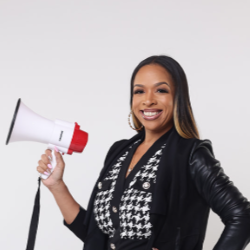
We recently had the chance to connect with Tiara Jordan-Sutton and have shared our conversation below.
Good morning Tiara, it’s such a great way to kick off the day – I think our readers will love hearing your stories, experiences and about how you think about life and work. Let’s jump right in? What do you think is misunderstood about your business?
I think the most significant misunderstanding about Activate Missouri is the idea that we want to point fingers at schools and school leadership when it comes to education equity. We know at Activate that it takes families, students, and school staff all working together and collaboratively on the same team to ensure significant impact and achievement for students.
We believe that we are all fighting against a system that was designed for students in under-resourced communities to fail, and those in more affluent neighborhoods to thrive.
Our goal is to empower parents to tap into their inner strength and advocate for the educational experiences their child deserves.
When parents are equipped as advocates and partners with school staff, and students and teachers feel their voices are being heard about their experiences and desires, the school as a whole thrives!
Can you briefly introduce yourself and share what makes you or your brand unique?
Tiara Jordan‑Sutton, M.A.Ed., is the CEO and Founder of Activate Missouri, formerly known as Activate STL. An experienced educational leader and former special-education teacher and principal in Chicago, Cleveland, and NYC, she now leads a statewide advocacy organization dedicated to uplifting student, parent, and educator voices and transforming educational equity in Missouri.
Tiara’s journey started in Flint, Michigan, where, through her own schooling experience, she learned the power of parents who were knowledgeable and knew how to work through the system, and evolved into founding a civic engagement movement in St. Louis and beyond. With a background in educational psychology and administration, she’s now guiding a statewide movement in Missouri that is centered on community-led activism and advocacy.
.
She’s currently building out programming that helps communities not only learn the system—from how school boards operate to how advocacy and organizing works—but also how to tactically pursue change, craft campaigns, and influence areas including education and education adjacent areas.
What makes Activate Missouri unique:
Youth‑centered civic leadership
Rather than working through parents, Activate Missouri directly empowers students—especially from under-resourced communities—to understand school governance, funding, and politics. Through its Youth Activators cohorts and paid summer fellowships, high schoolers learn how to design and campaign for education reforms affecting their schools and communities.
Real-world advocacy training
Participants engage in structured learning: mapping the school system, building peer coalitions, meeting decision-makers, and pitching change initiatives with tangible support at the end of each cohort or program cycle.
.
Systemic change through lived experience
As Jordan‑Sutton explains: “We were asking the people most impacted by the systemic inequalities to fix the issue… So we needed to think about this from another lens.” Shifting the focus to youth—“the very people who are closest to the issue”—activates a new source of agency and impact.
Great, so let’s dive into your journey a bit more. What was your earliest memory of feeling powerful?
My earliest memory of feeling powerful was when I had to decide whether I was going to let others define me for their comfort, or unapologetically walk in my truth and exude authenticity.
A crucial part of my story, which is essential to understanding the work we do at Activate, is that I am the product of powerful parents who researched and advocated at every step of my brother’s and my education journey—starting with studying and understanding the academic performance of the schools in our neighborhood in Flint, and deciding to move to another district with better facilities, enrichment/exposure opportunities, in addition to higher overall achievement scores. I saw this sacrifice firsthand for our education, and so at a very young age, my parents showed me the value and importance of getting a quality education.
Unfortunately, when I was entering school, this also meant that going to a better school meant having to grapple with identity issues. My brother and I were 2 of the very few non-white children in the entire school district. This meant I didn’t see teachers who looked like me or felt that my culture was celebrated or appreciated.
After constantly having my differences pointed out to the larger student population, I had the choice to change myself to fit their “norm” or stand in my power and who I was proud to be.
I chose the latter and my confidence went through the roof and has stayed there :). You have to love and believe in yourself before anyone else will!
What did suffering teach you that success never could?
Suffering taught me how to listen—really listen. Not just to what people say, but to what they feel and what they need. As a former special education teacher and principal working in under-resourced communities, I’ve seen firsthand how systems fail children and families—not because people don’t care, but because those most impacted are rarely at the center of the conversation.
There were moments in my career when I felt powerless—when students slipped through the cracks, when parents were ignored, when the weight of broken systems made it feel like change was impossible. Those were the moments that shaped me. They taught me the difference between working in the system and working to transform it.
Success can validate your strategy, but suffering tests your purpose. It showed me that resilience is not just about pushing through—it’s about redefining the problem, shifting power, and building with those who’ve been silenced. That’s why I founded Activate Missouri. I don’t just want to reform education—I want to activate the people most impacted to lead the change themselves.
But most importantly, suffering taught me that you grow the most during hard seasons. It strengthens you in ways success never could. You realize that you can survive bad times—that pain, no matter how overwhelming, is temporary. It’s a season that will pass. And when it does, you come out on the other side more grounded, more compassionate, and more certain of who you are and what you’re called to do.
So a lot of these questions go deep, but if you are open to it, we’ve got a few more questions that we’d love to get your take on. What important truth do very few people agree with you on?
One truth I hold—often quietly resisted or overlooked—is that the children we are failing to educate don’t just disappear. They don’t vanish from our communities, our economy, or our future. We treat education like a private matter—something for individual families to figure out, succeed at, or suffer through on their own. But the reality is that education is a public good, and our collective well-being is deeply tied to whether every child gets what they need to thrive.
As a former special education teacher, principal, and now as the CEO of Activate Missouri, I’ve seen what happens when we disconnect education from community. We normalize inequality by pretending it only affects certain zip codes, certain schools, or certain families. But the truth is: when we fail to educate one child, we weaken the fabric of our whole community—socially, economically, and morally.
Very few people want to sit with the fact that the same young person denied a quality education may be the same young person who lacks employment opportunities, who gets over-policed, or who cycles through systems of trauma and punishment instead of care and support. They are still ours—still part of the communities we live in.
What gives me hope, and what I work toward every day through Activate Missouri, is the belief that when we educate equitably—when we empower every child, regardless of background—we unlock untapped brilliance and build stronger, safer, and more united communities. It’s not just about giving kids a chance. It’s about all of us rising together.
Before we go, we’d love to hear your thoughts on some longer-run, legacy type questions. What do you think people will most misunderstand about your legacy?
I think people may misunderstand why I chose this path. I was born into a loving home with two college-educated parents who are still married to this day. I had stability, guidance, and the kind of foundation that too many children never get. Because of that, some people look at me and wonder why I care so deeply—why I chose to step into a field like education advocacy that’s emotionally draining, financially limiting, and full of uphill battles, when I could’ve easily pursued a career with more comfort, prestige, or pay.
What they don’t see is that my background doesn’t make me less qualified to fight for justice—it’s what compels me. I was blessed to be a blessing. I carry the weight of that responsibility. The injustice I’ve witnessed in classrooms, in boardrooms, and in statehouses keeps me up at night. Fighting for equity, for kids who’ve been overlooked and underserved, helps me sleep—because at least I know I’m doing something about it.
And at the heart of it all is my daughter. She will grow up seeing a mother who didn’t just talk about problems—she acted. She organized, she spoke up, she poured her energy and love back into her community. I want her to know that when you see something wrong, you don’t wait for permission or the perfect plan. You get activated. You move. And that energy, that urgency—it’s contagious. That’s what I hope my legacy becomes: a spark for others to rise, serve, and lead. Even when the world says you don’t have to.
Contact Info:
- Website: https://www.activatemo.org
- Instagram: activate.mo
- Linkedin: https://www.linkedin.com/in/tiara-jordan-sutton-m-a-ed-45992789?lipi=urn%3Ali%3Apage%3Ad_flagship3_profile_view_base_contact_details%3BBP%2FP8smfSuStZsmVdotyvw%3D%3D
- Facebook: Activate Missouri
- Other: Tik Tok = Activate.mo
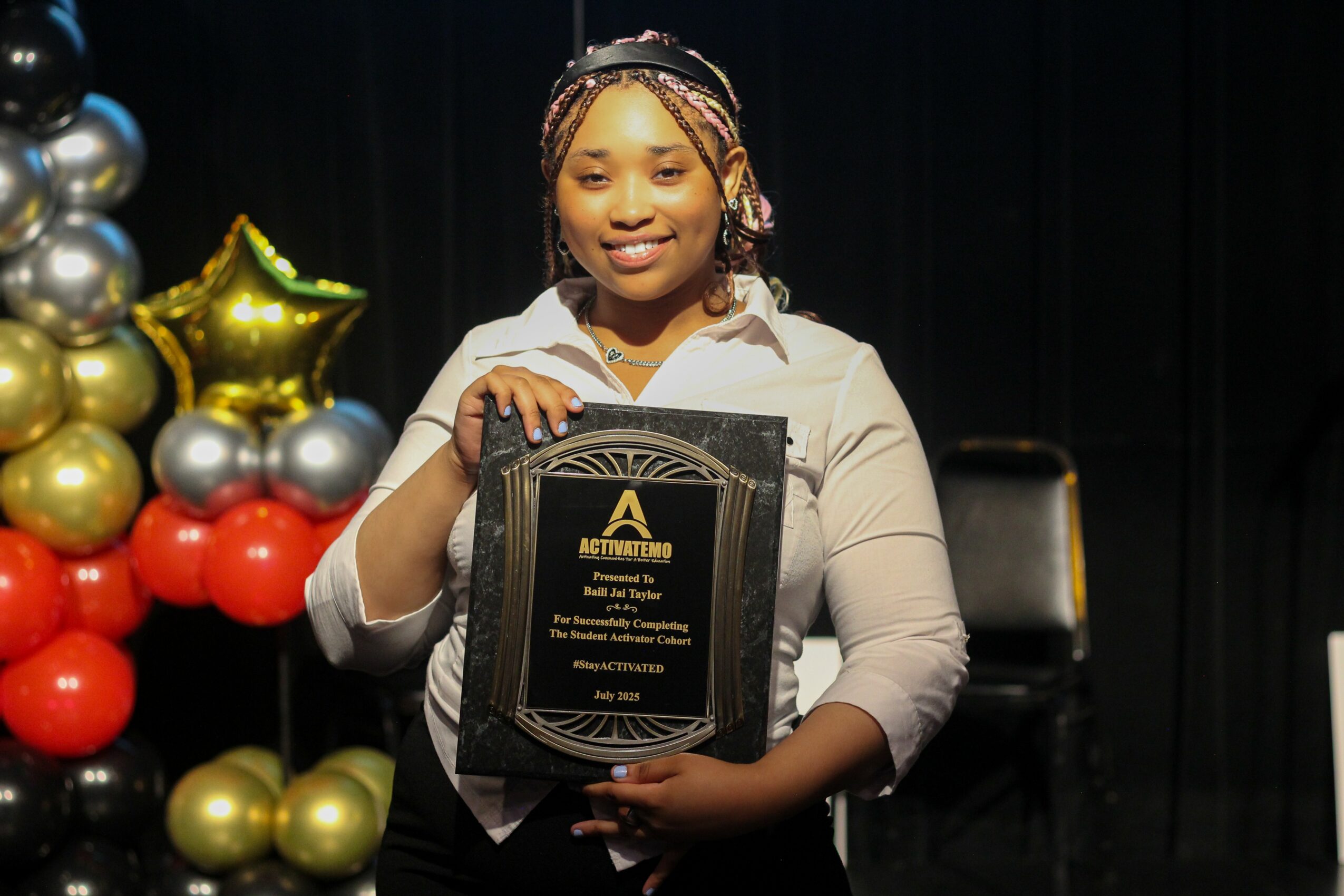
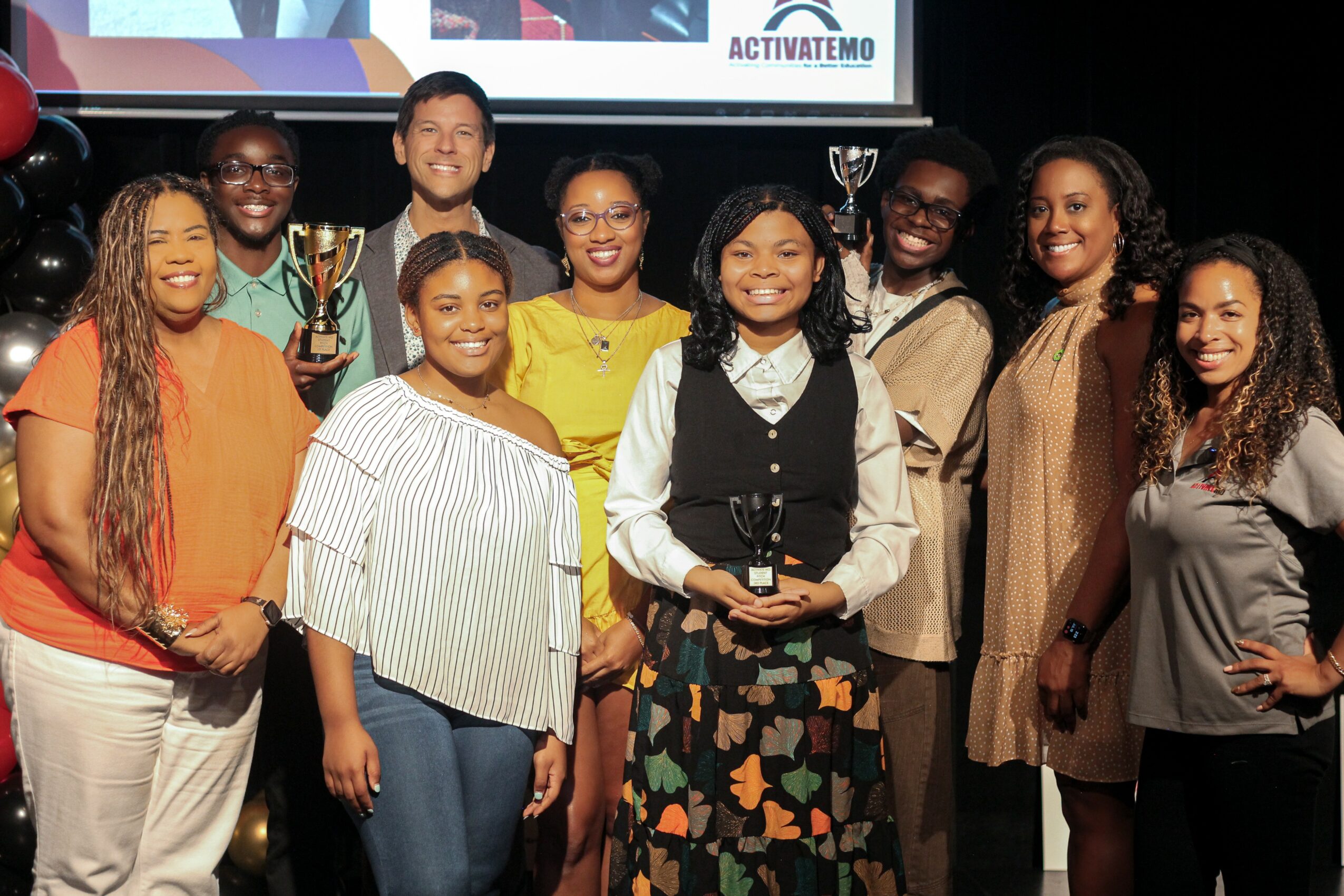
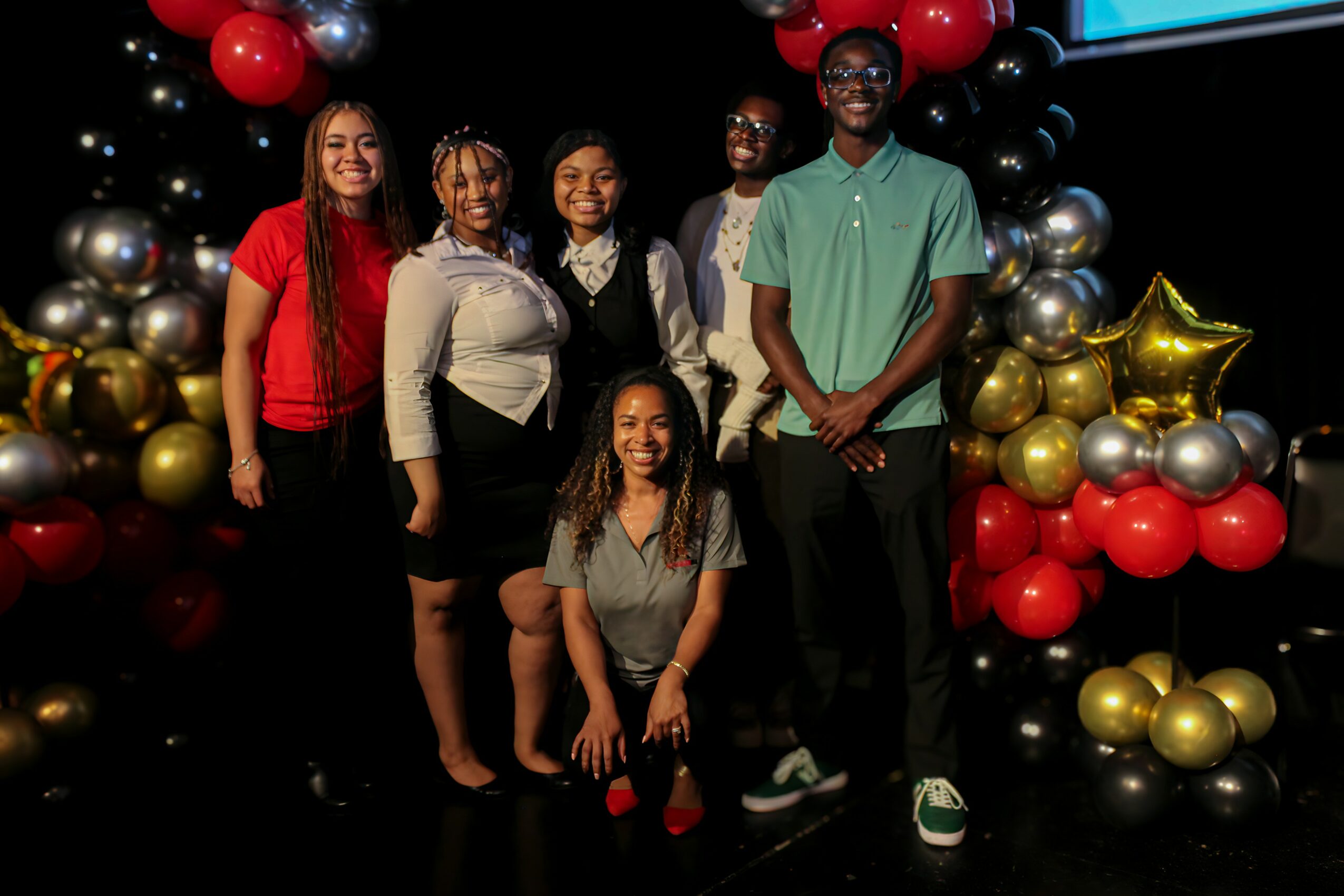
Image Credits
Mena Darre Photography
Scooda Ink