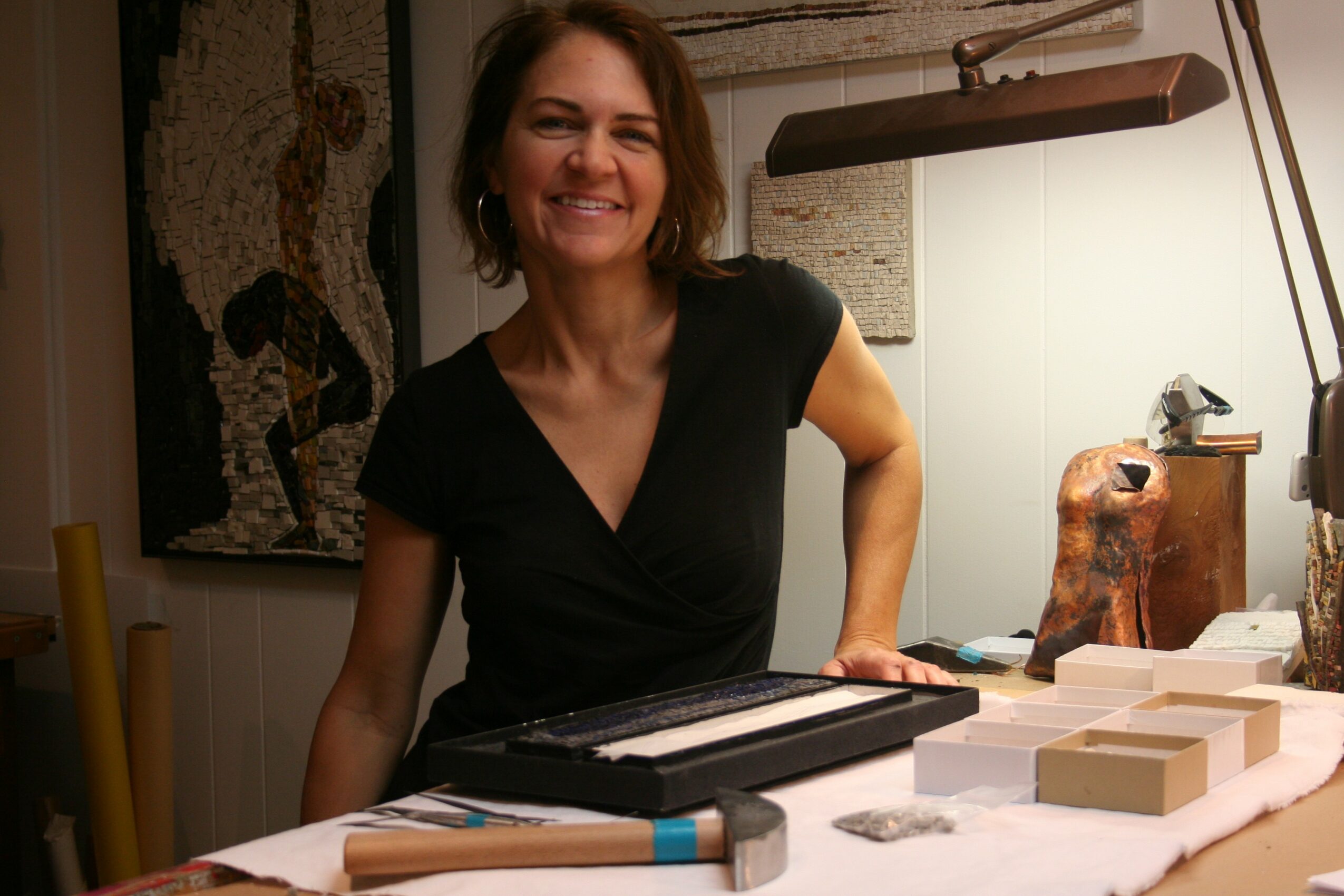
Today we’d like to introduce you to Sue Giannotti.
Hi Sue, can you start by introducing yourself? We’d love to learn more about how you got to where you are today?
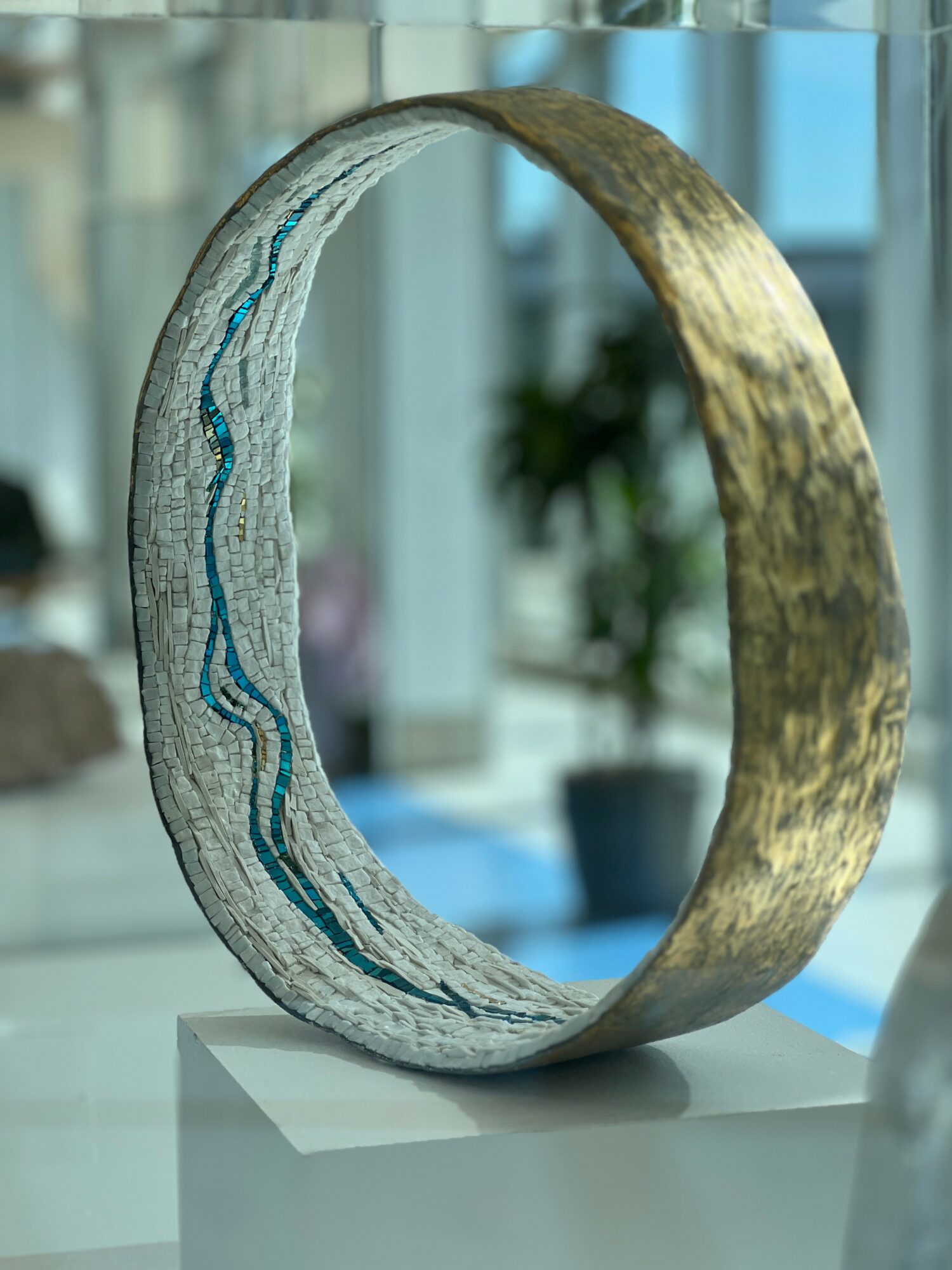
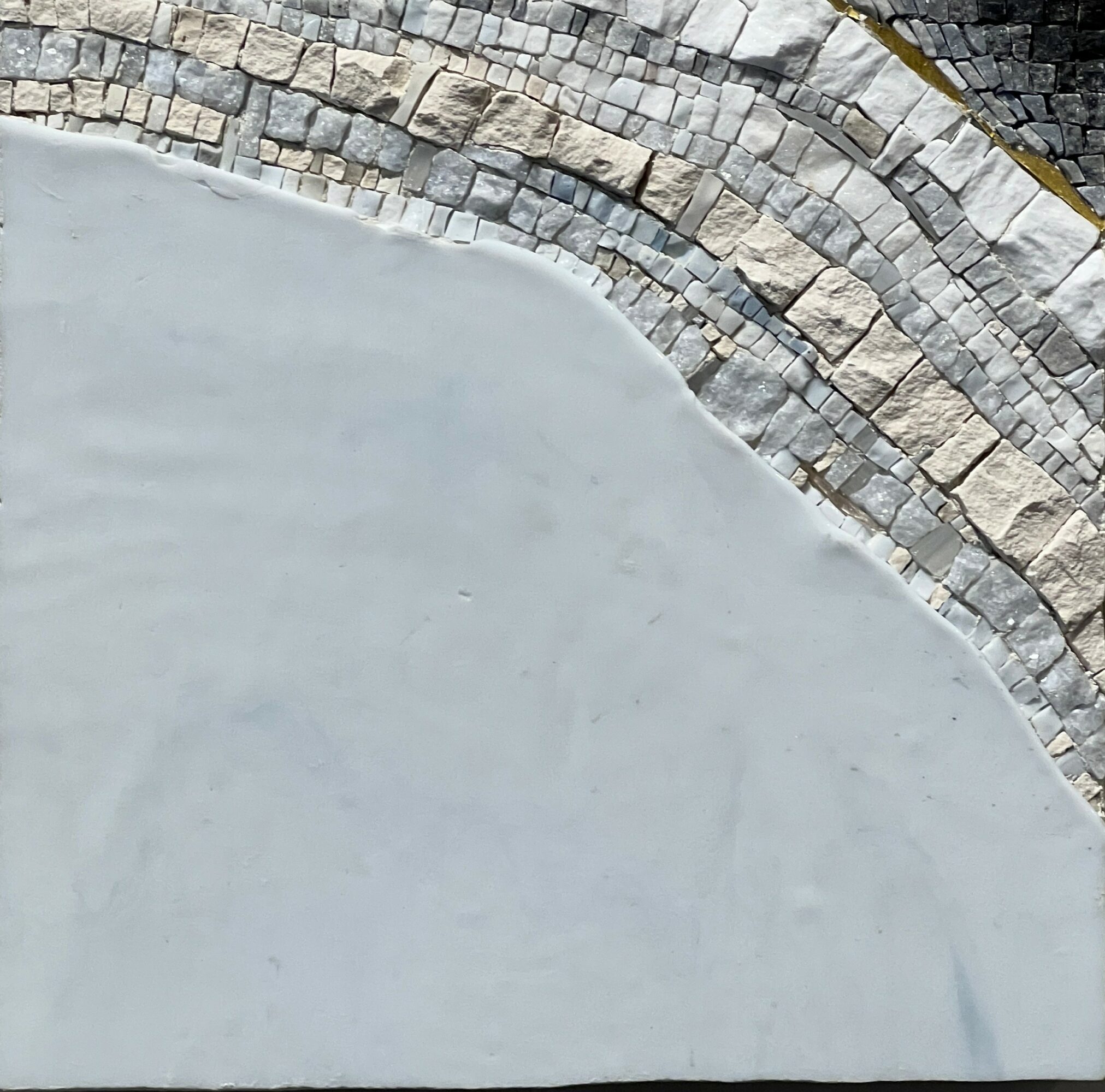
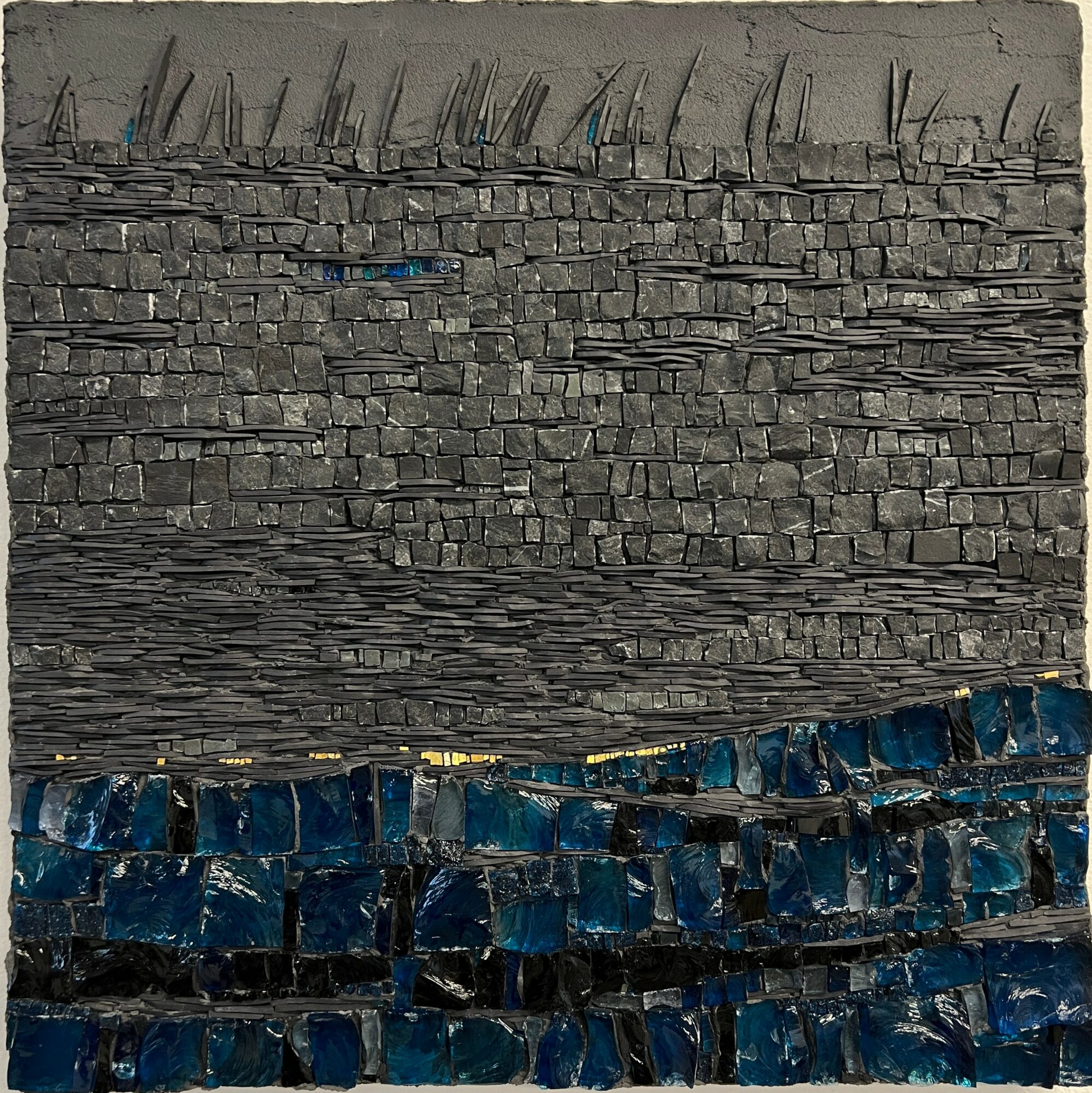
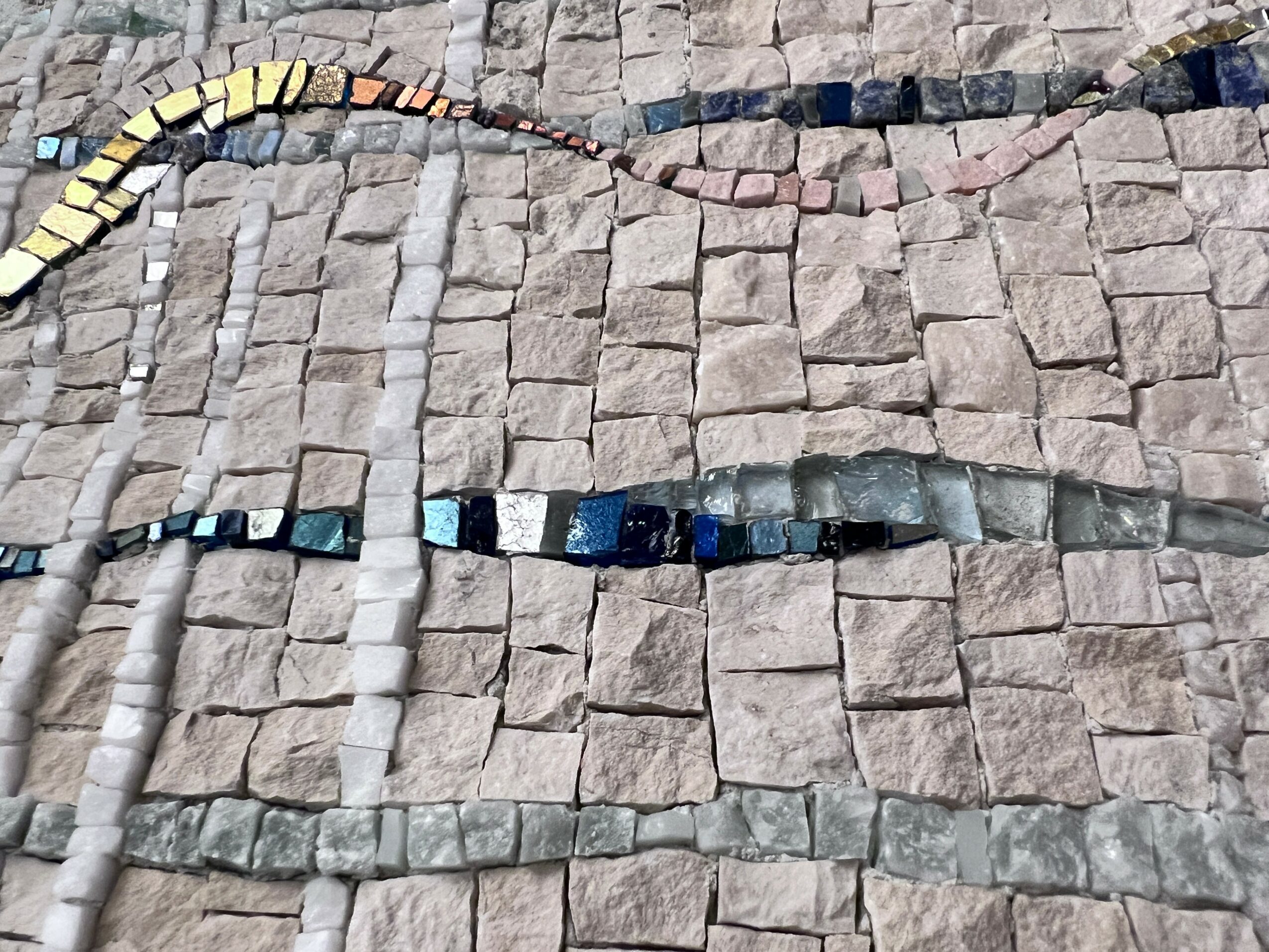
The short version is that I was originally trained in Itay and I create contemporary mosaics using the same tools, materials and techniques that have been used in classical mosaics for thousands of years. Many people are unaware that this tradition still exists today and that the roots of this artistic language are being translated into 2026.
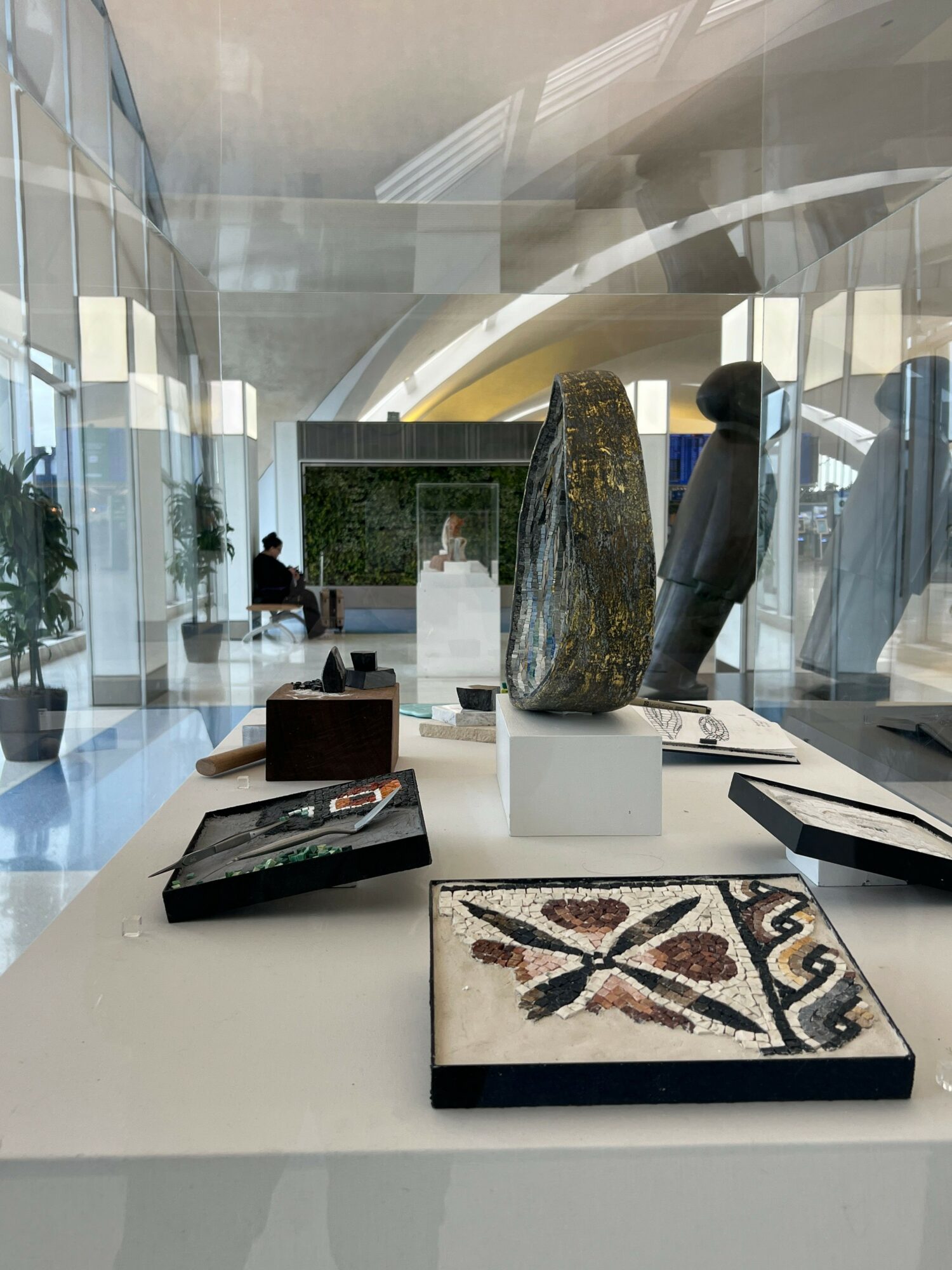
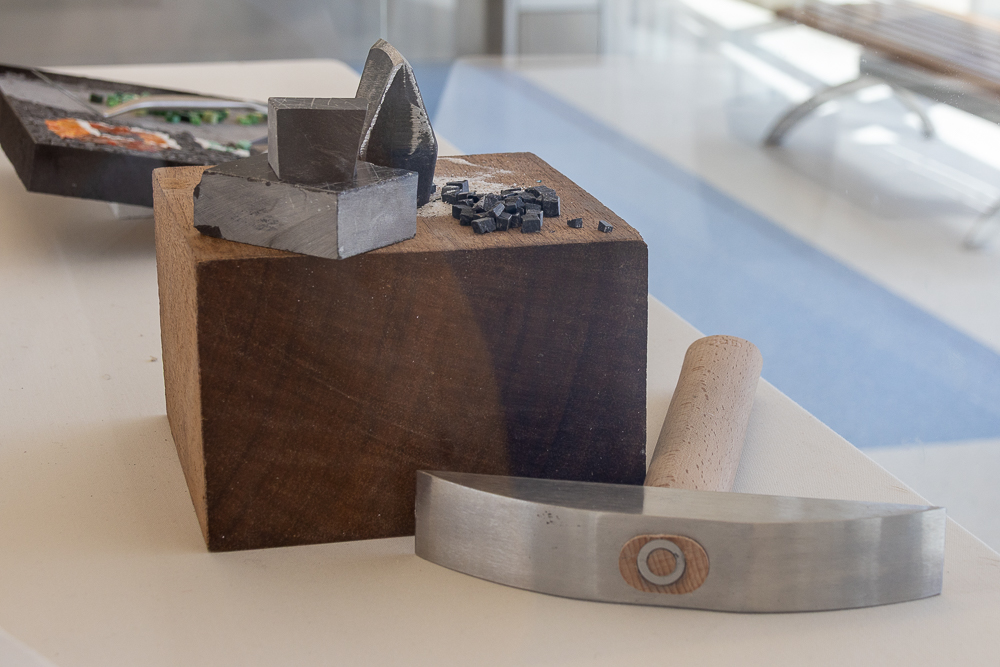
At my studio in the Foundry Art Centre, people can see me use the hammer and tagliolo to cut each tessera (piece) to the desired shape and size. Most visitors are surprised that I cut each piece of stone and mosaic glass and then set each one into the mosaic. In St. Louis, people primarily know mosaics as either ancient mosaics overseas, or those in the Cathedral Basilica or City Museum. But there’s another aspect to this medium and my studio practice and art are focused on that.
I came to mosaics after a series of unusual and serendipitous moments at the point in my life when I was contemplating leaving the corporate world. Through more synchronicity that involved San Francisco and Chicago, I ended up traveling to Italy to learn from a mosaic master in Venice. Now, more than two decades later, I can see that the twisting path that brought me here was the one I was meant to follow.
I’m originally from Alton, Illinois, and I went to Washington University in St. Louis. I began college in the engineering school, and, while I liked the mechanical drawing classes and thinking in 3D, there was a high focus on exactitude. There’s nothing wrong with that and, while that’s a great thing for building bridges, I was craving something with more freeform thinking. Having learned sewing from my mom at a very young age and watching my dad build things that were always well-constructed, I think the genes to assemble and piece together with care have always been a part of me. I graduated from Wash U in business which led me to corporate life and my job included extensive travel. I’m still fortunate to be able to travel a lot, but now it’s for teaching, sourcing materials, and to exhibit my art.
I had an amazing full-circle moment this past winter. I was invited to speak at Wash U at a symposium on the topic of Mosaics, Aesthetics and AI. It was impactful for me to be back on campus, in this new chapter in my life, sharing about a several topics I’m passionate about: mosaics, art, and human potential—what can we create with our hands and heart instead of relying on technology.
Alright, so let’s dig a little deeper into the story – has it been an easy path overall and if not, what were the challenges you’ve had to overcome?
When the challenges happened, I would say they were difficult, but like many things, it seems that as time passes, the roughness levels out. Although the one outcome of the challenges that remains the same are the lessons learned– those stick.
Throughout all of it, I’ve used the skills I learned in the engineering school, my business career, and my artistic life; I remind myself that I can figure out a solution and do it professionally. Those three different skill sets are helpful in my larger commissions, such as those in Indiana and New York City, and make it easy to work with everyone from architects to clients.
Alright, so let’s switch gears a bit and talk business. What should we know about your work?
This year has been wonderfully busy. I’ve been working with the St. Louis Art Museum on demos and workshops in conjunction with their special exhibition “Ancient Splendor: Roman Art in the Time of Trajan.” Having the opportunity to share this art and the process of mosaics with visitors to the art museum has been amazing! The people at SLAM are fantastic.
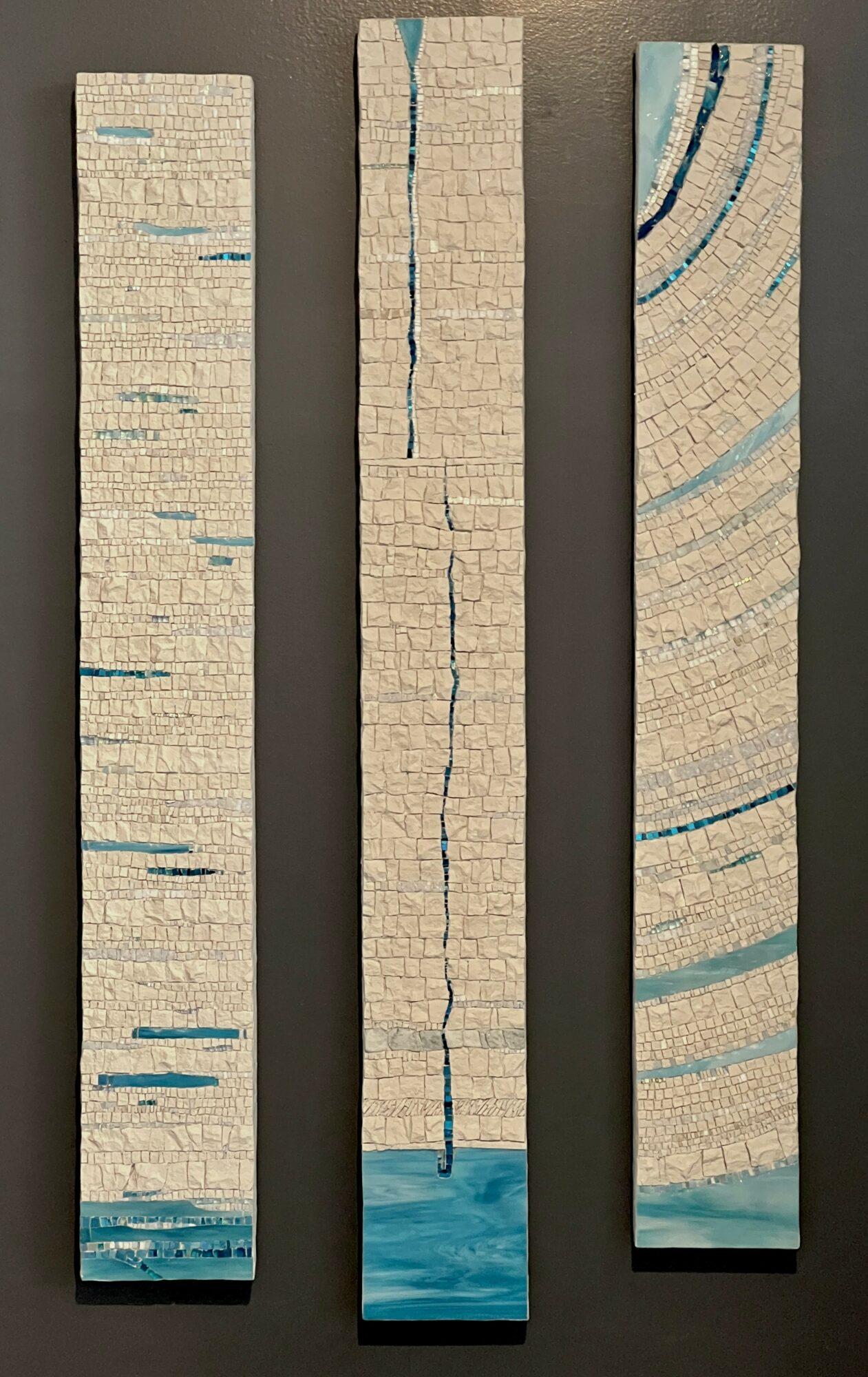
In addition, my work will be in three exhibitions simultaneously this summer. In February, I installed my exhibition in the main terminal at St. Louis Lambert airport. Titled “Journeys: Inward and Outward”, it has sculptural mosaics as well as 2D pieces. There’s also a vitrine that shows the different steps involved in creating a mosaic, and I like sharing that educational aspect with people. The lighting in the airport changes throughout the day and, with the works up through July, the travelers get different experiences depending on when they see the work. In May I traveled to Italy to give a presentation near Rome at a conference of international contemporary mosaicists and I liked watching travelers look at my work in the airport.
For July, I’ll be exhibiting with other artists at the “Contemporary Visionaries” exhibition at the Gallery at the Library in Hermann (MO) and I’ve just installed a solo exhibition of my work opening in St. Louis at the Gretchen Brigham Gallery. The title of the show is “Unfolding” and it’s a juncture point for my work, my voice and my process.
I’m also fortunate to have several commissions on the calendar with amazing clients, so it’s been a great year! I’m grateful that as a classically trained mosaic artist, I can use this ancient technique and its unique language to create art and architectural installations. It’s wonderful the artform resonates in 2026 and that I have so many great opportunities to share it with others.
Can you tell us more about what you were like growing up?
As I mentioned earlier, I grew up surrounded by people who created with their hands and shared their skills with me. I use those 3D skills today, but now instead of fabric or wood, I use stone and glass.
Contact Info:
- Website: https://suegiannotti.com
- Instagram: suegiannotti