Today we’d like to introduce you to David Campbell.
Alright, so thank you so much for sharing your story and insight with our readers. To kick things off, can you tell us a bit about how you got started?
One thing that I can say for certain is that when I founded the not-for-profit that is iFM Community Medicine back in 1999, I didn’t envision all that we are doing today. I am originally from St. Louis having grown up in a modest middle-class family. In those days, my parents didn’t get a new car until they could pay cash for it, so we didn’t have a new car very often. Other ‘luxuries’ were generally deferred because the primary goal was that I go to college – first in my family to do so. I was able to go to Washington University based on a little bit of academic scholarship money, but mostly on the money my parents had saved. I was accepted to Saint Louis University School of Medicine and paid for that by making a commitment of several years (7 ½ actually) to the United States Navy after graduation.
I spent the first twenty years of my medical career in medical education – teaching other medical school students and graduates. After a total of 11 years away from St. Louis, I returned with my wife (my high school sweetheart) plus our three children to our hometown in 1987. I had been invited to develop a residency program in family medicine at a small community hospital – one at which I had actually worked all through college [Deaconess Hospital].
In 1999, I began to make plans for the development of the not-for-profit. Initially, it was intended as the vehicle to accept a contract for physician services through the county health department. This is where the seeds were planted for iFM Community Medicine as it exists today. This brand-new start-up not-for-profit received a substantial contract to provide a dozen or so physicians at several county-run clinics, and my question was ‘what else can we do.’ What else can we do with this new organization and the access to the professionals we had hired. We approached one school district to see if they were interested in expanding their school-based health services. They were, and so we placed one of our physicians, separate from the county contract, in the school one afternoon per week.
Things began to grow rapidly. Another school district heard about what we were doing and approached us with even grander plans – a school-based clinic that would be open to anyone who lived in the district for free medical care. The district was willing to provide us with space and put some dollars into the clinic to assure free care for district residents. This was in 2001 and became the model for how we would grow.
Then some youth shelters that we had worked with during the Deaconess years approached us. They were very aware of how much they were spending in staff time to transport the kids in their care to doctors’ visits and emergency rooms. If we were willing to send a medical provider on campus on a regular basis, they were willing to redirect those dollars to support the clinic. Hence our model was born. Agencies that saw the benefit of on-site medical care for those for whom they were providing other services were willing to develop a contractual relationship with iFM Community Medicine.
Our growth has continued ever since and during our 20th anniversary year of 2020, we had 20 such partner clinic throughout the greater Metropolitan St Louis area. Now it is 2021, and the requests from potential new partners continues.
I’m sure you wouldn’t say it’s been obstacle free, but so far would you say the journey have been a fairly smooth road?
It is difficult to talk about struggles (more on that) without first acknowledging one of the blessings that made everything possible. We have historically had an incredible staff, committed to the mission, and dedicated to our patients. Recruiting staff can be a challenge when you are near the bottom of the pay scale, but the iFM staff has always been and continues to be a jewel in our crown.
I think our primary struggle is not unique to any not-for-profit, or any new venture for that matter – that is financial. We were in debt from the very beginning. We would make a little progress and then absorb another financial body blow. We had borrowed all that the bank would lend, and so I had a decision to make. Do I let the dream die, or do I personally keep it alive. If I do keep it alive by loaning personal money, is there a light at the end of the tunnel.
Frequently throughout the history of the organization, we would have a “Red Sea” moment. A moment when the sky was dark and there simply didn’t appear to be a way forward – and then, something good would happen. Perhaps a grant, a gift, or a new contract. Enough to keep us going. It seemed nearly every payday was a challenge. I even remember the Executive Director of one of our partners meeting me on the parking lot of a convenience store one evening, willing to make their quarterly payment a week early so we could cover payroll. Our cars pulled side-by-side and he handed me an envelope. We joked about what that must have looked like to anyone watching.
My wife has always been supportive, but we both knew that whatever we had been able to save for retirement was not really there for us – it was tied up in paper loan notes to the organization with very little hope of repayment.
December 31, 2018 – the day our financial situation turned around after 18 years of debt. One of our long-standing board members, a mentor of mine who had first hired me at Deaconess in 1987, asked for a meeting. This gentleman is in his upper 80’s and caused our hearts to stop when he began by saying, “first, the bad news.” That turned out to be a light-hearted lead into the main subject. He had been a trustee for a foundation that was ceasing to operate and had allowed the final distribution of assets to be dispersed to not-for-profits selected by each trustee. He presented us with a check that day that allowed us to pay off all of our long-term debt and have a small reserve going forward. The waters had indeed parted, and we could see our way forward.
Things have definitely been on an upward course since then. Grants, donations, and even large contracts are more likely to come your way when you are doing the right thing AND not under a mountain of debt. I also want to make one other comment about ‘bumps in the road.’ Sometimes what we initially felt was a big bump in the road, the proverbial kick in the gut, turned out to lead to amazing new opportunities. The most recent example was that a funder didn’t renew funding for one of our favorite projects. Nearly $100K gone with less than a month’s notice. We were devastated but absolutely committed to keeping the project going. Within a month, one of the large health systems offered to provide some funding for that very project. Not only were we able to maintain the project so close to our hearts, but the partnership with the new health system has led to an even bigger new opportunity.
Thanks – so what else should our readers know about iFM Community Medicine?
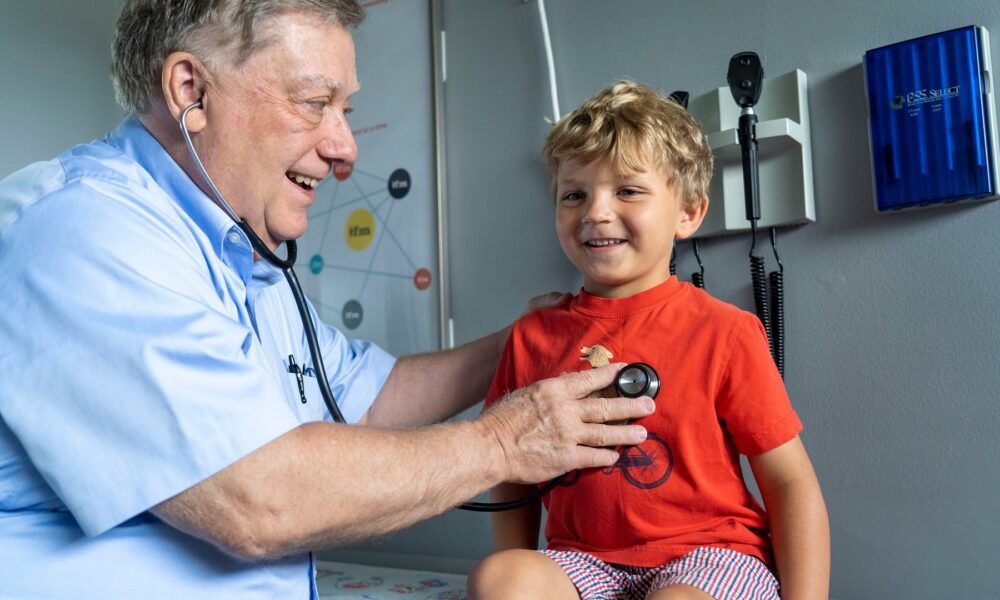
iFM Community Medicine is a health care organization. We focus on those who have difficulty accessing medical care through the traditional system by reducing barriers such as transportation, cost, language barriers, and distrust of the traditional system. Everything we do, we do in partnership with other agencies. We partner with schools, shelters, and social service organizations that are providing other types of services (education, job training, housing, etc.) to these under-resourced individuals. Most importantly, we come to where these individuals live and gather.
By partnering with agencies that already have a trusting, serving relationship with these individuals, we have a leg-up on winning the trust of our patients. One thing that I believe sets us apart is that WE LISTEN. No two of our clinic sites are exactly the same because each program is designed based on the needs expressed both by the agency and by the patients. Sometimes blending those needs with the reality of funding is a challenge, but that is what makes it the most rewarding. We also feel we are nimble. We can have a program up and running in a matter of weeks. You can decide how that compares to other agencies.
While it is said that you are known by the company you keep, I am very proud of our relationship with the agencies with whom we partner. My guess is that before reading this article, you might not have ever heard of iFM Community Medicine (or our earlier name, Institute for Family Medicine), but I would bet that you have heard of the agencies that put their trust in us for medical care for their students and clients: How about St Louis Crisis Nursery, Epworth Children and Family Services, Youth-In-Need, Covenant House of Missouri, Every Child’s Hope, Lydia’s House, St. Vincent’s Home for Children, The Women’s Safe House, Missouri Baptist Children’s Home, Harris Stowe State University. We also provide medical director services and in some cases, direct medical care for St Louis County Special School District, St. Louis Public Schools, and the school districts of Hancock Place, Bayless, Maplewood-Richmond Heights, University City, Normandy, Hazelwood, Jennings, KIPP-STL, Confluence Academies, and MICDS.
But our hearts are with the individual patients that we serve. The majority of our patients are experiencing trauma and other disruptive forces in their lives. Many of the youth we serve are homeless. Having a chance to bring some stability, some caring, some opportunity to improve well-being – that is why we do what we do.
What matters most to you?
What matters most to me is helping those in need, helping those less fortunate. I have been blessed to have the opportunity to do this through medicine, but it’s deeper than that. My father was a blue-collar machinist. He worked hard to give me the opportunities I have, but more than that, he was always looking for ways to help others. It was almost like a radar you could see in his crystal blue eyes when he was out in public. Scanning his surroundings to see if anyone needed help.
The flip side of the question could be what matters least. I appreciate this opportunity, and I have enjoyed telling my story, but attention and recognition are not important to me. iFM has pretty much-lived under the radar for 21 years, and while I am OK with that, I also realize that as a charitable organization dependent for a percentage of our operating budget on donations, we need to be more visible. I thank VoyageSTL for this opportunity to do that.
Contact Info:
- Email: ifmonline@ifm-stl.org
- Website: https://ifm-stl.org/
- Instagram: https://www.instagram.com/ifmstl/
- Facebook: https://www.facebook.com/IFMSTL
- Twitter: https://www.twitter.com/ifmstl


Image Credits:
Darling Brand Makery