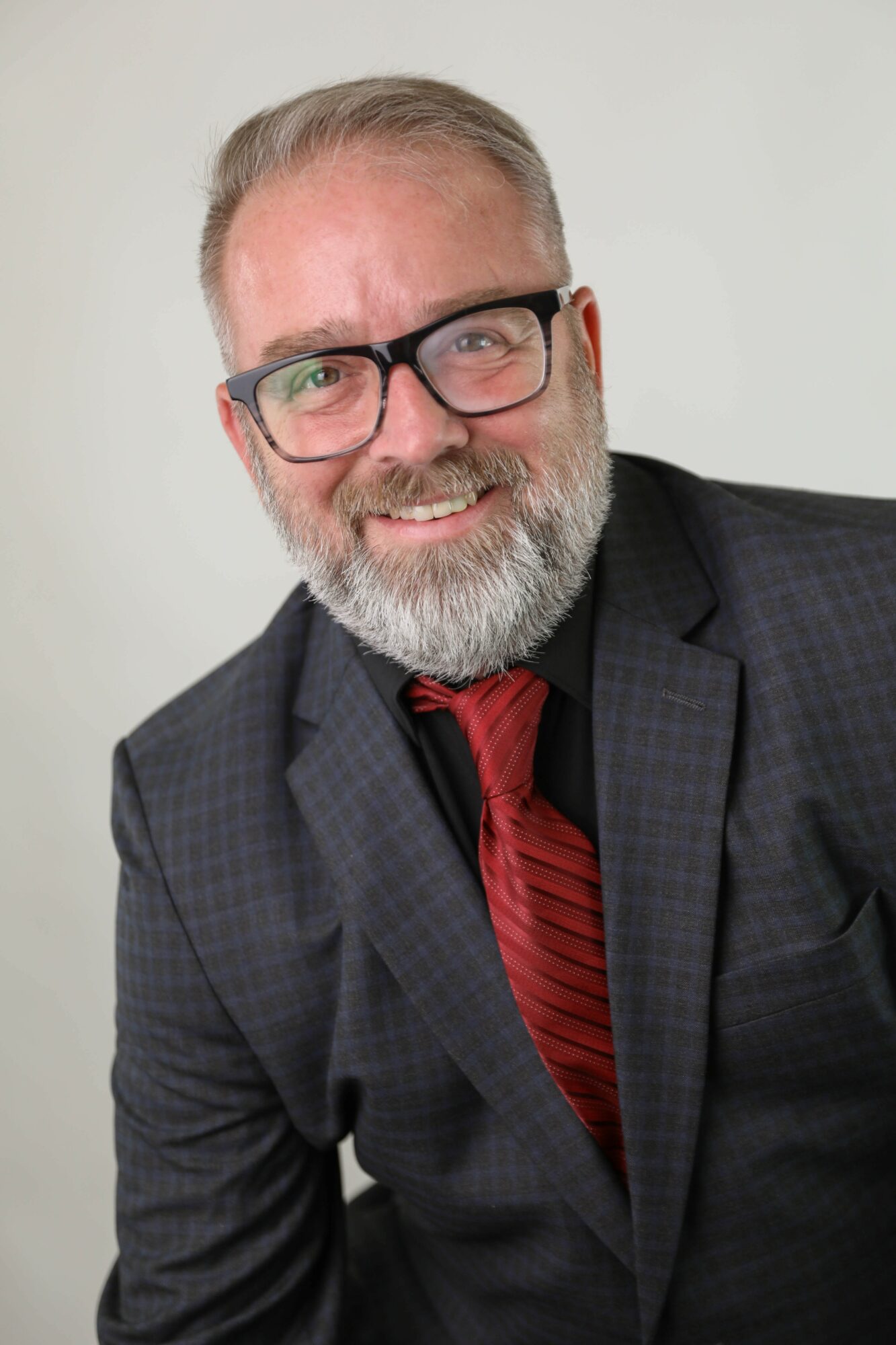
Today we’d like to introduce you to Jason Farley.
Jason, we appreciate you taking the time to share your story with us today. Where does your story begin?
My professional path has been anything but linear; it is shaped by my own journey in long-term recovery; a commitment to actively building a life of purpose, meaning, and continuous growth. Finding this grounding was the catalyst that redirected my career toward helping others. I identify as a person with live-experience. Embracing that has changed the trajectory of my entire life.
I initially trained in the Peer Support Program at VA St. Louis Health Care System, and became one of the first Whole Health Coaches in the Nationwide VA Healthcare System. I am active in the recovery community and have spent a lot of time in institutions, mentoring men with substance use disorder. This involvement in the community provided me with invaluable insight into the pervasive, systemic barriers to recovery. It compelled me to move into advocacy, joining local and statewide advisory boards to identify and tackle these problems. Most importantly, it gave me the empathy and compassion necessary to meet every person exactly where they are.
That passion for building solutions led me to Amare NFP, a Recovery Community Organization (RCO). Amare takes a community-driven approach to addiction recovery and empowers people with substance use disorder to reach their full potential by leading a self-directed life. I started on the Board of Directors before rising to Associate Director. One of my proudest accomplishments is being the co-founder of Rockin for Recovery. A music festival created to unify all pathways to recovery and build a strong community. This tenure was foundational, allowing me to build programs and significantly expand recovery services in the Metro East, strengthening the movement from the ground up.
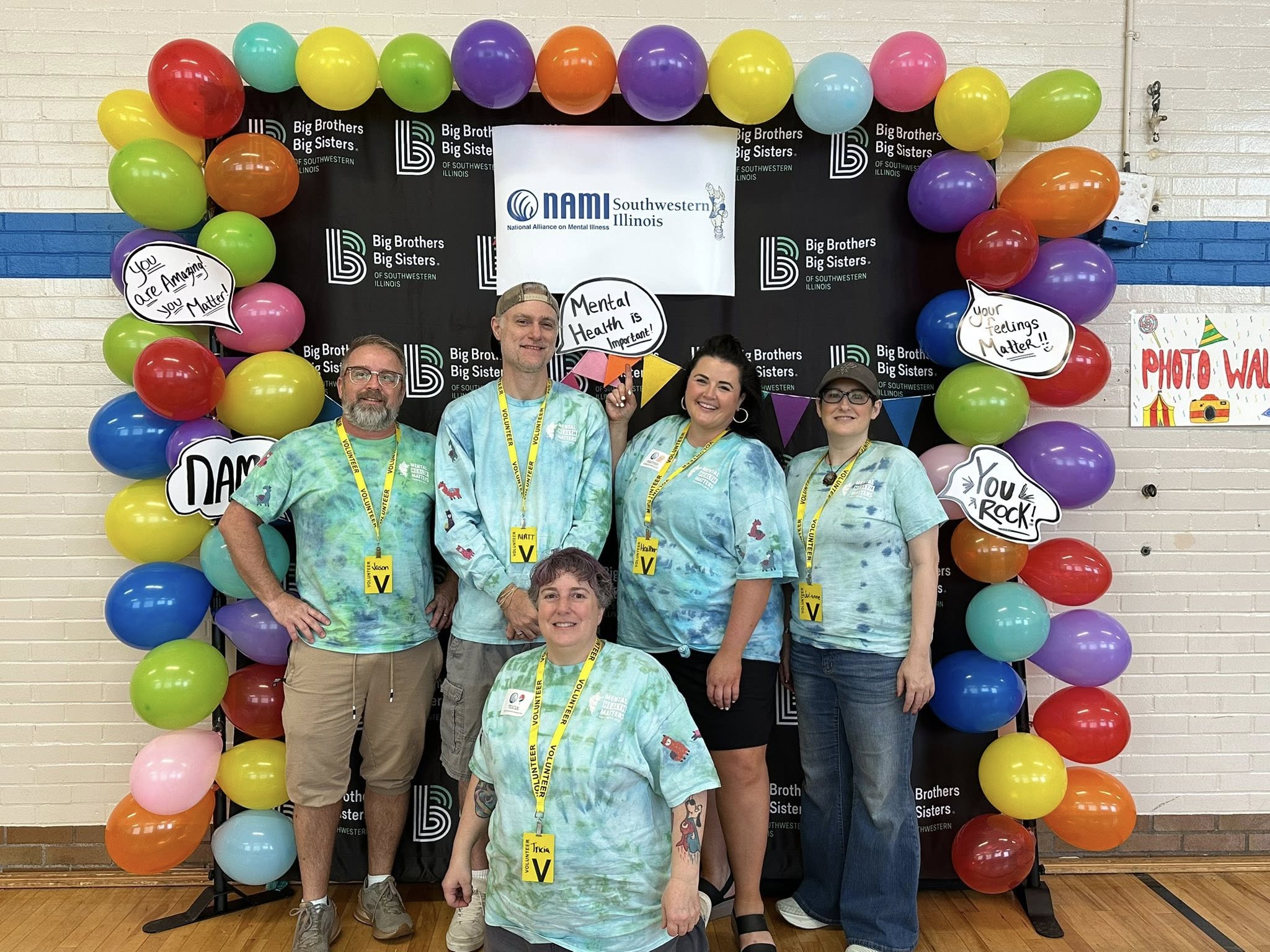
Today, I carry that foundational experience forward as the Executive Director of the National Alliance on Mental Illness Southwestern Illinois (NAMI SWI). After joining the Board in 2022 and serving as Vice President and Chair of the Marketing Committee, I now lead our organization in its mission to expand its impact and advocate for mental health and recovery across our region.
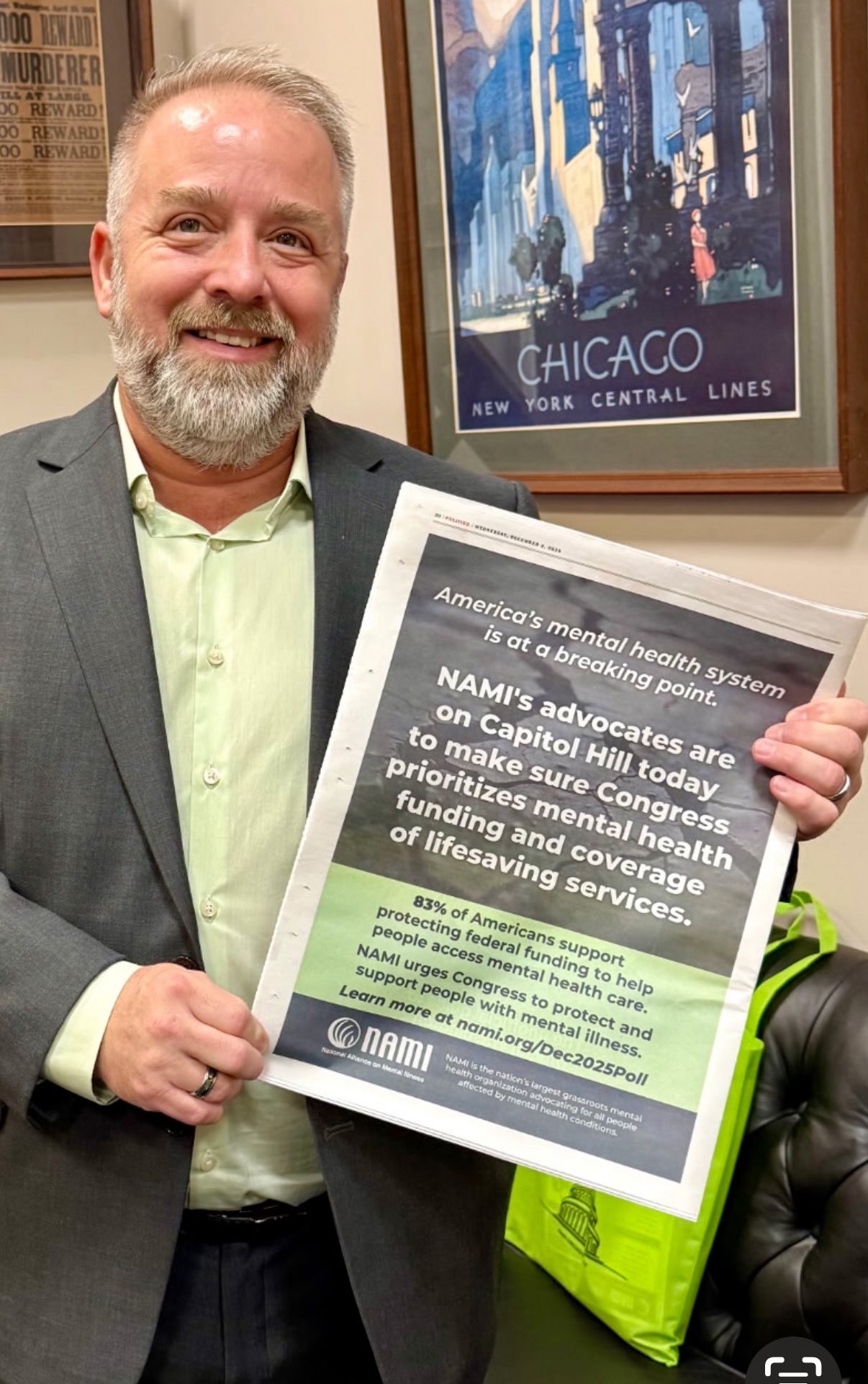
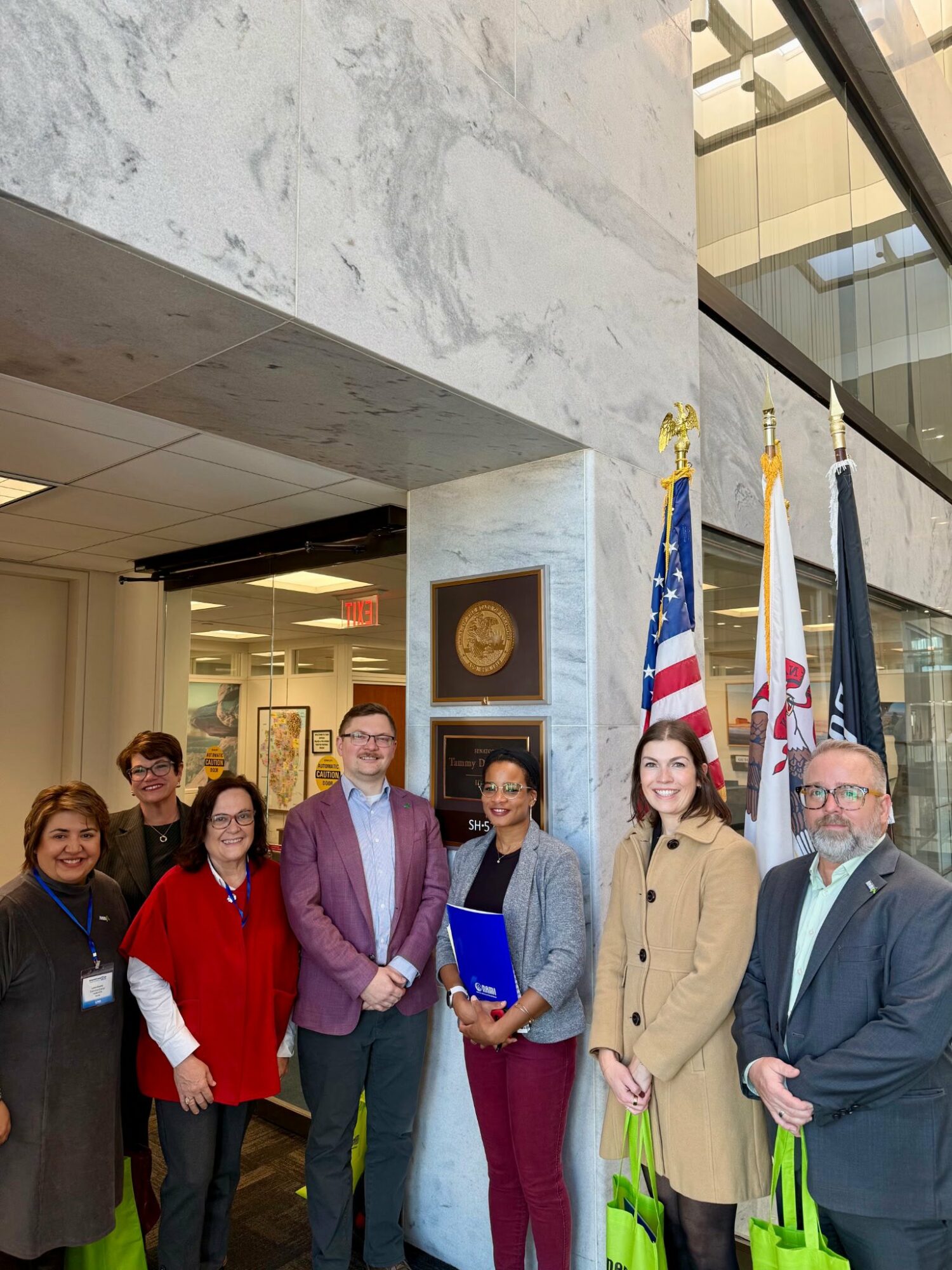
I recently went, for the second time, to Washington DC for “Hill Day” to advocate for people with substance use disorder and mental health conditions. One of the bills NAMI asked our legislatures to co-sponsor is the PEER Act, which will recognize Peer Support in the Standard Occupational Classification System, to acknowledge the significant improvements to outcomes when peers are incorporated, increase reimbursement rates, create a distinct classification and a national standard.
I’m sure it wasn’t obstacle-free, but would you say the journey has been fairly smooth so far?
A ‘smooth road’ is a rare experience. Life presents inherent difficulties for everyone, including those of privilege, and it can be particularly demanding for individuals dealing with mental health conditions or a substance use disorder. However, the human capacity for resilience and positive change is considerable. A kernel of hope can grow into something spectacular. If I follow a few simple principles, the road is smooth with a few bumps now and then. I take care of the small things to prevent some of the big things, and I do no intentional harm to myself or others. Simple philosophies have carried me a long way.
While there were external barriers, the most profound obstacles I faced were internal. The self-imposed limits and negative beliefs I had about myself hindered my progress. Overcoming these has been crucial. My initial struggle was in the professional arena, where constant self-scrutiny and a heavy presence of imposter syndrome made navigation a significant challenge.
Alright, so let’s switch gears a bit and talk business. What should we know about your work?
I’d be happy to talk about the work I do with NAMI Southwestern Illinois. We are the local affiliate of the Nations largest grassroots organization. We exists to support people living with mental illness, their families, and anyone whose life is affected by these conditions. Everything we do comes back to three things: supporting people, educating communities, and advocating for better systems. Our programs are designed to empower individuals to understand their illness, speak up for their needs, and navigate the system with confidence. We also work hard to push for better legislation and more effective treatment options, and we partner closely with other mental health and behavioral health providers so people don’t fall through the cracks. NAMI SWI fills in the gaps within the mental healthcare system and addresses barriers that exist for members of our community.
What really defines us is the commitment to our alignment with NAMI National Standards of Excellence and full program fidelity. That means tightening up how we train, how we deliver programs, how we track outcomes, and how we show up in the community. We’re restructuring from the ground up so we can grow in a healthy, sustainable way.
We’ve also been rolling out a lot of new and creative programming. NAMI SWI offers Stigma Free Workplace presentations to local businesses to educate them about mental health. It is important that employers know how to support their workforce. We have added several new hybrid and online Connections Support Groups for people with lived experience. We’re expanding our work in schools, by developing new youth and young-adult initiatives, building stronger peer-support pathways, working in underserved communities and increasing our reach in rural counties that historically haven’t had consistent mental health support. All of this is tied to our mission of reducing stigma, increasing understanding, and making mental illness something people feel safe talking about and seeking help for.
Over the past year, I’ve led a major operational restructuring to make the organization stronger, more efficient, and more aligned with national standards. We modernized our internal infrastructure, and tightening our workflows so staff can track outcomes and deliver programs with greater accuracy and consistency. This has allowed us to streamline how we train, how we communicate, and how we show up in the community.
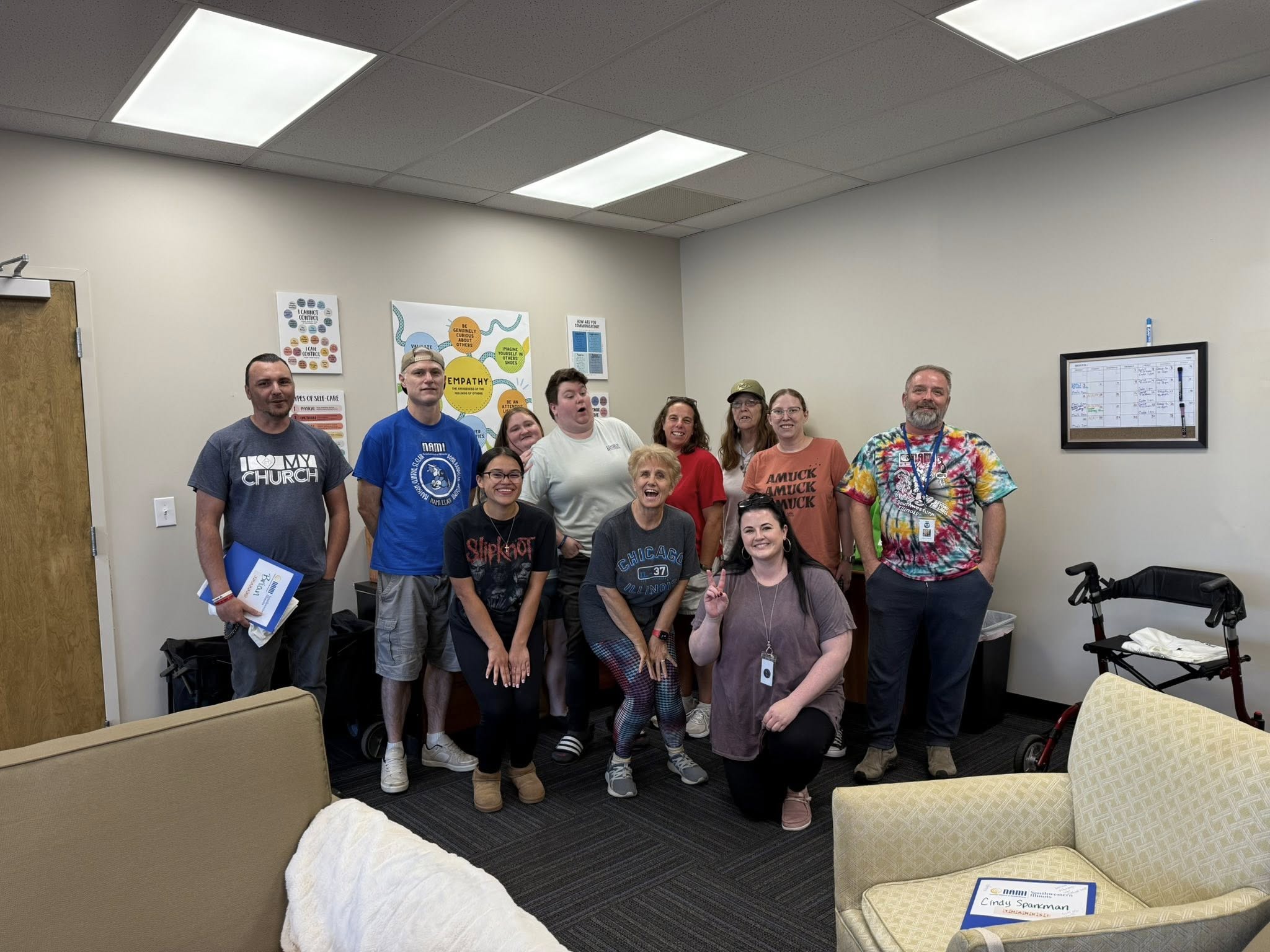
What I am most proud of is my Team. Our staff and volunteers are the engine behind all of this. They’re skilled, committed, and willing to evolve with the organization. They’ve stepped into a lot of change and handled it with professionalism and heart. I’m proud of how they show up every single day to help build a recovery ready community.
What sets NAMI SWI apart is simple: we’re not just doing the work; we’re doing it with intention. We’re pushing ourselves to be innovative, accountable, and community-driven while never losing sight of why we exist. We’re here to make sure people have support, education, and a voice, because mental healthcare IS healthcare!
What was your favorite childhood memory?
When I was a boy, we would visit my Great Uncle Ben and Aunt Ruby on their ranch in Phelps County Missouri. I loved being outdoors, exploring in the woods and playing in the rivers of Missouri, such as the Little Piney or Gasconade. They lived in a beautiful Antebellum home with a wraparound porch and balconies. Sometimes I would get to ride the horses; my favorite was an Appaloosa. I found a lot of joy being out in nature. It was a refuge and much needed escape for me. In recovery, I have rekindle my spark for the outdoors. I feel so much peace out in the woods, and I am fortunate to have a beautiful wife who shares the same love for the outdoors.
Pricing:
- No cost
- Totally free
Contact Info:
- Website: https://www.namiswi.org
- Instagram: https://instagram.com/nami.swi
- Facebook: https://www.facebook.com/NAMISouthwesternIllinois?fref=ts
- LinkedIn: http://www.linkedin.com