We’re looking forward to introducing you to Megan Naik. Check out our conversation below.
Megan, a huge thanks to you for investing the time to share your wisdom with those who are seeking it. We think it’s so important for us to share stories with our neighbors, friends and community because knowledge multiples when we share with each other. Let’s jump in: What do you think is misunderstood about your business?
One of the biggest misunderstandings in the henna world is the assumption that all henna is safe henna. Unfortunately, that’s not true. As a certified henna artist I try to bring awareness to everyone. Natural henna is made from the leaves of the henna plant and is a natural, plant-based dye that’s been used safely for thousands of years. But there are products out there—often called ‘black henna’ or marketed with flashy colors—that contain harmful chemicals like PPD (para-phenylenediamine). These chemicals can cause severe allergic reactions, blistering, bladder cancer, or even permanent scarring. As a certified henna artist, I only use 100% natural, fresh-mixed henna made with safe, skin-friendly ingredients, and I’m passionate about educating clients so they know what’s going on their skin. Henna should be a beautiful, positive, and safe experience—not a dangerous one.
Can you briefly introduce yourself and share what makes you or your brand unique?
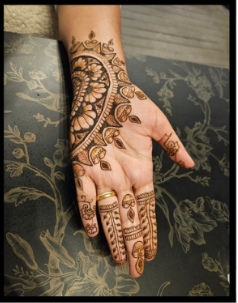
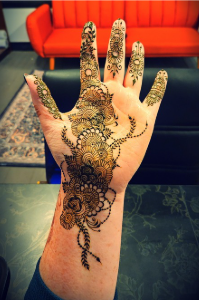
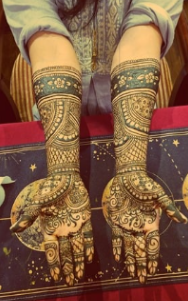
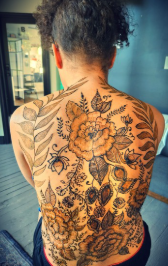
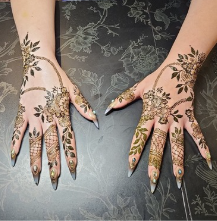
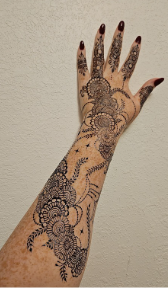
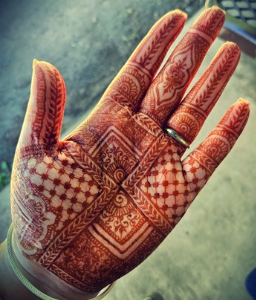
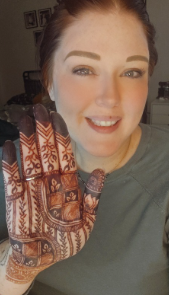
My name is Megan, and I’m the owner of Rani Henna STL, a henna artistry business based on Cherokee Street in St. Louis. I specialize in traditional and contemporary henna styles, including bridal mehndi, festivals, pregnancy henna, events, and I also offer free henna crowns for women who have lost their hair due to cancer. I started doing henna in 2017, completely self-taught, and over the years I’ve grown my passion into a full-time business. I’m internationally certified through the ICNHA and pride myself on using only 100% natural, freshly mixed henna for safe, beautiful results. My work is about more than just art—it’s about connection and creating meaningful moments for my clients. Right now, I’m expanding my offerings with henna classes, design books, and events to help share the beauty and history of henna with even more people. I am the only certified henna artist near St. Louis.
Appreciate your sharing that. Let’s talk about your life, growing up and some of topics and learnings around that. Who taught you the most about work?
I learned the most about work from my Mamaw and Papaw Walters, who always led by example when it came to working hard and taking pride in what you do. My Great Granny Walters used to say, ‘Idle hands are the devil’s workshop,’ and that phrase really stuck with me as a child. It planted this drive in me to always be working, creating, or building something meaningful. This is why I am a full time elementary music teacher, I own a music business, and I also do my henna business full time. Purposeful hands make a purposeful life.
Was there ever a time you almost gave up?
Everyone says the first year of running a shop is the hardest, and I learned just how true that is. When I opened my henna studio last year, there were times I almost gave up because I had so few customers walking through the door. It was discouraging, but I kept showing up, creating, and putting my heart into my work. Now, I’m proud to have a steady base of loyal clients and see more and more regulars returning each month. Watching my customer community grow gives me hope and excitement for the future of my shop.
Alright, so if you are open to it, let’s explore some philosophical questions that touch on your values and worldview. What’s a cultural value you protect at all costs?
One cultural value I protect in my work is respecting the meaning behind traditional henna designs and symbols. Certain symbols and patterns are meant for specific life events, like weddings, and I don’t place those on someone just because they bring me a picture. For example, bridal mehndi carries deep cultural and ceremonial significance, so I won’t use those designs and symbols for a casual request. Instead, I work with clients to create something unique for them while being cognizant of traditional symbolism.
Okay, we’ve made it essentially to the end. One last question before you go. When do you feel most at peace?
I feel most at peace in the evenings at my henna shop, when everything is quiet and I can hear the soft sounds of the city outside. There’s something grounding about that stillness. I also find peace at home with my kids and husband, sitting together on our covered back porch during a rainstorm, listening to the steady rhythm of the rain. Those moments remind me to slow down and just be present.
Contact Info:
- Website: https://www.ranihennastl.com/
- Instagram: https://www.instagram.com/reel/DFMf7boOnv6/
- Facebook: https://www.facebook.com/RaniHenna23/
- Youtube: https://www.youtube.com/channel/UCs4P-hTGhZ_0Q_zTtvVdTQA/about
- Other: https://www.tiktok.com/@ranihennastl