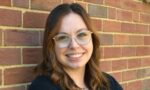
We recently had the chance to connect with Jordan Scott Gaunce and have shared our conversation below.
Hi Jordan Scott, thank you so much for taking time out of your busy day to share your story, experiences and insights with our readers. Let’s jump right in with an interesting one: What makes you lose track of time—and find yourself again?
That’s a great question. There are a few activities where I completely lose track of time and then find myself again. First and foremost is creativity—especially painting and making work. An art practice has a way of revealing parts of yourself you didn’t know were there. Another is meditation, which lets me meet different versions of myself and go deeper into knowing who I am. It reminds me of the Greek philosopher Heraclitus, who said, “No man ever steps in the same river twice, for it’s not the same river and he’s not the same man.” The same can be said of the mind.
Some days I start with yoga, which helps me connect breath to movement and wake up my body. Mobility rocks. And, well, a little psilocybin can definitely make you lose track of time—and find yourself again—lol.
Can you briefly introduce yourself and share what makes you or your brand unique?
I’m a contemporary abstract painter based in St. Louis, represented by Duane Reed Gallery. My artistic journey began in Albuquerque, New Mexico, where a sense of creativity and curiosity first took root — influences that continue to shape my work today.
My paintings explore the invisible networks that connect life, from cells to ecosystems to human consciousness. Through color, geometry, and symbolic titles, I echo patterns found in biology and neuroscience. Each piece becomes both a diagram and a narrative, offering viewers a contemplative space away from the noise of social media to reflect on the unseen forces that shape our shared existence.
For more, you can visit my website jordanscottgaunce.com, where my full artist statement is also available.
Appreciate your sharing that. Let’s talk about your life, growing up and some of topics and learnings around that. What’s a moment that really shaped how you see the world?
The most influential moment that shaped how I see the world was losing my father when I was six. What I know of his work came from what he told my mother on his deathbed. My father had worked as a young engineer on top-secret, highly sensitive projects—among them the Rover Project in the 1960s, during the height of the Cold War space race (1957–1975)—where the U.S. military and its contractors knowingly exposed him to dangerous levels of radiation. When the machines failed, he was ordered into the “hot room,” told that in just one minute he would absorb a lifetime’s worth of radiation.
That negligence eventually caused the cancer that killed him at 41. Even after his diagnosis, he showed extraordinary courage—coaching my sister’s soccer team, later watching from the sidelines with his oxygen tank, and even riding his bicycle from San Francisco to Los Angeles just months after lung surgery. He endured surgeries, radiation, and experimental therapies with resilience, showing us how to live fully even in the face of decline.
At that age, I couldn’t fully comprehend the science or the injustice, but I felt the shift—an invisible force had changed everything in our home. This loss taught me, maybe too early, that what you can’t see—radiation, grief, love—can leave marks as real and lasting as anything tangible. That awareness continues to drive my work today, where I explore the invisible systems and forces that shape human existence.
As I grew older and began to ask more questions about my father’s death, I was relieved to learn that, although he was in the military, he wasn’t part of the war machine—he was part of space exploration. That realization made me proud of who he was: a curious, thoughtful man who loved sports and expressed himself through photography.
And if you look at the photo section of this piece, you’ll find a photograph credited to my father. It’s a family photo of my mother, my sister, and me—just the three of us, the survivors. What I find eerily comforting about that image is that it comes from his point of view, his eye. He is there and not there in the photo. He is the one who took it, so he is present, yet at the same time invisible. That paradox captures exactly what I’ve carried with me ever since.
When did you stop hiding your pain and start using it as power?
I appreciate this question because it touches on something deeply personal. I’ve never really hidden my pain. My wife often says I’m guileless, and I agree—I wear my heart on my sleeve. That openness comes from experiencing loss at a young age. When I was six, my mother had me see a counselor, and that taught me early on the value of being straightforward and honest.
Over time, I’ve learned that openness is a source of power. Speaking the truth is simpler and less confusing, but the real strength comes from choosing the right words. Words can be blunt objects, or they can be used with patience and care to reveal even the hardest truths in softer, kinder ways. My wife has taught me that lesson well: there’s always a more effective way to share a difficult truth.
That’s why my pain has never been something I felt the need to hide. Pain defines us whether we acknowledge it or not—it shows up in our attitude, in the way we resolve conflict, and in the energy we give off. I’ve found it’s better to bring it into the open and remove that obstacle, turning it into a bridge rather than a barrier.
I think our readers would appreciate hearing more about your values and what you think matters in life and career, etc. So our next question is along those lines. What would your closest friends say really matters to you?
Instead of guessing, I asked my closest friends to answer this question in their own words. One said, “What matters to Jordan is being a seeker, a learner… a man in constant study of the world around him.” Another emphasized loyalty: “you’ve always stayed true to yourself. You don’t follow trends or chase approval.” Others spoke about curiosity as a driving force in my painting, cooking, and conversations, paired with a desire to do things well without being trapped by perfectionism. And one friend, in classic fashion, cut right to the essentials: “my first thought was clean underwear.” Across all their voices, a few themes rose again and again: creativity, curiosity, loyalty, family, friends, and connection. It was profoundly moving to hear this.
What began as a simple interview question became an exercise in perspective. Going to the source and hearing what people believe you are, compared to what you assume they think, was both comforting and surprising. I’d encourage anyone reading this to try it for themselves: ask your closest friends the same question. You may be surprised to discover that the qualities you overlook in yourself are the very ones that shine most brightly in the eyes of others.
Okay, we’ve made it essentially to the end. One last question before you go. If you knew you had 10 years left, what would you stop doing immediately?
If I knew I had 10 years left, what would I stop doing immediately?
I love this question, because the idea of impermanence has always felt important to me. Ten years sounds like a long time, but when you break it down—3,652 days, 10 more summers, 10 more Halloweens, 10 more birthdays—it suddenly feels shorter, more fragile.
This is something I think about and often share with my wife. The fact that I’ve already outlived my father by nine years feels strange. Looking back on those years, I see how much I’ve grown in knowing myself, in deepening my craft, in living new experiences. Now at 50, I sometimes measure time by days instead of years. Based on when my grandparents passed, I figure I might have about 14,610 days left—around 40 years. But it could be shorter for all I know. That thought is sobering, but also motivating.
So if I had just 10 years, what would I stop? I’d stop worrying so much about the future. One of my biggest hang-ups has always been saving for an uncertain retirement and the constant question of money—trying to make sure I’ll “have enough” for a future I can’t predict. But if I knew my time was limited, I could plan my resources with clarity, spending my savings on what matters instead of holding back out of fear.
At the end of the day, I feel grateful for what I’ve already done in my life. Would I change some things? Of course—life is always changing. But as John Lennon said, “Life is what happens when you’re busy making other plans.”
In the meantime, I’ll keep creating—painting what the world looks like from my point of view. Excuse me now, I have to head into the studio and get to work. Thanks for the questions, this was fun. And a big shoutout to you, the reader—thanks for taking the time to learn a little about lil’ ol’ me.
And I’ll leave you with one more thought: “Don’t dream it, be it.” — Dr. Frank-N-Furter, The Rocky Horror Picture Show
Contact Info:
- Website: https://www.jordanscottgaunce.com
- Instagram: https://www.instagram.com/jordanscottgaunce?igsh=ZWh6d3l2bzVsZmY5&utm_source=qr
- Youtube: https://www.youtube.com/watch?v=uR1bedR46-o
- Other: Gallery Website
https://www.duanereedgallery.com/jordan-scott-gaunce