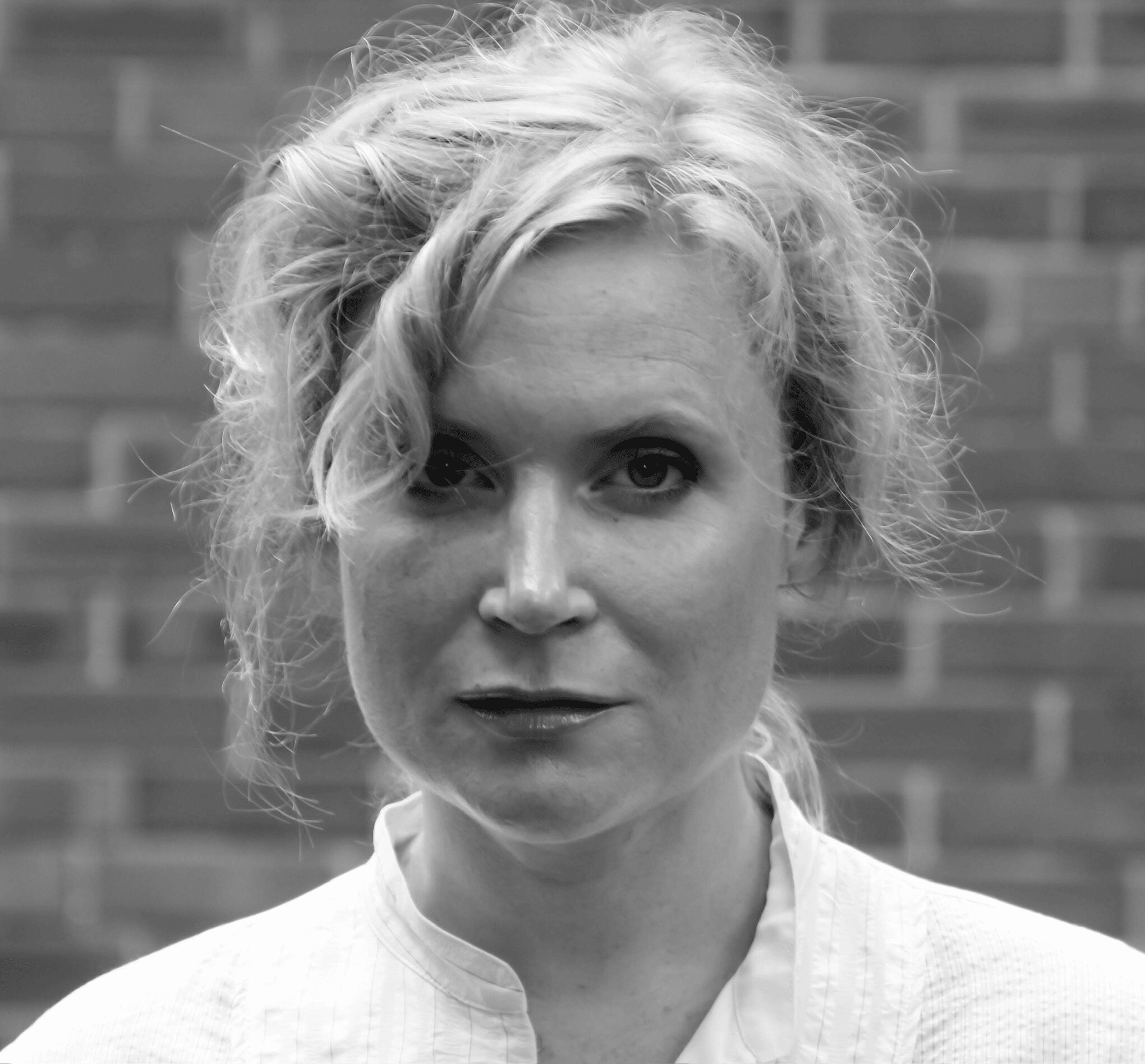
We recently had the chance to connect with Lucy Cashion and have shared our conversation below.
Lucy, so good to connect and we’re excited to share your story and insights with our audience. There’s a ton to learn from your story, but let’s start with a warm up before we get into the heart of the interview. Who are you learning from right now?
Right now, I am learning from my students. I have seven undergraduate students in our advanced directing course at the University where I teach, and I am mentoring all of them for essentially an evening of short plays, which is really two evenings of short play because there are 7 Short Plays. And I am learning so much about how to make theater from these undergraduate students. It’s really making me contemplate what suggestions I give them and if those suggestions are coming from me in a place of trying to get their work to be more like the work I know they’re trying to make or to get their work to be more like the work I know people will like. I think at first in the process, I was mentoring them in a way that had to do with making their work adhere to certain theatrical conventions, and I’m still doing that to an extent when it serves them, but I am trying more to mentor them to make their works how I believe they really envision them or feel them or are chasing them. Try to make them try to help them make their work of their aspirations the work that they can’t quite know what it is until it is. And when you let go of conventions as a priority or when you even just make other priorities equal to executing conventions, you discover a lot about theater and how to make theater and who theater is for and all the different contexts it exists in.
Can you briefly introduce yourself and share what makes you or your brand unique?
Hi, I am Lucy Cashion and I am an experimental artist, mostly a theater artist, and I am the founding artistic director of Equally Represented Arts, also known as ERA Theatre, and we are a small nonprofit theater company producing out of St. Louis, Missouri. There is so much that makes our organization interesting. I think that what we do fundamentally is interesting. We do experiments which in theater, compared to sciences, manifest as artistic challenges or that’s what they end up looking like or even like artistic games. And then the game, the logistics of the game, serves as a kind of frame through which the audience can experience our productions. And of course, the experiment is different with each production. I also think that our work is interesting because we have developed a style. A consistent style of an artist is uncommon in theater generally. There are some big names, some auteurs directors who have a clear style that one could recognize, but there aren’t that many. And I’m really proud of us for having developed a style, though I think it can seem unusual to some audiences. It’s the sort of thing that we expect from a visual artist or from a musician, and somehow Theater, which is always 200 years behind everything going on in all the other art forms, has escaped this demand. Meaning you could never get by as a visual artist without having a style, even if it were two styles like Max Richter or something, but in theater, we have become very bland in my opinion, though this is not the opinion of everyone. I also think our company is really fascinating because we work with the same group of people regularly, and this is how we have all developed this style. Our brand—we have created it together, and there are a few of us who formally work for the company, but there are dozens of people in the St. Louis area who have contributed to creating the brand of the company whose work is forever imprinted on the brand of the company and I think it’s kind of fascinating to just have this family that you make art with. And I think our company has really made an experimental theater scene in St. Louis. Scene might be a little bit of an exaggeration, but I think that our company has brought out an appetite for experimental work in the St. Louis area. The only problem with producing in St. Louis is you might as well be producing on an unknown island in terms of your engagement with the rest of the world.
Great, so let’s dive into your journey a bit more. What did you believe about yourself as a child that you no longer believe?
My child self did not account for the logistical demands of life in making her goals. She was very clear about some legitimate options for what success as an adult looks like, and I often check in with her to see how disappointed, proud, or apathetic she would be about where my life is now. I try to think what eight-year-old Lucy would say about this moment, and I do have a lot of moments that I think myself as a child would be impressed with, even though I was so easily unimpressed as a child. I do try to savor those moments that might pass me by as an adult, those accomplishments or moments where I can say, “Yeah, if my 10-year-old self saw what I was doing right now, she would be like, ‘ OK, cool. That’s good. All right, good job.’ It would be cooler if it were in a major metropolitan city in Europe, but it’s still cool.’” And it’s satisfying to me to make her happy.
Was there ever a time you almost gave up?
Yes—there have been several moments when I’ve almost given up in the short-term sense: those times when frustration builds or it feels like the universe is sending you a message that you’re on the wrong path. But less than a year ago, I nearly gave up entirely—on my career and on Equally Represented Arts.
I was deeply unhappy. In addition to my faculty role at the university, I had taken on an administrative appointment. The work was demanding—psychologically, emotionally, and in sheer volume—and it didn’t suit me.
At the same time, I had lost touch with my sense of purpose. My reason for waking up each day had always been to make art—because the world needs my art. That might sound naïve, but it was my truth. My driving goal had always been to make ERA the most important experimental theatre company in the world. And suddenly, I didn’t feel either of those things anymore.
Eventually, I worked my way out of the depression. I returned to a rehearsal process that allowed me the time and space to truly work, to reconnect with what I love about making theatre. I finished out the administrative appointment, and now I’ve come through something. I don’t think I’m entirely on the other side yet—but I am through something. And I know again that I don’t want to quit. I don’t want to leave theatre or academia and “go into business,” whatever that means. I’m still here.
I think our readers would appreciate hearing more about your values and what you think matters in life and career, etc. So our next question is along those lines. What do you believe is true but cannot prove?
There are three things I believe about art.
First, art is a human right. The ability to see, experience, patronize, or create art should be accessible to everyone. Access to art is access to being fully human.
Second, I believe that humanity needs art the way it needs God. Art doesn’t offer anything tangibly useful—and it’s dangerous to expect that it should. It can teach, it can heal, it can serve, but its value doesn’t depend on those outcomes. Art, like God, is not required for survival, but both give life meaning.
And third, I believe that art must be transformative. Art that transforms nothing isn’t truly art—it’s a reenactment or a reproduction. Of course, even those can become transformative if framed in the right way. But for art to be alive, it must change something: the artist, the audience, the moment.
This is especially difficult in theatre, where time exerts real pressure. Theatre is a live form, with many people and layers of expertise converging in real time before an audience. Film can delay its opening, reshape itself in editing. Theatre doesn’t have that luxury. It has to transform now, in the moment. That’s its burden—and its power.
Before we go, we’d love to hear your thoughts on some longer-run, legacy type questions. If you knew you had 10 years left, what would you stop doing immediately?
I would stop doing bullshit—but first, I’d have to figure out what counts as bullshit. That alone would be a fascinating experiment. Ten years is such an interesting amount of time: long enough to build something, but short enough to feel the clock ticking.
I think I’d stop spending so much money on things like a mortgage. I’d probably move in with one of my parents, see if my partner would come too, and save as much as possible. Then I’d want to see what we could accomplish with that freedom—and how much of that time we’d want to reserve just for being together.
If I knew I had ten years, I’d work really hard for five, then take a year off, then regroup—maybe do one more big thing. But I’d definitely stop paying a mortgage. It feels like such a waste of money.
I’d also be less stressed about my performance at the university. I’d let go of so much unnecessary pressure. What I’d really stop doing is being afraid of people not liking my artistic choices. I don’t know if you can ever stop being afraid completely, but I think I’d be less afraid.
Contact Info:
- Website: https://www.eratheatre.org/
- Instagram: https://www.instagram.com/eratheatre/
- Twitter: https://x.com/ERAtheatre
- Facebook: https://www.facebook.com/eratheatrestl
- Youtube: https://www.youtube.com/playlist?list=OLAK5uy_k5B9TK5bhKIZN2fIXWcwTjb3OS4lxApJg


Image Credits
Jason Hackett
Meredith LaBounty